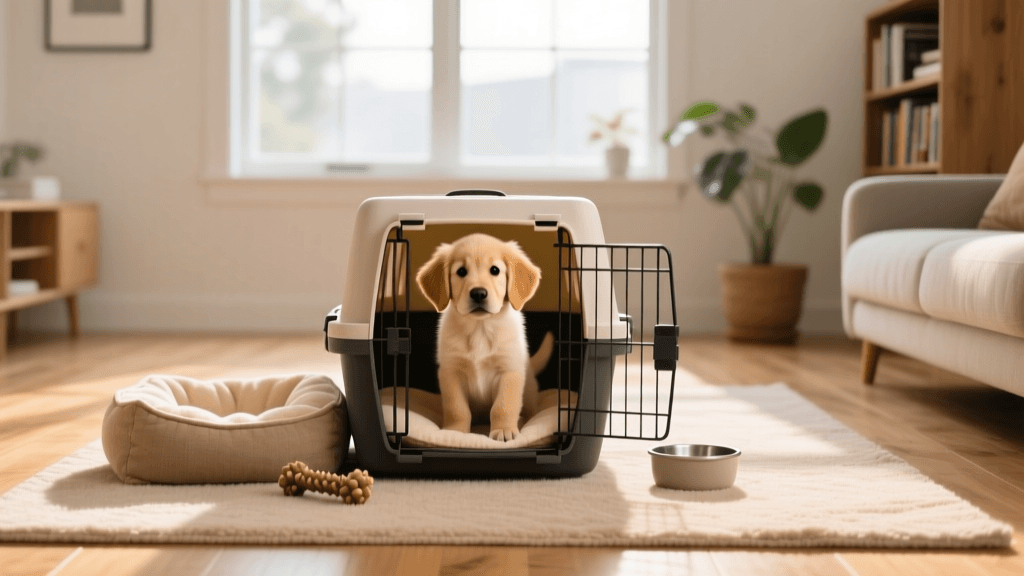
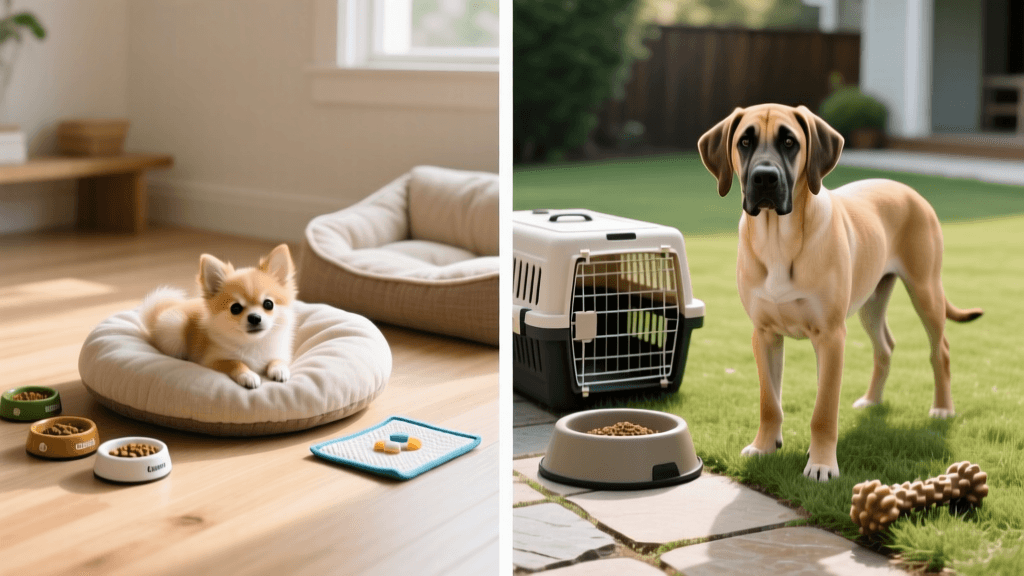
First-Time Owner Guide To Puppy Potty And Crate Training
Master puppy potty and crate training with our first-time owner guide. Learn hourly schedules, crate sizing, and actionable tips for a mess-free home.
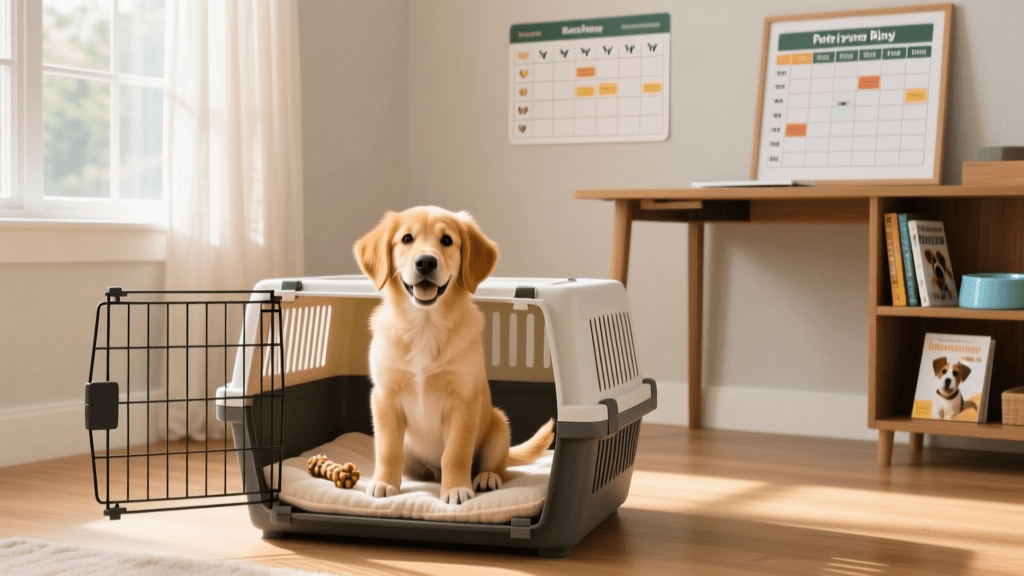
Welcome to Puppy Parenthood: The Potty Training Reality
Bringing home a new puppy is an exhilarating experience, but it quickly becomes a test of patience when you are dealing with unexpected puddles on your favorite rug. For first-time dog owners, potty training and crate training can feel like insurmountable hurdles. However, understanding the biological limitations of your puppy and establishing a rigid, predictable routine will set you both up for success. This comprehensive guide will walk you through the exact schedules, product recommendations, and behavioral science needed to house-train your puppy efficiently.
The Science of Puppy Bladders
Before you get frustrated with accidents, it is crucial to understand that young puppies physically cannot hold their bladders for long periods. Their sphincter muscles are not fully developed, and their metabolic rates are incredibly high. According to the American Kennel Club (AKC), a general rule of thumb is that a puppy can hold their bladder for one hour per month of age, up to a maximum of about eight hours for an adult dog. Therefore, an eight-week-old puppy can only hold it for roughly two hours, and that is only when they are resting.
Puppy Bladder Capacity and Potty Break Schedule
| Puppy Age | Max Bladder Capacity | Daytime Potty Breaks | Nighttime Breaks |
|---|---|---|---|
| 8 Weeks | 1.5 - 2 Hours | Every 1-2 Hours | 2-3 Times |
| 12 Weeks | 2 - 3 Hours | Every 2-3 Hours | 1-2 Times |
| 16 Weeks | 3 - 4 Hours | Every 3-4 Hours | 0-1 Time |
| 6 Months | 5 - 6 Hours | Every 4-6 Hours | 0 Times |
Step-by-Step Crate Training for Beginners
Crate training is not about locking your dog away; it is about tapping into their natural den instincts. Dogs are instinctively reluctant to soil the area where they sleep. By utilizing a properly sized crate, you are actively preventing indoor accidents while providing your puppy with a safe, secure sanctuary. The Humane Society of the United States highly recommends crate training as a foundational tool for housebreaking and preventing destructive behavior.
Choosing the Right Crate and Gear
For first-time owners, a wire crate with a divider panel is the most cost-effective and practical choice. Wire crates offer excellent ventilation and visibility, and the divider allows you to adjust the interior space as your puppy grows.
- Recommended Product: MidWest Homes for Pets iCrate (Double Door). Cost: $50 - $80 depending on size.
- Sizing Rule: The crate should be just large enough for your puppy to stand up, turn around, and lie down comfortably. If it is too large, they will designate one corner for sleeping and another for a bathroom, defeating the purpose of the den instinct.
- Bedding: Avoid thick, plush beds initially, as puppies may chew and ingest the stuffing. Opt for a tight-fitting crate mat or a simple folded towel until the teething phase passes.
- Crate Enrichment: A Kong Classic toy ($12 - $15) stuffed with frozen peanut butter or puppy-safe yogurt is essential for keeping your puppy occupied and building positive associations with the crate.
Your Daily Potty Training Schedule
Consistency is the ultimate key to potty training. Puppies thrive on routine, and their digestive systems will quickly adapt to a predictable feeding and walking schedule. Here is a blueprint for a successful day:
Morning Routine
The moment your puppy wakes up, carry them directly outside. Do not let them walk, as the physical act of moving can stimulate their bladder and cause an accident on the way to the door. Place them in their designated potty spot and use a consistent command word, such as 'Go Potty' or 'Do Your Business.' Praise them enthusiastically and offer a high-value training treat immediately after they finish.
Feeding and Hydration Timing
Puppies generally need to eliminate 15 to 30 minutes after eating or drinking heavily. Feed your puppy three measured meals a day (e.g., 7:00 AM, 12:00 PM, and 5:00 PM) using a high-quality puppy kibble. Pick up their water bowl two hours before bedtime to minimize overnight accidents. Always take them outside immediately after their post-meal digestion window.
Playtime and Nap Transitions
Any shift in activity level triggers the need to eliminate. After a vigorous game of tug-of-war or a long nap in their crate, immediately leash them and head outside. The ASPCA notes that supervising your puppy 100% of the time when they are not in their crate is vital to catching pre-accident signs like circling, sniffing, or whining.
The Importance of Enzymatic Cleaners
When accidents happen—and they will—how you clean them dictates whether the puppy will repeat the offense. Standard household cleaners, bleach, or ammonia-based products do not break down the uric acid crystals found in dog urine. To a puppy's sensitive nose, the scent remains, acting as a beacon that marks that specific spot as an acceptable bathroom.
You must use a dedicated enzymatic cleaner. Products like Nature's Miracle Advanced Stain and Odor Eliminator ($12 - $15) contain bio-enzymatic bacteria that literally eat the organic matter causing the odor. Saturate the area thoroughly, allow it to sit for 10-15 minutes, and let it air dry completely. Never use a steam cleaner on urine stains, as the heat will permanently bond the proteins to synthetic carpet fibers.
Troubleshooting Common Setbacks
First-time owners often make the mistake of punishing a puppy for an accident they discover after the fact. Rubbing a puppy's nose in it or yelling will only teach them to fear you, leading them to hide behind furniture to eliminate in the future. If you catch them in the act, clap your hands loudly to interrupt the behavior, immediately scoop them up, and carry them outside to finish. Reward them heavily if they complete the act outdoors. If you find a puddle after the fact, simply clean it silently with your enzymatic cleaner and resolve to watch them more closely next time.
A Note on Pee Pads
While puppy pee pads seem like a convenient indoor solution, they often confuse first-time owners and their dogs. Pads teach the puppy that it is acceptable to eliminate on soft, absorbent surfaces indoors—which translates to your rugs, bathmats, and laundry piles. Unless you live in a high-rise apartment without immediate outdoor access, or you are dealing with extreme weather conditions, it is highly recommended to bypass pee pads and train directly to outdoor grass or gravel to establish a clear substrate preference.
Final Thoughts for the First-Time Owner
Potty and crate training are marathons, not sprints. There will be days of regression, especially during teething or growth spurts. Stick to your schedule, manage your puppy's environment using the crate, and celebrate the small victories. With patience, the right enzymatic cleaners, and a consistent routine, your puppy will master the rules of the house, paving the way for a lifetime of trust and companionship.
marcus-aldridge
All our authors care for dogs every day — read more of their work on the authors page.