Small vs. Large Breed Puppies: First-Year Care Guide
Discover the key differences in caring for small vs. large breed puppies. Compare costs, feeding, potty training, and developmental milestones.
The Impact of Breed Size on First-Year Puppy Care
When selecting a puppy, many first-time owners focus primarily on temperament, coat type, and aesthetics. However, the adult size of your chosen breed is one of the most critical factors that will dictate your daily routine, financial budget, and overall puppy care strategy during the crucial first year of life. Caring for a Chihuahua is fundamentally different from raising a Great Dane. From metabolic rates and nutritional requirements to potty training logistics and teething behaviors, size matters immensely.
Understanding these differences before you bring your puppy home ensures you are prepared with the right gear, the correct diet, and realistic expectations. This comprehensive guide compares the first-year care requirements of small breed puppies (expected adult weight under 20 pounds) and large breed puppies (expected adult weight over 50 pounds) to help you make an informed selection and provide the best possible care.
Developmental Milestones: Fast Track vs. Slow Burn
Puppies do not all grow at the same rate. According to the American Kennel Club, a puppy's growth trajectory is heavily influenced by its genetic size potential. Small breed puppies are essentially on a biological fast track. They experience rapid growth spurts in their first six months and often reach their full adult size and skeletal maturity between 9 to 12 months of age. Because they mature quickly, their transition from puppy food to adult formulas usually happens around the one-year mark.
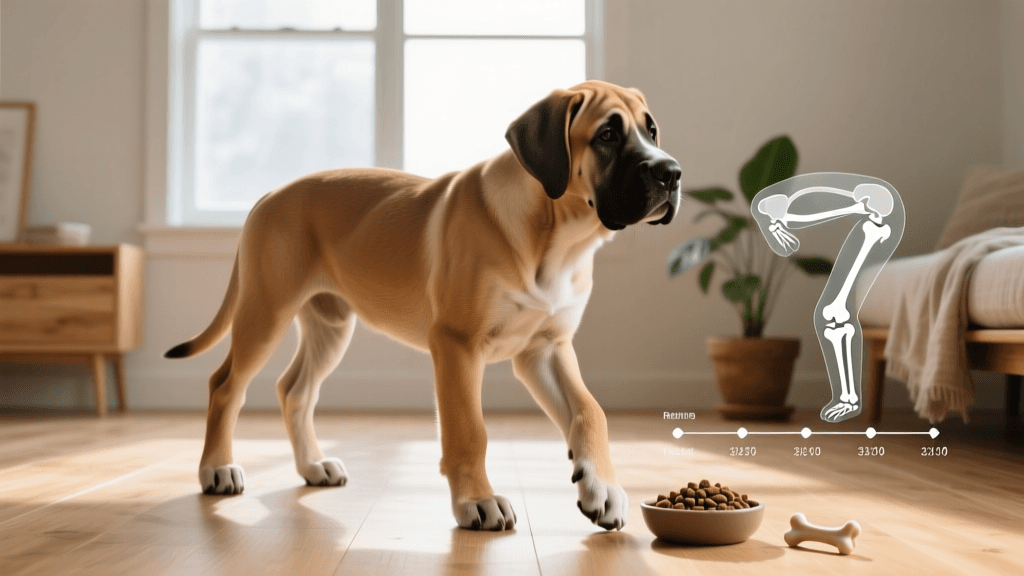
Conversely, large and giant breed puppies are on a slow burn. While they may look massive by six months, their growth plates remain open, and they continue to fill out and develop bone density well into their second year. A large breed puppy like a Labrador Retriever may not reach full physical maturity until 18 to 24 months. This extended growth phase requires careful monitoring to prevent developmental orthopedic diseases, meaning your 'puppy care' phase for a large dog actually lasts much longer than it does for a small dog.
Feeding Schedules and Nutritional Needs
Nutrition is where the divergence between small and large breeds becomes most apparent. Small breeds have incredibly fast metabolisms but tiny stomachs. They burn calories rapidly and are highly susceptible to hypoglycemia (dangerously low blood sugar) during their first few months. To combat this, small breed puppies require calorie-dense kibble specifically formulated for their tiny jaws and high energy needs, fed in smaller, more frequent meals.
Large breed puppies face the opposite challenge. If they grow too quickly, their bones and joints cannot keep pace with their muscle mass, leading to severe conditions like hip dysplasia and panosteitis. Large breed puppy foods are specifically formulated with lower fat, controlled calcium, and precise phosphorus ratios to ensure a slow, steady growth rate.
First-Year Feeding Comparison Chart
| Feature | Small Breed Puppies (Under 20 lbs) | Large Breed Puppies (Over 50 lbs) |
|---|---|---|
| Meal Frequency (2-6 mos) | 3 to 4 times per day | 3 times per day |
| Meal Frequency (6-12 mos) | 2 to 3 times per day | 2 times per day |
| Kibble Size | Extra-small, easy to chew | Large, promotes chewing and dental health |
| Key Nutritional Focus | High caloric density, DHA for brain development | Controlled calcium/phosphorus, joint support (glucosamine) |
| Transition to Adult Food | 9 to 12 months | 18 to 24 months |
Potty Training Realities and Crate Sizing
Potty training is a universal puppy care challenge, but the physical limitations of your dog will dictate your strategy. A general rule of thumb for puppy bladder control is one hour per month of age. However, small breeds have physically smaller bladders and higher metabolic rates, meaning they process water and food much faster. A 3-month-old Maltese may need to eliminate every two hours, whereas a 3-month-old Golden Retriever might comfortably hold it for three to four hours.
Pro Tip: For apartment dwellers with small breed puppies, consider setting up an indoor potty station with artificial grass or pee pads for late-night emergencies, as carrying a half-asleep puppy down three flights of stairs at 2 AM can derail your training progress.
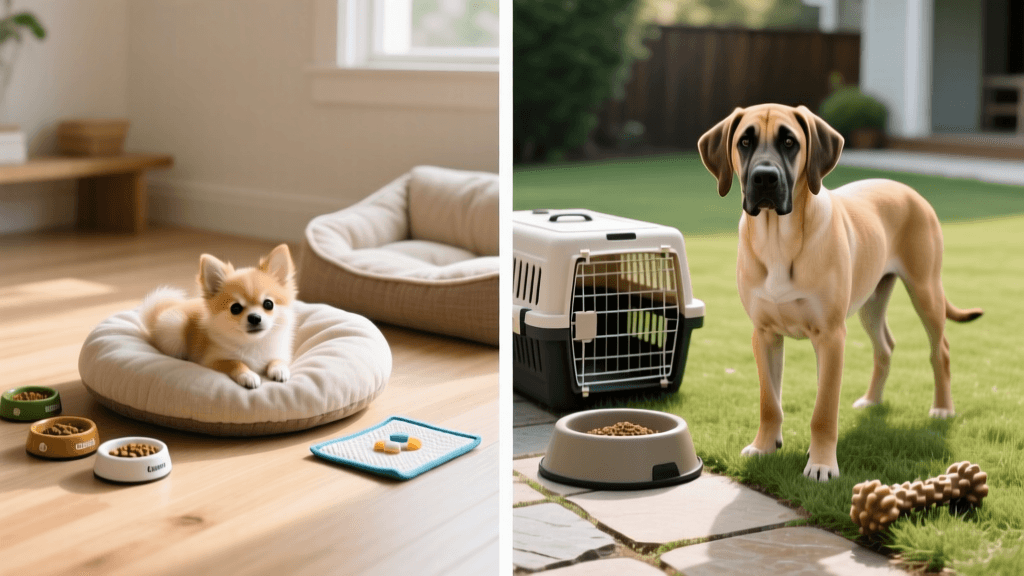
Crate training is essential for both sizes, but the equipment differs vastly. A small breed puppy will require a 22-inch or 24-inch crate. Many owners buy a crate with a wire divider so the space can expand as the puppy grows. Large breed puppies, however, require massive crates. You will likely need to invest in a 42-inch or 48-inch heavy-duty wire or impact crate. Be prepared for the logistical challenge of fitting a 48-inch crate into your living space, and ensure you purchase a correspondingly large, washable crate mat to protect their developing joints.
Teething and Chew Toy Selection
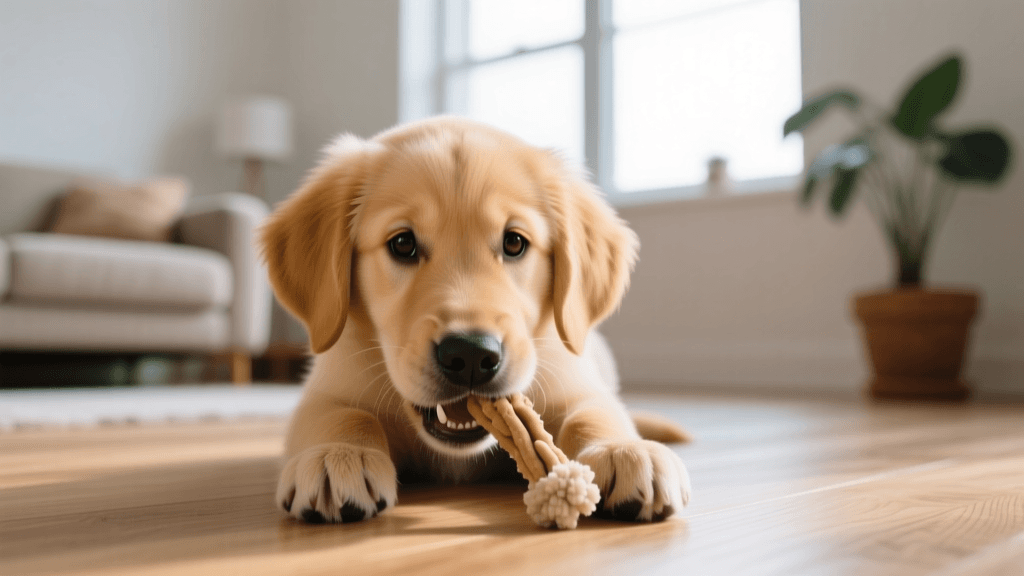
All puppies go through a teething phase between 3 and 6 months of age, but the destructive potential varies wildly by breed size. Small breed puppies have delicate jaws and tiny teeth. They benefit from softer rubber toys, chilled carrot sticks, and small rope toys. You must be vigilant about choking hazards; a toy that is safe for a Beagle could easily be swallowed whole by a Pomeranian.
Large breed puppies, on the other hand, possess jaw strength that can obliterate standard pet store toys in minutes. During their teething phase, large breeds require heavy-duty, puncture-resistant toys. Products like the Kong Classic (filled and frozen with puppy-safe peanut butter) or Nylabone Dura-Chew Power rings are excellent choices. Never give large breed puppies cooked bones or cheap plastic toys, as they can splinter or shatter, leading to expensive veterinary emergencies and intestinal blockages.
Early Socialization and Handling
The critical socialization window occurs between 3 and 14 weeks of age. As detailed by the AKC Puppy Socialization Guide, positive exposure to new sights, sounds, and people during this time is vital for behavioral health. However, the approach must be tailored to the puppy's size.
Small breed puppies are fragile. A clumsy toddler or an overly enthusiastic larger dog can easily cause physical injury. Socialization for small breeds must be highly controlled. You must advocate for your puppy, ensuring they are held or placed on elevated, secure surfaces when meeting strangers to prevent them from feeling cornered or stepped on. Focus on building their confidence so they do not develop 'small dog syndrome'—a behavioral issue where tiny dogs react with fear-based aggression.
Large breed puppies are physically robust but often entirely unaware of their own size. A 40-pound, 14-week-old puppy can easily knock over a small child or an elderly person. Socialization for large breeds must heavily focus on impulse control, teaching them to sit politely for greetings, and discouraging jumping up. Enrolling in a structured puppy kindergarten class is highly recommended to teach large breeds appropriate bite inhibition and play manners with other dogs.
First-Year Cost Breakdown
Budgeting for a puppy's first year is a critical part of the selection process. The ASPCA notes that initial puppy expenses are significantly higher than subsequent years due to the need for vaccinations, spay/neuter surgeries, and foundational gear. Unsurprisingly, large breeds cost considerably more to raise than small breeds.
- Initial Veterinary Care (Vaccines, Microchip, Spay/Neuter): Small breeds average $600 - $900. Large breeds average $800 - $1,200 (anesthesia and medications are weight-based).
- First-Year Food Costs: Small breeds (approx. 1 bag per month) cost $300 - $500 annually. Large breeds (approx. 2-3 bags per month) cost $800 - $1,200 annually.
- Preventative Medications (Flea, Tick, Heartworm): Small breeds cost $150 - $200 annually. Large breeds cost $250 - $350 annually (again, weight-based dosing).
- Gear (Crates, Beds, Harnesses, Toys): Small breed gear averages $200 - $300. Large breed gear, requiring heavy-duty, oversized items, averages $400 - $600.
When selecting your breed, ensure your monthly budget can comfortably accommodate the higher recurring costs of a large dog, particularly the premium large-breed puppy food and joint supplements that will be necessary as they age.
Conclusion
Selecting between a small and large breed puppy is about more than just the space in your home; it is about aligning a dog's physical needs with your lifestyle, schedule, and budget. Small breeds demand frequent feeding, rigorous potty schedules, and gentle, protective socialization. Large breeds require strict dietary management to protect their joints, heavy-duty gear, and intensive obedience training to manage their boisterous size. By understanding these distinct first-year care requirements, you can confidently choose the right puppy and set the foundation for a healthy, happy, and well-adjusted adult dog.
tom-renshaw
All our authors care for dogs every day — read more of their work on the authors page.