First-Time Puppy Prep: Essential Home Setup & Shopping Guide
Discover the ultimate first-time puppy prep guide. Learn how to puppy-proof your home, set up a safe space, and buy essential gear for day one.
Welcoming Your First Puppy: Beyond the Excitement
Bringing home your first puppy is a monumental milestone filled with joy, adorable moments, and a profound sense of responsibility. However, the transition from a breeder or shelter to your living room can be overwhelming for both you and your new dog. First-time owners often underestimate the sheer amount of preparation required to ensure a safe, structured, and stress-free environment. Without a solid plan, you may find yourself dealing with chewed furniture, indoor accidents, and unnecessary anxiety.
This comprehensive guide is designed specifically for first-time dog owners. We will walk you through the critical steps of puppy-proofing your home, establishing a secure 'safe zone,' and purchasing the exact gear you need for day one. By following this actionable roadmap, you will set the foundation for a well-behaved, confident, and happy adult dog.
Puppy-Proofing: A Room-by-Room Audit
Puppies explore the world primarily through their mouths, and their curiosity can lead them straight into danger. According to the American Kennel Club (AKC), getting down on your hands and knees to view your home from a puppy's perspective is the most effective way to identify hidden hazards. Before your puppy's paws touch your floors, conduct a thorough room-by-room audit.
The Living Room and Kitchen
These high-traffic areas are riddled with temptations and hazards. Start by securing all electrical cords using split loom tubing or cord concealers. Puppies teething on live wires can suffer severe burns or fatal electrocution. In the kitchen, ensure that all cleaning supplies, trash cans, and toxic foods are locked away. Foods containing xylitol (an artificial sweetener often found in sugar-free gum and peanut butter), grapes, raisins, onions, and chocolate are highly toxic to dogs. Keep your trash cans inside latched cabinets or invest in heavy, dog-proof bins.
Bathrooms and Bedrooms
Medications, vitamins, and personal care products must be moved to high shelves or locked drawers. Even a dropped ibuprofen pill can cause kidney failure in a small puppy. Additionally, keep toilet lids closed; puppies can easily fall in or drink water contaminated with harsh cleaning chemicals. In the bedrooms, pick up stray socks, shoes, and children's toys. Swallowed fabric or plastic can lead to life-threatening intestinal blockages requiring emergency surgery.
Indoor and Outdoor Plants
Many common household and garden plants are highly poisonous to dogs. Lilies, sago palms, azaleas, and oleander can cause severe organ damage or death if ingested. Before bringing your puppy home, cross-reference every plant in your house and yard with the ASPCA's comprehensive list of toxic and non-toxic plants. Remove any toxic flora immediately or place them in rooms that are strictly off-limits behind baby gates.
Creating a Safe Zone: Crate and Playpen Setup
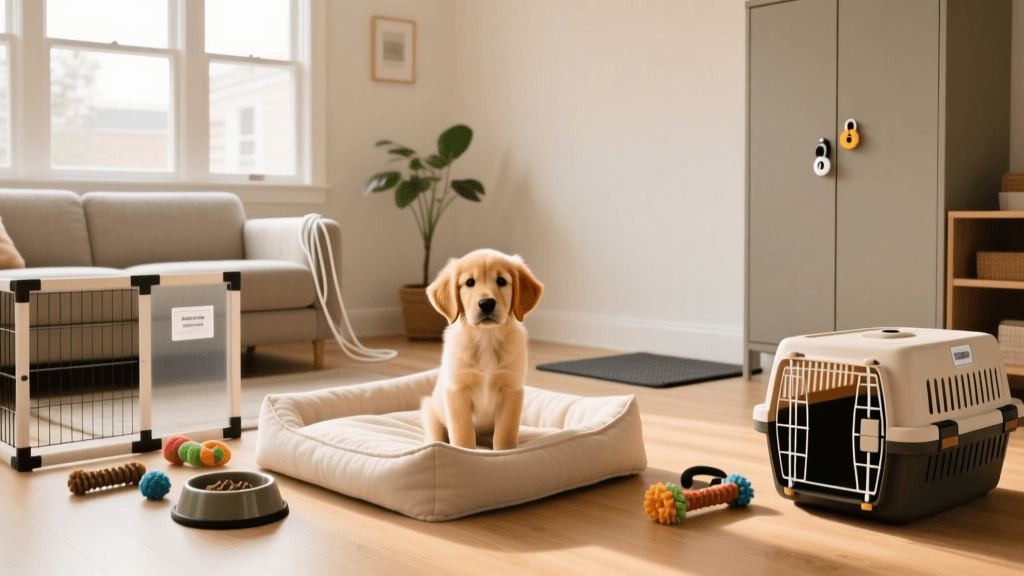
First-time owners often make the mistake of giving a new puppy free roam of the entire house. This leads to potty training regressions and destructive chewing. Instead, establish a 'Safe Zone' using a crate and an attached exercise pen. This area serves as your puppy's bedroom, providing a secure retreat when they feel overwhelmed and a management tool when you cannot actively supervise them.
Selecting the Right Crate Size
A crate should be large enough for your puppy to stand up, turn around, and lie down comfortably, but not so large that they can use one corner as a bathroom and the other as a bed. For growing puppies, purchase a wire crate with an adjustable divider panel. Here are the standard measurements to guide your purchase:
- Small Breeds (Under 25 lbs): 24-inch crate (e.g., Chihuahuas, Pomeranians)
- Medium Breeds (26-40 lbs): 30-inch crate (e.g., Beagles, Cocker Spaniels)
- Large Breeds (41-70 lbs): 36-inch crate (e.g., Labrador Retrievers, Golden Retrievers)
- Giant Breeds (71-90+ lbs): 42-inch crate (e.g., Great Danes, Mastiffs)
Place the crate in a quiet but socially integrated area of your home, such as a corner of the living room or your bedroom. Avoid high-traffic chokepoints or drafty hallways.
The First-Time Puppy Shopping List
Walking into a pet store or browsing online can be incredibly overwhelming due to the sheer volume of products available. To save you time and money, here is a curated, actionable shopping list featuring specific product types and estimated costs for your first week.
| Essential Item | Purpose & Benefit | Recommended Brand / Type | Estimated Cost |
|---|---|---|---|
| Wire Crate with Divider | Safe sleep space and potty training aid. | Midwest iCrate or Frisco Double Door | $50 - $90 |
| Enzymatic Cleaner | Completely breaks down urine proteins to prevent repeat accidents. | Nature's Miracle Advanced Stain & Odor | $12 - $18 |
| Front-Clip Harness | Prevents pulling and protects delicate puppy tracheas. | Ruffwear Front Range or Puppia Soft Harness | $25 - $50 |
| Rubber Chew Toy | Soothes teething gums and prevents destructive chewing. | Kong Classic Puppy (Pink or Blue) | $12 - $20 |
| Exercise Playpen | Creates a larger safe zone attached to the crate. | IRIS USA Panel Pet Playpen | $50 - $80 |
| Potty Training Bells | Teaches the puppy to signal when they need to go outside. | Potty Bells Dog Training Doorbells | $8 - $15 |
| Long Training Lead | Allows safe outdoor exploration before vaccines are complete. | 15ft to 30ft Nylon or Biothane Long Line | $15 - $25 |
Your Puppy's First 24 Hours: A Timeline
The first day sets the tone for your puppy's entire life. Keep the environment calm, avoid inviting friends and family over for a 'welcome party,' and stick to a predictable routine. Here is a practical timeline to follow on day one.
Arrival (Hours 1-2): Potty and Decompress
Before you even bring the puppy inside, carry them directly to your designated outdoor potty spot. Praise calmly and offer a high-value treat immediately after they eliminate. Once inside, allow them to explore their Safe Zone and a single, puppy-proofed room on a leash. Offer a small bowl of water, but avoid overwhelming them with too much food immediately after a stressful car ride.
Afternoon (Hours 3-5): Rest and Gentle Play
Puppies require 18 to 20 hours of sleep a day. After an hour of gentle exploration and a light meal, guide your puppy into their crate for a nap. If they fuss, ensure their basic needs (potty, food, water) are met, then use a white noise machine or a ticking clock wrapped in a blanket to soothe them. Do not let them out of the crate while they are crying, as this teaches them that whining equals freedom.
Evening and Night: The Potty Schedule
Young puppies (8-12 weeks) have tiny bladders and can only hold it for about one hour per month of age. You must take them outside:
- Immediately upon waking up
- 15 to 20 minutes after every meal
- After vigorous play sessions
- Right before bedtime
Set an alarm for 2:00 AM and 5:00 AM for nighttime potty breaks. Keep these middle-of-the-night trips incredibly boring: leash them, carry them outside, wait for them to potty, and immediately return them to the crate. No play, no talking.
Nutrition and Veterinary Setup
Before your puppy arrives, you should have already selected a veterinarian and scheduled their first wellness exam within 48 hours of arrival. The Centers for Disease Control and Prevention (CDC) emphasizes the importance of early veterinary care to establish a baseline for your dog's health, discuss a core vaccination schedule (such as DHPP and Rabies), and implement a rigorous flea, tick, and heartworm prevention protocol.
Regarding nutrition, stick to the exact food the breeder or shelter was feeding your puppy for at least the first two weeks. Sudden diet changes can cause severe gastrointestinal upset and diarrhea. If you plan to switch to a higher-quality kibble or a fresh food diet, do so gradually over a 7-to-10-day period by mixing increasing amounts of the new food with the old food.
'The biggest mistake first-time owners make is giving a puppy too much freedom too soon. A puppy must earn their space in the house through consistent potty training, crate conditioning, and good behavior. Management is the key to prevention.'
Final Thoughts for the First-Time Owner
Preparing for your first puppy requires patience, investment, and a commitment to structure. By thoroughly puppy-proofing your home, investing in the right management tools like crates and enzymatic cleaners, and adhering to a strict first-day schedule, you eliminate the guesswork from the equation. Remember that raising a well-adjusted dog is a marathon, not a sprint. Celebrate the small victories, remain consistent with your rules, and enjoy the incredible journey of watching your new puppy grow into a loyal companion.
jonas-cole
All our authors care for dogs every day — read more of their work on the authors page.