Essential Puppy Starter Kit: A Comprehensive Buyer Guide
Discover the essential puppy starter kit with our comprehensive buyer's guide. Compare top crates, beds, and bowls for your new dog's first day home.
Welcoming Your New Puppy: Why Preparation Matters
Bringing a new puppy into your home is one of the most exciting milestones for any dog lover. However, the transition from a breeder or shelter to a brand-new environment can be overwhelming for a young dog. According to the ASPCA, proper preparation and having the right supplies on hand before your puppy arrives are critical steps in reducing stress and preventing behavioral issues. This comprehensive buyer's guide will walk you through the essential puppy starter kit, reviewing the best products, materials, and price points to ensure your new companion thrives from day one.
Many first-time dog owners fall into the trap of buying cheap, ill-fitting, or aesthetically pleasing items that fail to meet a puppy's developmental needs. Puppies chew, grow rapidly, and require specific types of environmental enrichment. In this guide, we break down the core essentials—crates, beds, bowls, and teething toys—providing actionable advice, specific product recommendations, and a detailed comparison chart to help you build the ultimate puppy starter kit.
The Core Essentials: What You Actually Need
1. Dog Crates: Your Puppy's Safe Haven
A crate is not just a training tool; it is your puppy's den. The American Kennel Club (AKC) emphasizes that crate training taps into a dog's natural instinct to seek a safe, enclosed space, which drastically accelerates housebreaking and prevents destructive behavior when you are away. But not all crates are created equal, especially for growing puppies.
Wire Crates vs. Plastic vs. Soft-Sided: For a new puppy, a collapsible wire crate with a divider panel is the undisputed best choice. Wire crates offer superior ventilation, visibility, and durability. Plastic crates (often used for air travel) can feel too enclosed and are harder to clean during inevitable house-training accidents. Soft-sided crates should be completely avoided for puppies, as their sharp teeth will destroy the mesh in minutes, creating a choking hazard.
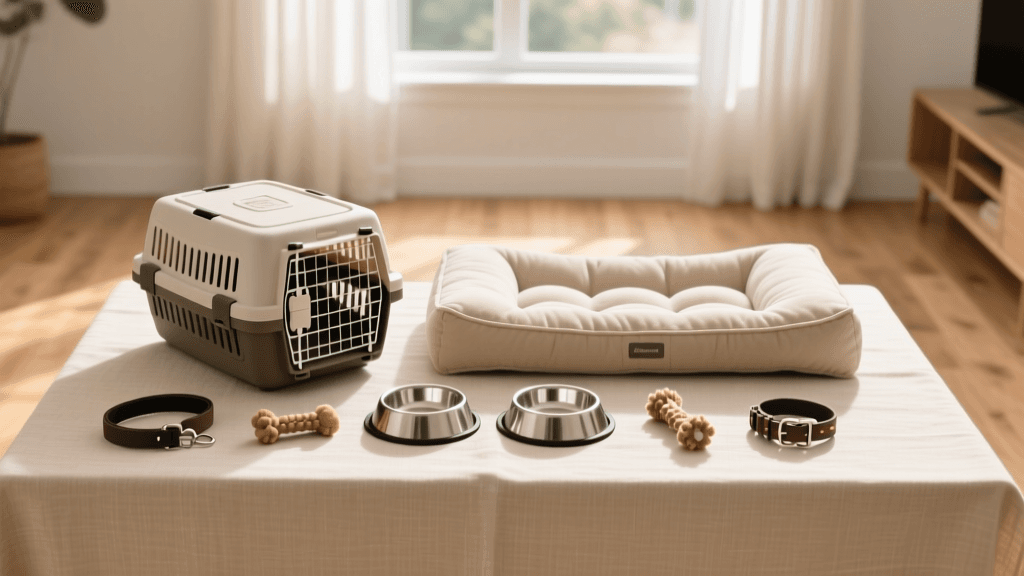
Top Recommendation: The MidWest Homes for Pets iCrate is a staple for new owners. It features a heavy-duty slide-bolt latch and an adjustable divider panel. This divider is crucial: it allows you to buy a crate sized for your dog's expected adult weight, while restricting the space to just enough for them to stand, turn around, and lie down. If a puppy has too much space, they may use one corner as a bathroom, undermining your potty training efforts.
Sizing Guide: To determine the correct adult crate size, measure your puppy's expected adult length (from the tip of the nose to the base of the tail) and add 2 to 4 inches. For height, measure from the top of the head (or ears, if erect) to the floor and add 2 inches. Common sizes include 24-inch for small breeds (under 25 lbs), 36-inch for medium breeds (40-70 lbs), and 42-inch for large breeds (70-90 lbs).
2. Dog Beds: Comfort and Joint Support
Puppies sleep up to 18 hours a day, making a high-quality bed a non-negotiable investment. However, the teething phase means that plush, fluffy beds are often shredded within days, posing a severe intestinal blockage risk if the stuffing is ingested.
Top Recommendation: The K9 Ballistics Chew Proof Elevated Dog Bed is widely considered the gold standard for puppy owners. Unlike traditional stuffed beds, this elevated cot features an aluminum frame and a ballistic nylon ripstop fabric. It is completely devoid of stuffing, eliminating the ingestion risk, and the elevated design promotes airflow, keeping your puppy cool while providing orthopedic joint support. While the upfront cost is higher (typically between $130 and $160), it saves you from replacing multiple destroyed beds during the first year.
Once your puppy matures past the heavy chewing phase (usually around 12 to 18 months), you can transition to an orthopedic memory foam bed, such as the Big Barker Pillow Top Orthopedic Dog Bed, which is particularly beneficial for large and giant breeds prone to hip dysplasia.
3. Food and Water Bowls: Hygiene and Stability
The material of your dog's bowl impacts their health more than most owners realize. Plastic bowls are porous, harboring bacteria that can cause canine acne (those black, pimple-like bumps on your dog's chin) and allergic reactions. Ceramic bowls can be a good alternative, but they are heavy, easily chipped, and the glaze can sometimes contain trace amounts of lead if not sourced from a reputable manufacturer.
Top Recommendation: High-quality, food-grade Stainless Steel Bowls are the safest and most durable option. They are dishwasher safe, rust-resistant, and completely non-porous. Look for bowls with a non-skid rubber base, such as the Basis Stainless Steel Pet Bowl, to prevent the bowl from sliding across hardwood floors while your enthusiastic puppy eats. For fast eaters prone to bloat or vomiting, consider integrating a slow-feeder bowl like the Outward Hound Fun Feeder Slo Bowl into your kit, which forces the puppy to forage for their kibble, slowing down ingestion and stimulating their brain.
4. Chew Toys and Teething Relief
Between 12 and 24 weeks of age, puppies lose their deciduous (baby) teeth and grow their adult teeth. This process is painful, and your puppy will seek relief by chewing on whatever is available—including your furniture and shoes. Providing appropriate teething toys is essential for saving your household items and soothing your puppy's gums.
Top Recommendation: The KONG Puppy Toy (specifically the pink or blue versions) is formulated with a softer, natural rubber compound designed specifically for developing teeth and gums. Unlike the classic red KONG, which is meant for adult dogs, the puppy version provides gentle resistance. You can stuff the KONG with a mixture of plain Greek yogurt, mashed banana, and puppy-safe peanut butter (strictly xylitol-free), then freeze it overnight. The frozen treat provides numbing relief for sore gums and keeps the puppy occupied for up to an hour.
Puppy Starter Kit Comparison Chart
To help you budget and prioritize your purchases, review the comparison table below detailing our top recommendations for the ultimate puppy starter kit.
| Category | Recommended Product | Material | Est. Cost | Best For |
|---|---|---|---|---|
| Crate | MidWest iCrate w/ Divider | Wire Metal / Electro-Coat | $60 - $90 | Growing Puppies & Housebreaking |
| Bed | K9 Ballistics Elevated Bed | Aluminum / Ballistic Nylon | $130 - $160 | Heavy Chewers & Joint Support |
| Bowls | Basis Stainless Steel Bowl | Food-Grade Stainless Steel | $15 - $25 (Set) | Everyday Hygiene & Durability |
| Teething Toy | KONG Puppy (Pink/Blue) | Soft Natural Rubber | $10 - $15 | Teething Relief & Enrichment |
| Slow Feeder | Outward Hound Fun Feeder | BPA-Free Plastic | $12 - $18 | Fast Eaters & Mental Stimulation |
Budgeting for Your New Puppy's First Month
According to the Humane Society of the United States, new pet owners should be prepared for the initial costs of supplies, veterinary care, and preventative medications. While the physical starter kit outlined above will cost approximately $250 to $350, this does not include essential first-month expenses such as initial vaccination boosters, microchipping, spay/neuter deposits, and heartworm/flea preventatives. Expect to allocate an additional $300 to $600 for veterinary setup during the first 30 days. Investing in high-quality, durable gear upfront (like the K9 Ballistics bed and a wire crate) actually reduces long-term costs by eliminating the need to constantly replace destroyed items.
Expert Tips for the First Week Home
Having the right gear is only half the battle; how you introduce these items to your puppy dictates their long-term success. Here are three expert tips for utilizing your new puppy starter kit:
- Make the Crate a Positive Zone: Never use the crate as a punishment. Feed your puppy their meals inside the crate with the door open, and toss high-value treats into the back to encourage voluntary entry. Covering the crate with a breathable blanket at night can mimic a den and reduce visual overstimulation.
- Rotate Toys to Prevent Boredom: Do not leave all chew toys out at once. Keep a rotation of three to four toys, including your frozen KONG, and swap them out every few days. This keeps the toys novel and maintains your puppy's interest, reducing the likelihood of them seeking out forbidden items like shoes.
- Establish a Potty Schedule: Puppies can typically hold their bladder for one hour per month of age. A two-month-old puppy needs a bathroom break every two hours, including overnight. Place the crate near your bedroom so you can hear them whine when they need to go out, and always carry them directly to the designated potty spot to reinforce the habit.
Final Thoughts on Preparing for Your Puppy
Building the ultimate puppy starter kit is an investment in your dog's safety, comfort, and behavioral development. By prioritizing durable, safe, and appropriately sized products—like a wire crate with a divider, a chew-proof elevated bed, and stainless steel bowls—you set the foundation for a smooth transition into your home. Take the time to research your specific breed's adult size and energy levels, and remember that patience, consistency, and the right tools are the keys to raising a happy, well-adjusted adult dog.
beth-carrasco
All our authors care for dogs every day — read more of their work on the authors page.