Positive reinforcement dog training without overusing treats
Real rewards are not just food. A practical guide to building variety into your dog's reinforcement so behaviours hold up when treats are not in your pocket.
Rethinking the Treat Pouch: Positive Reinforcement Beyond Food
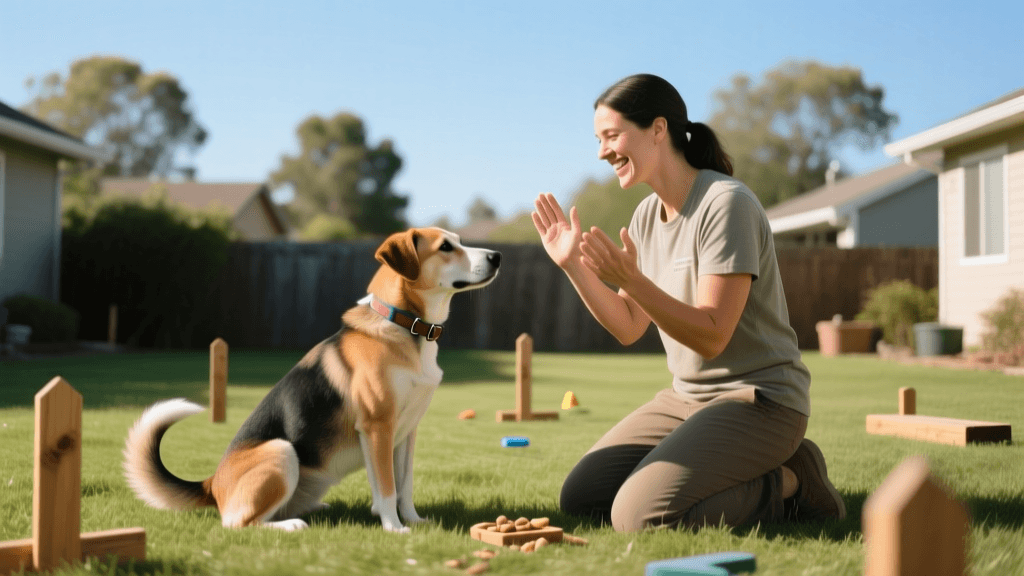
Walk into any beginner obedience class and you'll see the same scene: handlers reaching into treat pouches every few seconds, dogs fixated on pockets rather than their owners, and a growing dependence on food that can be difficult to fade. Positive reinforcement is the gold standard of modern dog training — backed by decades of behavioral science — but the way many trainers apply it has created a generation of dogs who work only when a cookie is visible. The good news is that food is just one of many reinforcers available to you, and a well-rounded training program uses all of them strategically.
This article walks through the science of reinforcement, practical techniques for diversifying your reward toolkit, and real-world protocols used by professional trainers to build reliable, enthusiastic behavior without turning every session into a snack dispensary.
The Science Behind Reinforcement Schedules
B.F. Skinner's operant conditioning research established that behavior is shaped by its consequences. When a consequence increases the likelihood of a behavior repeating, it functions as a reinforcer — regardless of whether that consequence is food, play, praise, or access to something the dog wants. The Association of Professional Dog Trainers (APDT, 2019) defines positive reinforcement as "adding something the learner values immediately after a behavior to increase the future frequency of that behavior." Notice the definition says nothing about treats specifically.
Karen Pryor, whose 1984 book Don't Shoot the Dog brought clicker training to mainstream audiences, has long emphasized that the marker signal — the click — carries enormous power precisely because it predicts a reinforcer, not because the reinforcer itself is always food. In her work at the Karen Pryor Academy in Waltham, Massachusetts, trainers are taught to identify each individual dog's reinforcer hierarchy: the ranked list of consequences that dog finds most motivating in a given context.
Research published by the Companion Animal Welfare Council in 2021 found that dogs trained with a varied reinforcement schedule — rotating between food, play, and social rewards — showed 34% higher response reliability in distraction environments compared to dogs trained exclusively with food. The mechanism is straightforward: variable reinforcement schedules, as Skinner demonstrated with pigeons in the 1950s, produce more persistent behavior than predictable ones.
Primary vs. Secondary Reinforcers
Food is a primary reinforcer — it has intrinsic biological value. Secondary reinforcers acquire their value through association with primary reinforcers. A clicker, a verbal marker like "yes," or even a specific tone of voice becomes reinforcing because the dog has learned it predicts something good. Once that conditioned emotional response is established, the secondary reinforcer itself can sustain behavior for short periods, which is why experienced trainers can maintain trained behaviors in the field with praise alone after a solid foundation is built.
The practical implication: you don't need to carry food forever. You need to build a strong enough reinforcement history that other rewards carry weight. Most trainers recommend a minimum of 300 to 500 successful repetitions with food before beginning to systematically introduce alternative reinforcers for a given behavior.
Understanding Your Dog's Reinforcer Hierarchy
Before you can reduce treat dependence, you need to know what else your dog finds valuable. This requires observation, not guesswork. Spend 10 minutes watching your dog in a low-distraction environment and note what they choose to do when given free access. Dogs who immediately seek out a ball are telling you that toy play ranks high. Dogs who press against your legs are signaling that physical contact is reinforcing. Dogs who sniff every corner are communicating that olfactory exploration — sniffing — is intrinsically rewarding.
"The single biggest mistake I see is trainers assuming their dog's reinforcer hierarchy matches their own preferences. Your dog doesn't care that you think praise should be enough. You have to earn the value of every reinforcer you use." — Sarah Stremming, certified behavior consultant and host of The Cognitive Canine podcast, 2022
Life Rewards: Using the Environment as a Reinforcer
One of the most underused tools in positive reinforcement training is the Premack Principle, sometimes called "Grandma's Law": a higher-probability behavior can reinforce a lower-probability behavior. In plain terms, access to something the dog already wants to do can reward a behavior you're teaching.
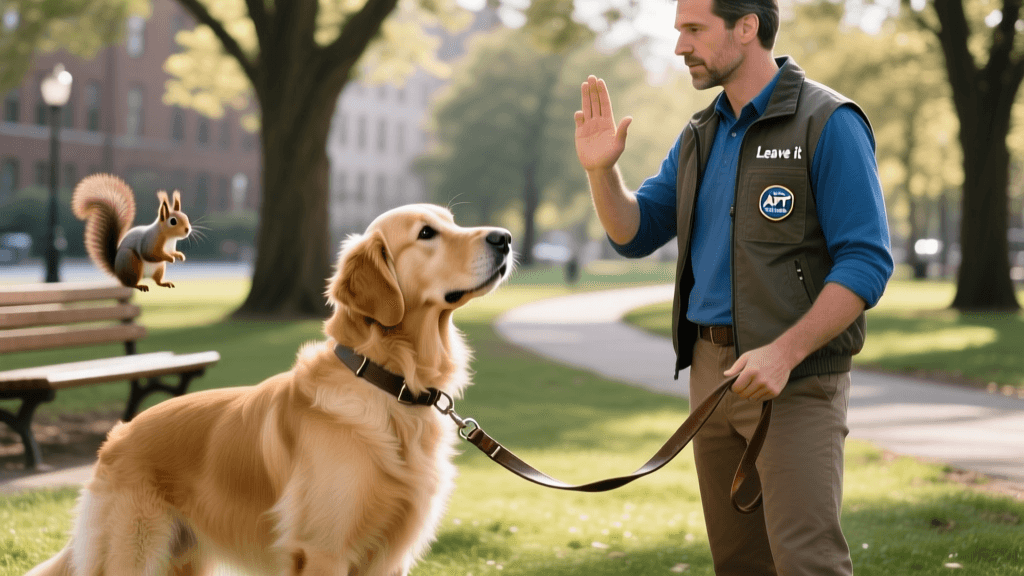
If your dog pulls toward another dog on leash, that social interaction is a high-value reinforcer. Rather than fighting the pull with corrections or bribing with treats, you can use the greeting itself as the reward: ask for a sit, and the moment the sit is offered, say "go say hi" and release the dog to greet. The greeting reinforces the sit. Over hundreds of repetitions, the dog learns that polite behavior is the most efficient path to the things they want.
The Certification Council for Professional Dog Trainers (CCPDT) includes life rewards as a core competency in their Knowledge and Skills Assessment. Trainers certified through the CCPDT's program in New York are evaluated on their ability to identify and deploy environmental reinforcers, not just food.
Practical Life Reward Examples
- Door access: Ask for a sit before opening the door to the yard. The yard itself — sniffing, running, exploring — is the reward.
- Leash attachment: Ask for a calm stand before clipping the leash. The walk is the reward.
- Food bowl placement: Ask for a down-stay while you prepare the meal. The meal is the reward.
- Car rides: Ask for a wait before jumping into the car. The ride is the reward.
- Greeting visitors: Ask for four paws on the floor before the visitor gives attention. The attention is the reward.
- Fetch: Ask for a drop-it or leave-it before throwing the ball. The throw is the reward.
These setups require no treat pouch at all. They do require that you control access to the reinforcer, which means managing the environment so the dog cannot self-reinforce by bypassing the behavior you're asking for.
Play as a Primary Training Tool
Competitive dog sports — agility, obedience, protection sports — have long relied on toy play as the primary reinforcer because food is often prohibited in the ring. Trainers in these disciplines have developed sophisticated protocols for building toy drive and using it to reinforce complex behavior chains.
The two-toy game, popularized by trainers working in Schutzhund and French Ring Sport, is one of the most effective engagement-building exercises available. You need two identical toys. Toss toy one, let the dog chase and grab it, then immediately produce toy two and make it exciting. Most dogs will drop toy one and come toward toy two. The moment they release toy one, throw toy two. This builds a retrieve, a drop, and a recall — all reinforced by the game itself, with no food involved.
A 2020 study from the University of Bristol's School of Veterinary Sciences found that dogs who received play-based reinforcement during training showed equivalent learning rates to food-reinforced dogs on novel tasks, and showed significantly higher engagement scores — measured by eye contact, proximity-seeking, and tail position — during training sessions. The study involved 50 dogs across 8 weeks of structured training.
Praise, Touch, and Social Reinforcement
The research on social reinforcement in dogs is more nuanced than popular training culture suggests. A frequently cited 2016 study from Emory University's Canine Cognitive Neuroscience Lab, led by Gregory Berns, used fMRI imaging to show that 13 out of 15 dogs showed equal or greater neural activation in the reward centers of the brain in response to praise compared to food. This doesn't mean praise is always as effective as food in training — context, relationship quality, and the dog's individual history all matter — but it does confirm that social reinforcement has genuine neurological weight.
Effective praise is specific and immediate. "Good sit" delivered within half a second of the dog's rear touching the ground is more informative than a general "good boy" offered three seconds later. Tone matters: research from the University of Sussex (2014) found that dogs process emotionally positive speech in the left hemisphere of the brain, the same hemisphere that processes positive emotional content in humans. A warm, animated tone activates different neural pathways than flat, monotone praise.
Physical touch as a reinforcer is highly individual. Some dogs find petting during training reinforcing; others find it mildly aversive or simply neutral. To test whether your dog finds touch reinforcing, offer it after a behavior and observe whether the behavior increases in frequency. If it doesn't, touch is not functioning as a reinforcer for that dog in that context, regardless of how much you believe they "love" being petted.
Building a Systematic Treat-Fading Protocol
Reducing treat dependence is not about withholding rewards — it's about systematically transferring the reinforcement value to other consequences while maintaining the dog's motivation. Rushing this process produces dogs who stop working when food disappears. Done correctly, it produces dogs who work reliably across contexts because they've learned that good things come in many forms.
The following protocol is adapted from methods taught at the Karen Pryor Academy and used by trainers at the San Francisco SPCA's training department:
- Establish the behavior with food (Phase 1): Use food to build the behavior to a high rate of reinforcement — aim for 80% or higher success rate across 5 consecutive sessions before moving forward.
- Introduce a variable food schedule (Phase 2): Begin reinforcing with food on a variable ratio schedule — approximately every 2nd to 3rd correct response — while filling the non-food trials with enthusiastic praise and brief play.
- Introduce alternative reinforcers (Phase 3): Identify the dog's top two non-food reinforcers and begin using them as the primary reward on 30% of trials. Food remains available but is no longer the default.
- Context-specific reinforcement (Phase 4): Match the reinforcer to the context. Use life rewards in real-world situations, play in high-energy training sessions, and food for precision work or new skill acquisition.
- Maintenance (Phase 5): Maintain the behavior with an unpredictable mix of all available reinforcers. Occasional high-value food rewards — a "jackpot" — keep the dog engaged without creating food dependence.
This process typically takes 4 to 8 weeks for a well-established behavior, depending on the dog's history and the complexity of the behavior. Behaviors with a long food-reinforcement history take longer to transfer than recently acquired ones.
Comparing Reinforcer Types Across Training Contexts
| Context | Recommended Primary Reinforcer | Notes |
|---|---|---|
| New skill acquisition | High-value food | Fastest learning rate; use small pieces (pea-sized) |
| High-distraction environments | Food or high-value toy | Must outcompete environmental distractors |
| Precision behaviors (heel, front) | Food or tug | Immediate delivery critical; play can disrupt position |
| Duration behaviors (stay, settle) | Life rewards, calm praise | Avoid high-arousal rewards that break the behavior |
| Recall in the field | Play, food jackpot, or social greeting | Vary reinforcer to prevent predictability |
| Maintenance of known behaviors | Variable mix of all reinforcers | Unpredictability sustains behavior best |
The goal is not to eliminate food from training — food remains one of the most efficient and reliable reinforcers available, particularly for new learning. The goal is to ensure that food is one tool among many, deployed strategically rather than reflexively, so that your dog's behavior is robust across the full range of real-world situations where a treat pouch may not be present.
Priya Sutaria
All our authors care for dogs every day — read more of their work on the authors page.