First-Time Owner Guide: Puppy Crate and Potty Routine
Discover essential crate training and nighttime potty schedules for first-time puppy owners. Ensure peaceful nights and quick housebreaking success.
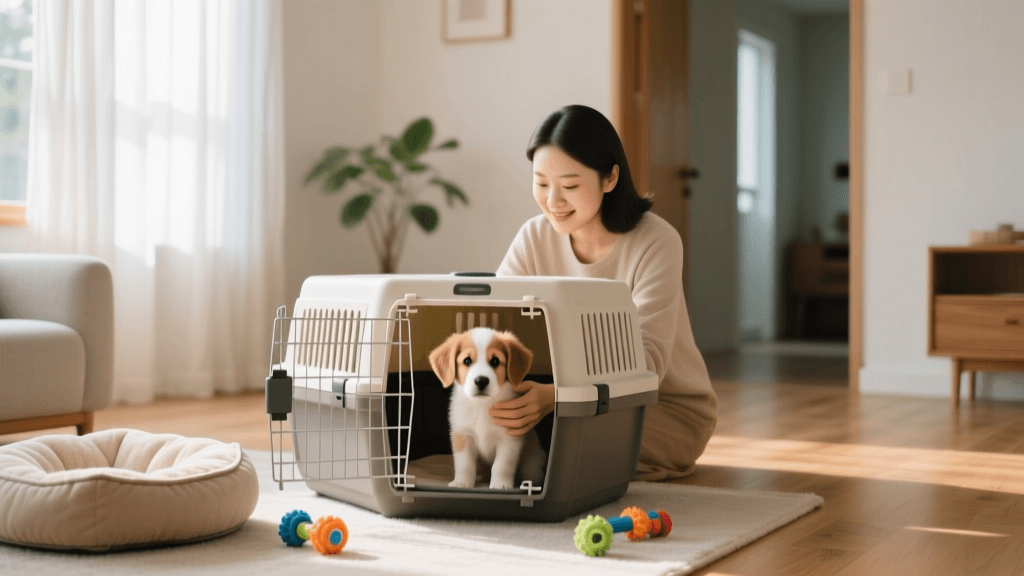
Welcome Home: The First 48 Hours with Your New Puppy
Bringing a new puppy home is one of the most exciting milestones in life, but the first 48 hours can quickly turn into an overwhelming blur of whining, accidents, and sleep deprivation. For first-time dog owners, establishing a structured environment immediately is the difference between a chaotic first month and a harmonious lifelong bond. The cornerstone of this early success lies in two interconnected routines: crate training and potty scheduling. When executed with patience and precision, these routines leverage your puppy's natural instincts, keeping your home clean and your new companion feeling secure.
Why Crate Training is Non-Negotiable for First-Time Owners
Many new owners mistakenly view crates as canine jails, but animal behaviorists and veterinarians universally agree that crates are essential tools for a dog's psychological well-being. Dogs are den animals by nature. According to the Humane Society of the United States, a properly introduced crate becomes a dog's personal sanctuary—a place where they can retreat when the household becomes overstimulating. Furthermore, crate training is the most effective method for housebreaking. Because dogs instinctively avoid soiling their sleeping quarters, a correctly sized crate teaches them to hold their bladder and bowels until they are taken outside.
'A crate is not a punishment; it is a safe haven that taps into a dog's natural denning instinct, making it an invaluable tool for both potty training and separation anxiety prevention.'
Choosing the Right Crate: A Comparison Guide
Selecting the correct crate involves considering your puppy's adult size, your living space, and your budget. For growing puppies, it is critical to purchase a crate that will fit their adult dimensions but use a divider panel to restrict the space while they are small. If the crate is too large, the puppy will designate one corner for sleeping and another for a bathroom, defeating the purpose of den training.
| Crate Type | Best For | Pros | Cons | Avg Cost |
|---|---|---|---|---|
| Wire Crate (e.g., MidWest iCrate) | Home training, high visibility | Excellent ventilation, folds flat, includes divider panel | Heavy, can be noisy if the dog paws at it | $45 - $90 |
| Plastic Airline Crate | Travel, den-loving dogs, chewers | Cozy, enclosed feel, durable, airline compliant | Poor ventilation in warm climates, hard to clean | $50 - $120 |
| Soft-Sided Crate | Fully trained adult dogs, travel | Lightweight, portable, aesthetically pleasing | Easily destroyed by teething puppies, not for potty training | $30 - $70 |
For a first-time owner bringing home an 8-week-old puppy, a wire crate with a divider panel is highly recommended. It allows you to adjust the interior space as your dog grows, ensuring they only have enough room to stand up, turn around, and lie down comfortably.
Step-by-Step Crate Introduction Process
Never force your puppy into the crate and shut the door on day one. This will create immediate negative associations. Instead, follow this gradual introduction timeline:
- Day 1 (Exploration): Leave the crate door open in a high-traffic family area. Toss high-value treats (like freeze-dried liver or small pieces of boiled chicken) inside. Let the puppy enter and exit freely.
- Day 1-2 (Meals): Begin feeding all meals inside the crate with the door open. This builds a strong positive association between the crate and food.
- Day 3 (Closing the Door): Once the puppy is comfortably eating inside, close the door while they eat. Open it immediately when they finish. Gradually increase the time the door remains closed after meals by 1-minute increments.
- Day 4+ (Duration): Introduce a food-stuffed puzzle toy, such as a KONG filled with dog-safe peanut butter and frozen overnight. Give this only when the puppy goes into the crate, and leave the room for 5 to 10 minutes.
The Nighttime Potty Schedule for 8-Week-Old Puppies
Nighttime survival requires managing your puppy's biological limits. An 8-week-old puppy has very little bladder control. The general veterinary rule of thumb is that a puppy can hold their bladder for one hour per month of age, plus one. Therefore, a two-month-old (8-week) puppy can theoretically hold it for about three hours. However, during active play or the first few nights in a new environment, this capacity drops significantly.
The ASPCA emphasizes that taking the puppy out on a strict, proactive schedule prevents accidents from ever happening, which is the key to rapid housebreaking. Here is a realistic nighttime schedule for a first-time owner with an 8-week-old puppy:
- 8:00 PM: Remove water bowl to reduce overnight urine production.
- 9:30 PM: Final vigorous play session to burn off energy.
- 10:00 PM: Last potty break outside. Keep it boring and strictly business. Use a specific command like 'Go Potty'.
- 10:15 PM: Puppy goes into the crate to sleep. Cover the crate with a breathable blanket to simulate a dark den and block visual stimuli.
- 1:00 AM: Set an alarm. Carry the puppy outside (do not let them walk, as they may get distracted or have an accident en route). Potty, praise, and immediately back to the crate.
- 4:00 AM: Second alarm. Repeat the carry-out procedure.
- 6:30 AM: Wake up, immediate potty break, followed by breakfast.
Troubleshooting First-Night Whining and Crying
It is almost guaranteed that your puppy will cry during the first few nights. They have just been separated from their littermates and mother. Distinguishing between 'I am lonely' whining and 'I need to potty' whining is a common struggle for first-time owners.
Soothing Techniques That Work
To ease the transition without reinforcing demand barking, consider investing in a heartbeat toy. Products like the SmartPet Love Snuggle Puppy (approximately $40) include a battery-operated heartbeat simulator and a heat pack. Placing this in the crate mimics the physical sensation of sleeping against a littermate, drastically reducing anxiety. Additionally, placing a ticking analog clock wrapped in a soft towel near the crate can provide a rhythmic, soothing sound. If the puppy whines, wait for a brief moment of silence before offering quiet verbal reassurance. If the whining persists past 15 minutes and you suspect a bathroom need based on your schedule, take them out on a leash, wait three minutes, and return them to the crate if they do not eliminate.
Daytime Potty Training: Frequency and Rewards
Daytime routines require even more vigilance than nighttime schedules. Puppies need to eliminate immediately upon waking up, within 10 to 15 minutes after eating or drinking, and after any vigorous play session. The American Kennel Club (AKC) recommends taking your puppy to the exact same spot outside every time. The lingering scent of previous eliminations will act as a biological trigger, encouraging them to go quickly.
The Power of Enzymatic Cleaners
Accidents will happen, regardless of your diligence. When they do, never use ammonia-based cleaners or standard household sprays. Ammonia smells like urine to a dog's sensitive nose, which will actually encourage them to mark the same spot again. Instead, you must use an enzymatic cleaner, such as Nature's Miracle Advanced Stain and Odor Eliminator (around $15). These cleaners contain specific bacteria that break down the uric acid crystals at a molecular level, completely erasing the scent marker. Spray the affected area heavily, let it soak into the carpet pad for 10 minutes, and allow it to air dry completely.
Establishing a Morning Routine for Success
How you start the morning sets the tone for the entire day. The moment you wake up, do not stop to make coffee or check your phone. Your first action must be taking the puppy outside. Keep a leash and a jacket right by the crate. Once the puppy eliminates, offer a high-value reward immediately—within one second of them finishing. Use a marker word like 'Yes!' or a clicker, followed by a treat. This immediate positive reinforcement wires the puppy's brain to understand that eliminating outside yields fantastic results.
After the morning potty, provide breakfast inside the crate to continue building positive associations. Follow this with a supervised play session and a short, 10-minute training session focusing on basic commands like 'sit' and 'look at me.' Mental stimulation tires a puppy out just as much as physical exercise, making them much more likely to settle down for a mid-morning nap in their crate.
Final Thoughts for the First-Time Owner
The first two weeks of bringing a puppy home are notoriously exhausting. You will lose sleep, you will clean up accidents, and you will question your readiness for dog ownership. This is entirely normal. By committing to a strict crate training protocol and adhering to a proactive potty schedule, you are laying a foundation of trust and clear communication. Remember that consistency is your greatest asset. Stick to the schedule, utilize the right tools, and celebrate the small victories. Within a few short weeks, your puppy will view their crate as their favorite place to rest, and your home will remain clean and happy.
anouk-beaumont
All our authors care for dogs every day — read more of their work on the authors page.