Diagnosing and Solving Leash Reactivity in Daily Walks
Learn how to diagnose the root causes of dog leash reactivity and apply proven, step-by-step training solutions for peaceful daily walks.
Problem Diagnosis: Understanding Leash Reactivity
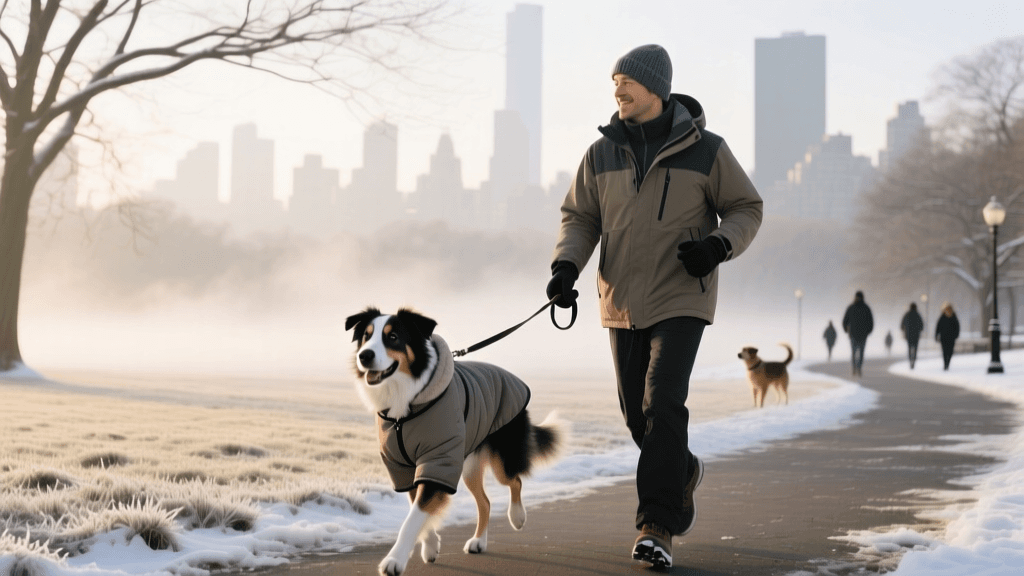
Daily walks are meant to be a cornerstone of the bond between you and your dog, offering physical exercise, mental stimulation, and a chance to explore the neighborhood together. However, for owners of reactive dogs, a simple walk can quickly devolve into a stressful ordeal of lunging, barking, and pulling. Leash reactivity is one of the most common behavioral issues reported by dog owners, but it is widely misunderstood. According to the American Kennel Club, reactivity is an overreaction to a specific trigger—such as another dog, a stranger, or a skateboard—while the dog is confined to a leash. It is crucial to understand that reactivity is not inherently synonymous with aggression. It is an emotional response driven by either fear or frustration, amplified by the feeling of being trapped by the leash.
Diagnosing the Root Cause: Fear vs. Barrier Frustration
Before implementing a solution, you must accurately diagnose the root cause of your dog's reactivity. Misdiagnosing the emotional driver can lead to training methods that inadvertently worsen the behavior. There are two primary drivers of leash reactivity:
1. Fear-Based Reactivity
Fear-based reactivity is essentially a 'fight or flight' response where the leash removes the 'flight' option. The dog lunges and barks to make the scary trigger go away. Signs of fear-based reactivity include a tucked tail, pinned-back ears, whale eye (showing the whites of the eyes), and a stiff, rigid posture. The dog's goal is to increase the distance between themselves and the trigger.
2. Barrier Frustration (Leash Frustration)
Barrier frustration occurs when a dog is highly social and desperately wants to greet the trigger, but the leash physically restrains them. This frustration boils over into barking and lunging. Signs include a loose, wagging tail, relaxed ears, and a play-bow posture, followed by frantic pulling. The ASPCA notes that distinguishing between frustration and true aggression is vital, as frustration-based dogs often become perfectly friendly once the leash is removed, whereas fear-based dogs will continue to exhibit avoidance or defensive behaviors off-leash.
Essential Gear for Reactive Dog Walking
You cannot train a dog effectively if your equipment is causing pain or restricting their breathing. Aversive tools like prong collars, choke chains, and shock collars suppress behavior through pain, which can increase underlying fear and anxiety. The American Veterinary Society of Animal Behavior (AVSAB) strongly advises against the use of punishment-based tools, citing their potential to cause adverse side effects including heightened aggression and damaged human-animal bonds. Instead, invest in the following positive-reinforcement gear:
- Front-Clip Harness: The Ruffwear Front Range Harness (approx. $40) features a front chest leash attachment. When the dog pulls, the front clip gently redirects their momentum back toward you, preventing them from leveraging their chest strength to drag you toward a trigger.
- Biothane Long Line: A 15-to-30-foot Biothane long line (approx. $25-$35) gives your dog the freedom to sniff and decompress while maintaining your control. Biothane is waterproof, easy to clean, and doesn't burn your hands if the dog suddenly bolts.
- Quick-Release Treat Pouch: The Ruffwear Treat Trader (approx. $30) clips securely to your waist and features a magnetic closure, allowing you to access high-value rewards in under one second.
The Step-by-Step Solution: The Engage-Disengage Game
Once you have the right gear and have diagnosed the emotional root, you can begin counter-conditioning using the Engage-Disengage game (also known as 'Look at That'). This protocol changes the dog's emotional response to a trigger from 'panic/frustration' to 'anticipation of a reward'.
Step 1: Find the Threshold Distance. Your threshold is the distance at which your dog notices the trigger but remains under their stress threshold—meaning they can still hear you, take treats gently, and shake off tension. For some dogs, this is 50 feet; for others, it is 200 feet.
Step 2: Engage (Mark the Behavior). The moment your dog looks at the trigger, use a verbal marker like 'Yes!' or click a clicker. You are marking the exact millisecond they notice the trigger.
Step 3: Disengage (Deliver the Reward). Immediately after the marker, present a high-value treat. The dog should turn away from the trigger to eat the treat from your hand. The timing is critical: the marker must happen within 1.5 seconds of the dog looking at the trigger.
Step 4: Repeat and Build Positive Associations. Over multiple sessions, the dog's brain rewires. The sequence changes from 'See Dog = Panic' to 'See Dog = Chicken is Coming.' Eventually, your dog will see the trigger and voluntarily turn to look at you for their reward without you needing to use the marker.
The High-Value Reward Hierarchy
Dry kibble will not override a dog's adrenaline response. You must use high-value, strong-smelling proteins to engage the brain's dopamine system. Budget approximately $15-$25 a week for training treats:
- Tier 1 (Highest Value): Freeze-dried beef liver or raw green tripe. (Cost: ~$15 for 8oz). Use exclusively for threshold training.
- Tier 2 (High Value): Boiled, shredded chicken breast or low-sodium deli turkey. (Cost: ~$4 per batch).
- Tier 3 (Medium Value): String cheese or diced hot dogs. (Cost: ~$3 per pack). Good for low-distraction environments.
Trigger Threshold Distance Guide
Use this diagnostic table to evaluate your dog's state of mind during a walk and determine the correct training solution in real-time.
| Distance to Trigger | Dog's Body Language | Recommended Action |
|---|---|---|
| Under Threshold (e.g., 60+ ft) | Relaxed posture, loose wag, taking treats gently, ears forward but soft. | Play Engage-Disengage. Mark and reward heavily. Allow sniffing. |
| At Threshold (e.g., 30 ft) | Stiffening, fixed stare, closed mouth, slow or high tail wag, ignoring treats. | Mark immediately, lure the dog away with a treat, and increase distance. |
| Over Threshold (e.g., 15 ft) | Lunging, barking, piloerection (hackles up), refusing food, whale eye. | Execute Emergency U-Turn. Block visual line of sight. Do not attempt to train. |
Management Solutions: The Emergency U-Turn Protocol
Even with meticulous planning, you will occasionally be ambushed by an off-leash dog or a sudden trigger. When your dog goes over threshold, their learning brain shuts down, and their survival brain takes over. Attempting to feed treats or yell commands will fail. Instead, you must manage the environment using the Emergency U-Turn.
Practice this in your living room first. Say a cheerful cue like 'Let's Go!', pivot 180 degrees on your heel, and run three steps in the opposite direction, tossing a handful of treats on the ground for your dog to chase and eat. On a real walk, when a trigger appears too close, execute the U-Turn immediately to break the dog's visual fixation and create rapid distance.
Reactivity is a symptom of an underlying emotional response, not a character flaw. By managing the environment and changing the emotion through counter-conditioning, you fundamentally change the behavior.
Setting Up Your Dog for Success
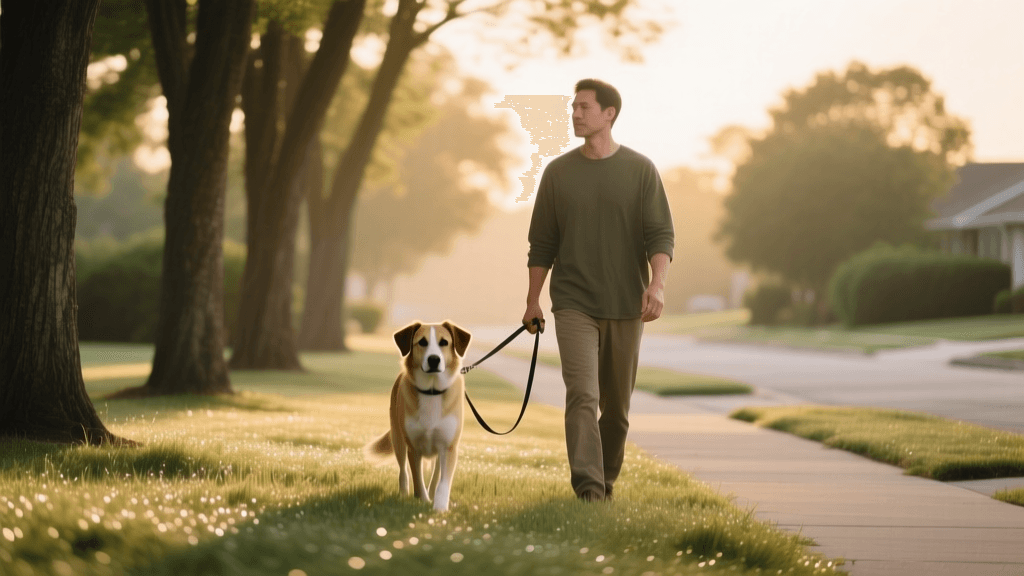
Management is just as important as active training. If your dog rehearses reactive behavior daily, the neural pathways associated with that behavior become stronger. To solve the problem, you must minimize uncontrolled exposures. Walk during off-peak hours (early morning or late evening), utilize visual barriers like parked cars or hedges to block line-of-sight, and incorporate 'decompression walks' in open, unpopulated fields using your long line. If your dog's reactivity includes biting, severe panic, or if you feel unsafe handling them, seek out a certified behavior consultant (such as a CDBC or IAABC-certified professional) who specializes in force-free behavior modification.
marcus-aldridge
All our authors care for dogs every day — read more of their work on the authors page.