The First 30 Days: A First-Time Dog Owner Survival Guide
Discover essential daily routines, puppy-proofing tips, and realistic cost breakdowns for the first 30 days of bringing your new dog home.
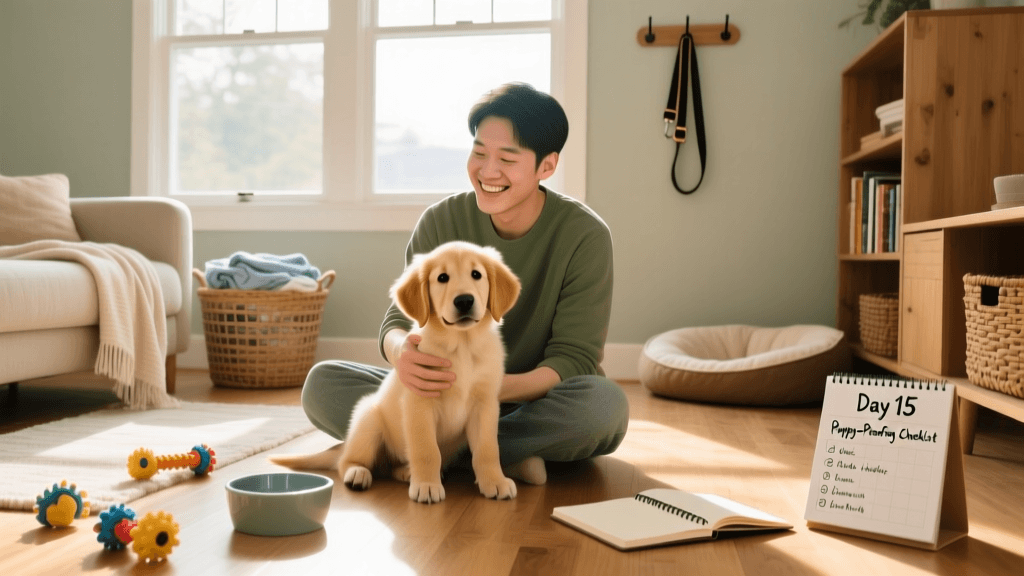
Welcome to the Whirlwind: Understanding the 3-3-3 Rule
Bringing a new dog into your home is one of the most rewarding experiences in life, but the first month can feel like a chaotic blur of sleepless nights, chewed baseboards, and endless potty breaks. For first-time owners, the key to surviving—and thriving—during this critical period is setting realistic expectations and establishing immediate structure. Animal behaviorists frequently reference the '3-3-3 Rule' to help owners understand the decompression process. During the first three days, your dog may feel overwhelmed, scared, and unsure of their surroundings. They might hide, refuse to eat, or test boundaries. By three weeks, they begin to settle into your routine, and their true personality starts to emerge. Finally, at three months, they typically feel completely secure and bonded to their new family. Understanding this timeline prevents first-time owners from panicking when their new puppy or rescue dog doesn't act perfectly on day one.
Tactical Puppy-Proofing: Beyond the Basics
Puppy-proofing is not just about putting shoes in the closet; it requires a tactical, ground-level assessment of your living space. Get down on your hands and knees to view your home from your dog's perspective. Start by securing electrical cords using products like the JOTO Cable Management Sleeves (approximately $15 for a 10-foot roll), which prevent fatal electrocution and save your expensive electronics. Install hardware-mounted baby gates rather than pressure-mounted ones at the top of any stairs, as energetic dogs can easily knock pressure gates loose. The Qdos Universal Pressure Mount Gate (around $70) is a reliable option for flat doorways to restrict access to high-risk areas like the kitchen or laundry room.
Next, audit your houseplants and garden. Many common decorative plants are highly toxic to canines. Lilies, sago palms, and oleander can cause severe liver failure or cardiac arrest even in small quantities. Always cross-reference your greenery with the ASPCA's comprehensive list of toxic and non-toxic plants before bringing a dog home. For furniture and baseboards, apply a deterrent like Grannick's Bitter Apple Spray ($12 per 8oz bottle) to edges to discourage destructive chewing. Reapply every 24 hours during the first two weeks until the habit is broken.
The First-Time Owner’s Daily Blueprint
Dogs, especially puppies and newly adopted rescues, crave predictability. A structured daily routine reduces anxiety and accelerates house training. Puppies under six months typically need to eliminate within 15 to 20 minutes after eating, drinking, waking up, or engaging in vigorous play. Here is a highly effective, actionable daily schedule for a young dog:
- 6:30 AM - Wake & Potty: Carry or leash your dog directly outside immediately upon waking. Use a consistent verbal cue like 'Go potty' and reward with a high-value treat (e.g., Zuke's Mini Naturals) the second they finish.
- 7:00 AM - Breakfast: Serve a measured portion of high-quality kibble. Avoid free-feeding, as scheduled meals create predictable potty schedules.
- 7:30 AM - Post-Meal Potty & Play: Take them out again, followed by 20 minutes of supervised play or basic training (sit, touch, name recognition).
- 8:00 AM - Morning Nap: Puppies need 18 to 20 hours of sleep a day. Enforce a nap in their crate or a quiet pen to prevent overtiredness, which leads to biting and hyperactivity.
- 12:00 PM - Lunch & Potty: Repeat the morning feeding and elimination cycle.
- 1:00 PM to 4:00 PM - Afternoon Rest: Long crate nap while you work or run errands.
- 4:30 PM - Active Enrichment: A 20-minute sniffari walk or interactive puzzle toy session (like the Outward Hound Dog Brick) to burn mental energy.
- 6:00 PM - Dinner & Potty: Final meal of the day, followed by an outdoor break.
- 7:30 PM - Wind Down: Low-energy chewing time with a frozen, water-soaked Kong Classic Puppy Toy to soothe teething gums.
- 9:30 PM - Final Potty & Bedtime: Water bowls should be removed by 8:00 PM to prevent overnight accidents. Crate them for the night in your bedroom so they feel secure.
Crate Training and Potty Logistics
Crate training is a non-negotiable tool for first-time owners. It taps into a dog's natural denning instinct and is the fastest route to reliable house training. When selecting a crate, size matters immensely. A MidWest Homes for Pets iCrate (approximately $60 for a 36-inch double-door model) is an industry standard. The crate must be large enough for your dog to stand up, turn around, and lie down comfortably, but no larger. If you have a growing puppy, use the included wire divider panel to block off excess space. If a puppy has too much room, they will designate one corner as a bedroom and the opposite corner as a bathroom, entirely defeating the purpose of the crate.
According to the Humane Society's crate training guidelines, the crate should never be used as a punishment. Feed your dog their meals inside the crate with the door open, and toss high-value treats inside to build a positive emotional association. For overnight potty breaks, set a quiet alarm for 3:00 AM for puppies under 12 weeks old. Keep the lighting dim, do not speak or play, and carry them outside. Once they eliminate, immediately return them to the crate to reinforce that nighttime is for sleeping.
The Financial Reality: First 30 Days Budget
First-time owners are often caught off guard by the initial financial outlay required to properly equip and care for a new dog. Below is a realistic breakdown of the costs you should expect during the first month of ownership. Note that these are estimates and can vary based on your geographic location, the size of your dog, and whether you adopted from a shelter or purchased from a breeder.
| Category | Item or Service | Estimated Cost (USD) |
|---|---|---|
| Healthcare | Initial Vet Exam, Fecal Test & First Vaccines | $150 - $300 |
| Healthcare | Monthly Preventatives (Flea, Tick, Heartworm) | $40 - $80 |
| Nutrition | Premium Puppy/Adult Food (First 2 Bags) | $60 - $120 |
| Gear | Crate, Playpen, Baby Gates, and Leash/Harness | $150 - $250 |
| Enrichment | Chew Toys, Puzzles, Treats, and Enzymatic Cleaner | $75 - $150 |
| Training | Group Puppy Kindergarten or Private Consultation | $120 - $250 |
| Total | Estimated First Month Outlay | $595 - $1,150 |
Budgeting for these expenses upfront ensures you are not forced to compromise on essential veterinary care or proper training tools during the critical first weeks.
Safe Socialization Protocols
Socialization is the process of exposing your dog to the sights, sounds, and smells of the world in a positive, controlled manner. The prime socialization window for puppies closes between 14 and 16 weeks of age. However, first-time owners must balance socialization with disease prevention. Until your puppy has completed their full series of DHPP and Rabies vaccinations (usually around 16 weeks), they are highly susceptible to deadly viruses like Parvovirus.
Therefore, avoid high-traffic dog areas like public dog parks, pet store floors, or rest stops. Instead, practice 'safe socialization.' Carry your puppy in a K9 Sport Sack backpack or use a pet stroller to visit outdoor cafes, hardware stores that allow dogs, and busy parks. Let them watch bicycles, hear traffic, and observe strangers from a safe distance. The American Kennel Club's puppy socialization timeline emphasizes that socialization is not just about meeting other dogs; it is about teaching your dog how to remain calm and neutral in a variety of human environments. Invite fully vaccinated, healthy adult dogs owned by friends to your home for controlled, supervised playdates to fulfill their canine social needs safely.
Embracing the Journey
The first 30 days of dog ownership are a profound period of adjustment for both you and your new companion. There will be accidents on the rug, moments of frustration, and nights where you question your decision. However, by rigorously puppy-proofing your home, adhering to a strict daily routine, managing your budget, and prioritizing safe socialization, you are laying an unbreakable foundation of trust. Consistency is your greatest tool. Stick to the blueprint, celebrate the small victories, and remember that the patience you invest in these first four weeks will yield a well-mannered, deeply bonded companion for the next decade and beyond.
beth-carrasco
All our authors care for dogs every day — read more of their work on the authors page.