First-Time Owner Guide: Building a Perfect Puppy Routine
Discover how to build a structured daily routine for your new puppy. Get expert schedules, feeding tips, and potty training advice for first-time owners.
Welcome to Dog Ownership: The Power of a Routine
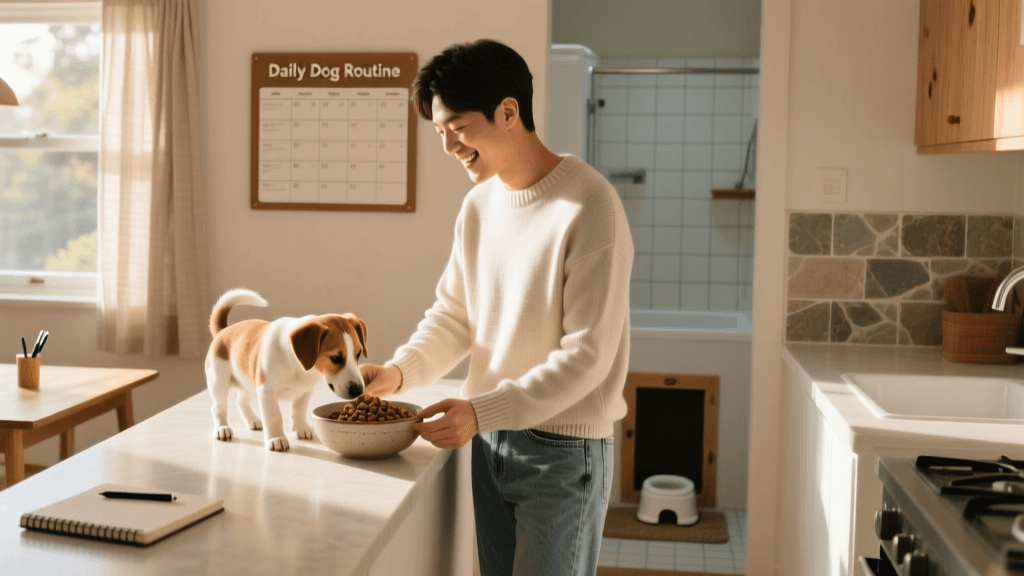
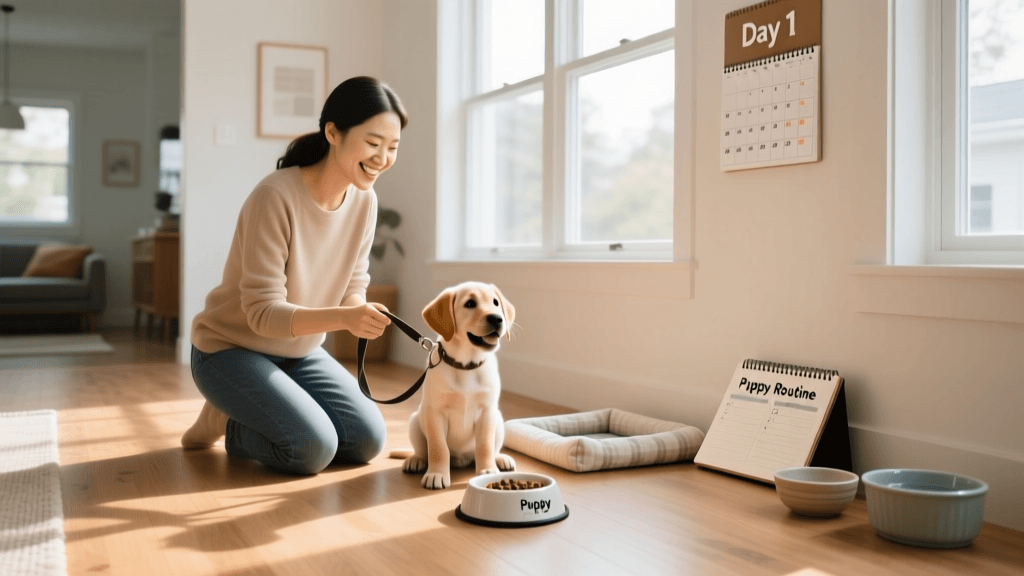
Bringing a new puppy home is undeniably one of the most exciting milestones in life, but it can also be incredibly overwhelming for a first-time dog owner. Between the midnight whining, the unexpected potty accidents, and the boundless bursts of energy, it is easy to feel like you are losing control of your household. The secret to surviving and thriving during those first few months is not just patience; it is establishing a rock-solid daily routine. Dogs are creatures of habit, and a predictable schedule provides them with a profound sense of security. When your puppy knows exactly what to expect and when to expect it, anxiety decreases, learning accelerates, and your bond strengthens immensely.
Why Predictability is Your Puppy's Best Friend
According to the ASPCA, puppies thrive in environments where their basic needs are met on a consistent schedule. A routine accelerates housebreaking because a puppy's digestive system becomes regulated, meaning you can accurately predict when they need to eliminate. Furthermore, a structured day ensures that your puppy gets the appropriate balance of physical exercise, mental stimulation, and crucial rest. First-time owners often make the mistake of overstimulating their puppies, leading to the dreaded 'puppy zoomies' and destructive biting. By enforcing scheduled nap times in a quiet space, you prevent overtiredness and promote healthy neurological development.
The Ultimate 24-Hour Puppy Schedule
While every dog is unique, the following framework is an excellent starting point for puppies aged 8 to 16 weeks. You can adjust the exact times to fit your work schedule, but try to keep the intervals consistent.
| Time | Activity | First-Time Owner Tips |
|---|---|---|
| 6:30 AM | Wake Up & Potty | Carry them outside immediately to avoid accidents. |
| 7:00 AM | Breakfast | Measure food precisely; remove the bowl after 15 mins. |
| 7:30 AM | Potty & Play | Short training session (5 mins) followed by free play. |
| 8:30 AM | Morning Nap | Crate time in a quiet, dimly lit room. |
| 11:00 AM | Potty & Enrichment | Use a snuffle mat or puzzle toy for mental stimulation. |
| 12:00 PM | Lunch | Second meal of the day (for puppies under 6 months). |
| 12:30 PM | Potty & Short Walk | Keep walks brief to protect developing joints. |
| 1:00 PM | Afternoon Nap | Longest nap of the day; ideal time for owner errands. |
| 4:00 PM | Potty & Training | Practice basic cues like 'sit' and 'recall'. |
| 5:00 PM | Dinner | Final meal of the day to allow digestion before bed. |
| 5:30 PM | Potty & Socialization | Expose them to new sounds, surfaces, and people. |
| 7:00 PM | Wind Down | Low-energy chewing (e.g., frozen KONG toy). |
| 9:30 PM | Final Potty & Bed | Withhold water 2 hours before bed to aid sleep. |
Nutrition and Hydration: Feeding by the Clock
Free-feeding (leaving a bowl of kibble out all day) is a common mistake first-time owners make. It makes potty training nearly impossible because you cannot predict when the puppy will need to go to the bathroom. Instead, feed your puppy three measured meals a day until they are six months old, then transition to two meals a day.
For a medium-sized breed puppy (expected adult weight of 30-50 lbs), you will typically feed between 1.5 to 2.5 cups of high-quality puppy food daily, split across the meals. Premium brands like Purina Pro Plan Puppy or Royal Canin Size Health Nutrition cost approximately $50 to $75 per month. Always use a standard measuring cup or a digital kitchen scale to ensure accuracy, as overfeeding can lead to rapid growth and orthopedic issues later in life. Regarding hydration, the general rule of thumb is that puppies need about one ounce of water per pound of body weight each day. However, to prevent nighttime accidents, it is highly recommended to pick up the water bowl two hours before your puppy's bedtime.
Potty Training and Crate Sizing
Crate training is not just about keeping your puppy safe when you cannot supervise them; it is the most effective tool for housebreaking. Dogs naturally avoid soiling their sleeping area. The Humane Society of the United States emphasizes that the crate must be sized correctly to work as a potty training aid. If the crate is too large, the puppy will designate one corner as a bathroom and the other as a bedroom.
For a first-time owner, purchasing an adjustable crate is the most cost-effective choice. The MidWest Homes for Pets iCrate (typically $45-$60) comes with a divider panel. The correct sizing formula is: measure your puppy from the tip of their nose to the base of their tail, and add 2 to 4 inches. Use the divider to limit the space to this exact measurement, moving it back as your dog grows. When potty training, remember the 'month plus one' rule: a puppy can hold their bladder for roughly one hour per month of age, plus one. Therefore, a two-month-old puppy can hold it for about three hours maximum during the day, necessitating frequent potty breaks.
The 5-Minute Exercise Rule and Enrichment
First-time owners often assume that a tired puppy is a good puppy, leading them to over-exercise their young dogs. However, a puppy's growth plates do not close until they are 12 to 18 months old. Forced exercise, like long jogs or repetitive fetch on hard surfaces, can cause permanent joint damage. The American Kennel Club (AKC) and veterinarians widely recommend the '5-minute rule': provide 5 minutes of structured exercise per month of age, up to twice a day. For a 12-week-old (3-month) puppy, this means just 15 minutes of walking or active play per session.
Because physical exercise is limited, mental enrichment becomes your best friend. Mental fatigue tires a puppy out just as much as physical exertion. Invest in a classic rubber KONG toy ($15) and stuff it with plain canned pumpkin and kibble, then freeze it. This provides a soothing, teething-friendly activity that can keep them occupied for 30 minutes. Additionally, snuffle mats ($20-$30) encourage natural foraging behaviors and can turn a 5-minute meal into a 20-minute brain game.
First-Month Budget: What to Expect
Establishing this routine requires a few upfront investments. Here is a realistic breakdown of what a first-time owner should budget for the first month to set up a successful environment:
- Adjustable Wire Crate & Bed: $60 - $90
- High-Quality Puppy Food (15lb bag): $45 - $65
- Stainless Steel Food/Water Bowls: $15 - $25
- Enzymatic Stain & Odor Remover (e.g., Nature's Miracle): $12 - $18
- Enrichment Toys (KONG, Snuffle Mat, Chew Toys): $40 - $60
- Long Training Lead (15-30 ft) for Potty/Recall: $15 - $25
By investing in these specific tools and committing to the daily schedule outlined above, you are laying the groundwork for a well-adjusted, obedient, and happy adult dog. Remember that consistency is your greatest asset. There will be days when the routine feels exhausting, but the payoff of a deeply bonded, well-mannered companion is worth every early morning alarm and midnight potty trip.
jonas-cole
All our authors care for dogs every day — read more of their work on the authors page.