First-Time Owner Guide: Building a Daily Dog Routine
Discover how to build a consistent daily routine for your new dog. Get expert schedules, potty training tips, and feeding guides for first-time owners.
Why a Daily Routine is Crucial for Your New Dog
Bringing a new dog into your home is one of the most rewarding experiences you can have, but it can also be incredibly overwhelming for a first-time owner. Between the potty accidents, the midnight whining, and the chewed-up shoes, it is easy to feel like you are losing control of your household. The secret to surviving and thriving during this transitional period is establishing a strict, predictable daily routine. Dogs are den animals that thrive on predictability. When your dog knows exactly what to expect and when to expect it, their anxiety levels drop significantly, and their ability to learn and retain training commands increases.
According to the ASPCA, dogs are creatures of habit, and a lack of structure can exacerbate behavioral issues, including separation anxiety and destructive chewing. By implementing a consistent schedule, you are not just making your life easier; you are actively protecting your dog's mental health. A routine helps regulate their biological clock, making potty training vastly more manageable and ensuring they get the right balance of physical exercise and mental rest.
The Ultimate First-Time Owner Daily Schedule
While every dog is unique, a foundational schedule is essential. Below is a highly effective daily template designed specifically for first-time owners managing a new puppy or an adult rescue dog transitioning into a home environment.
| Time of Day | Activity | First-Time Owner Tips |
|---|---|---|
| 6:30 AM - 7:00 AM | Wake Up and Potty | Take them outside immediately upon waking. Keep the interaction calm and business-like. |
| 7:00 AM - 7:30 AM | Breakfast | Use a measured portion. Pick the bowl up after 15 minutes to encourage a schedule. |
| 7:30 AM - 8:00 AM | Morning Walk and Play | Engage in physical exercise and basic obedience training while they are alert. |
| 8:00 AM - 12:00 PM | Nap Time / Crate Rest | Dogs need up to 18 hours of sleep. Enforce quiet time in a crate or pen. |
| 12:00 PM - 12:30 PM | Mid-Day Potty Break | A quick trip outside. Essential for puppies under six months of age. |
| 12:30 PM - 1:00 PM | Mental Enrichment | Use puzzle toys or a snuffle mat instead of a bowl for their lunch portion. |
| 1:00 PM - 4:30 PM | Afternoon Nap | Allow them to sleep off the morning stimulation. |
| 4:30 PM - 5:30 PM | Evening Exercise | A longer sniffari walk or fetch session to burn off evening energy. |
| 5:30 PM - 6:00 PM | Dinner | Second or third meal of the day, depending on the dog's age and dietary needs. |
| 6:00 PM - 8:30 PM | Family Time and Training | Practice settle commands, grooming, and gentle socialization. |
| 8:30 PM - 9:00 PM | Last Potty and Wind Down | Dim the lights, limit water intake, and take a final boring potty trip. |
| 9:00 PM | Bedtime | Crate or designated sleeping area for the night. |
Morning: Potty, Breakfast, and Enrichment
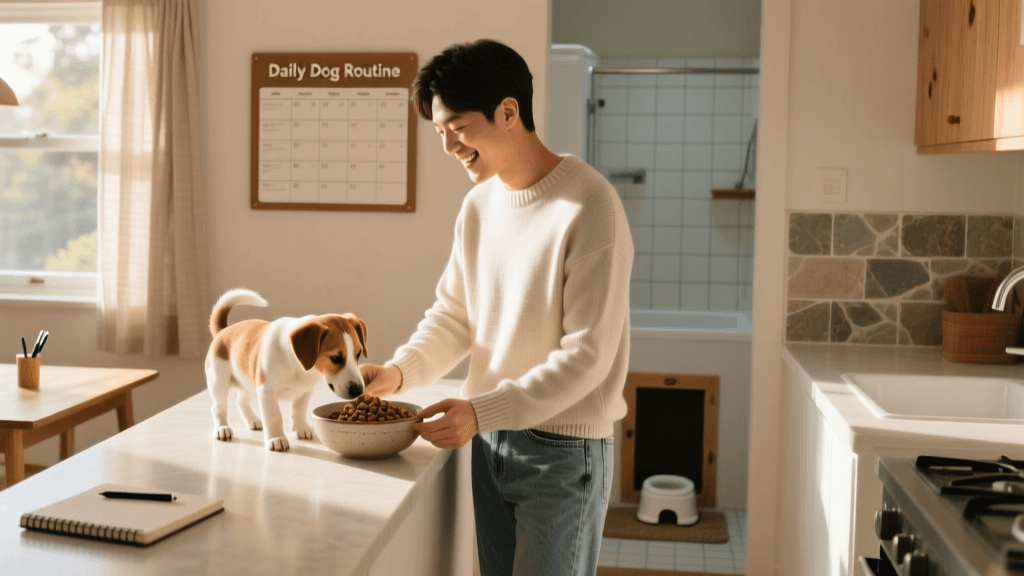
The first thirty minutes of the day set the tone for the next twenty-four hours. As soon as your dog wakes up, carry them or lead them directly outside to their designated potty spot. Do not stop to play or cuddle; this must be strictly business. Once they eliminate, offer enthusiastic praise and a high-value training treat. After returning inside, serve breakfast. For puppies under six months, breakfast should be one of three daily meals. For adult dogs, it is the first of two. To prevent free-feeding and ensure you can accurately predict when they will need to eliminate next, remove the food bowl after fifteen minutes, even if they have not finished.
Mid-Day: Breaks and Mental Stimulation
First-time owners often underestimate how much sleep a dog actually needs. Puppies can easily sleep up to twenty hours a day, while adult dogs need between twelve and fourteen hours. If your dog is crated or penned while you work, ensure they have a comfortable bed and a safe chew toy. The mid-day potty break is non-negotiable for young puppies. If you work outside the home, you must budget for a professional dog walker or a trusted neighbor to provide this break. Following the potty trip, engage their brain rather than their body. Mental stimulation tires a dog out much faster than physical exercise.
Evening: Exercise, Dinner, and Wind Down
The evening is when many dogs experience the notorious zoomies. To combat this, schedule a vigorous exercise session in the late afternoon. This could be a game of fetch, a visit to a secure dog park, or a long decompression walk on a long-line leash in a quiet area. After dinner, transition into calming activities. Practice handling exercises, gently brush their coat, or work on mat training to teach them how to settle while you watch television or prepare for the next day.
Mastering the Potty Training Routine
Potty training is arguably the most stressful aspect of bringing home a new dog. The key to success is managing their environment and anticipating their biological needs. The Humane Society of the United States recommends taking your puppy outside frequently, specifically after they wake up, after they eat or drink, and after a vigorous play session. A general rule of thumb for puppy bladder control is their age in months plus one. For example, a three-month-old puppy can typically hold their bladder for about four hours, though you should never push this limit during the active training phase.
Accidents will happen. When they do, it is vital to clean the area immediately with a high-quality enzymatic cleaner, such as Nature's Miracle or Rocco & Roxie Professional Strength Stain & Odor Eliminator. Standard household cleaners might mask the scent to human noses, but dogs can still smell the ammonia and uric acid, which will draw them back to the same spot to eliminate again. Never punish your dog for an accident you did not catch in the act; this only teaches them to hide from you when they need to go.
Feeding Schedules: Timing and Portions
Consistency in feeding times directly correlates to consistency in potty habits. Food moves through a dog's digestive tract at a relatively predictable rate. If you feed your dog at the exact same times every day, you will be able to predict when they need to defecate with remarkable accuracy.
- Puppies (Under 6 months): Require three meals a day to maintain stable blood sugar levels and support rapid growth. Space meals roughly five to six hours apart during your waking hours.
- Adults (Over 1 year): Transition to two meals a day, typically one in the morning and one in the early evening. Avoid feeding right before bedtime to prevent overnight potty emergencies.
First-time owners often rely on the measuring scoop provided in the kibble bag or a standard baking cup. This can lead to severe overfeeding, as kibble density varies wildly between brands. Invest in a cheap digital kitchen scale and weigh your dog's food in grams according to the feeding guidelines on the packaging, adjusting based on your dog's body condition score and activity level.
Mental Enrichment and Physical Exercise
A tired dog is a good dog, but physical exhaustion is only half the equation. The American Kennel Club emphasizes that mental stimulation is just as critical as physical exercise for a well-rounded, happy dog. Ten minutes of intense sniffing and problem-solving can burn as much energy as a thirty-minute walk.
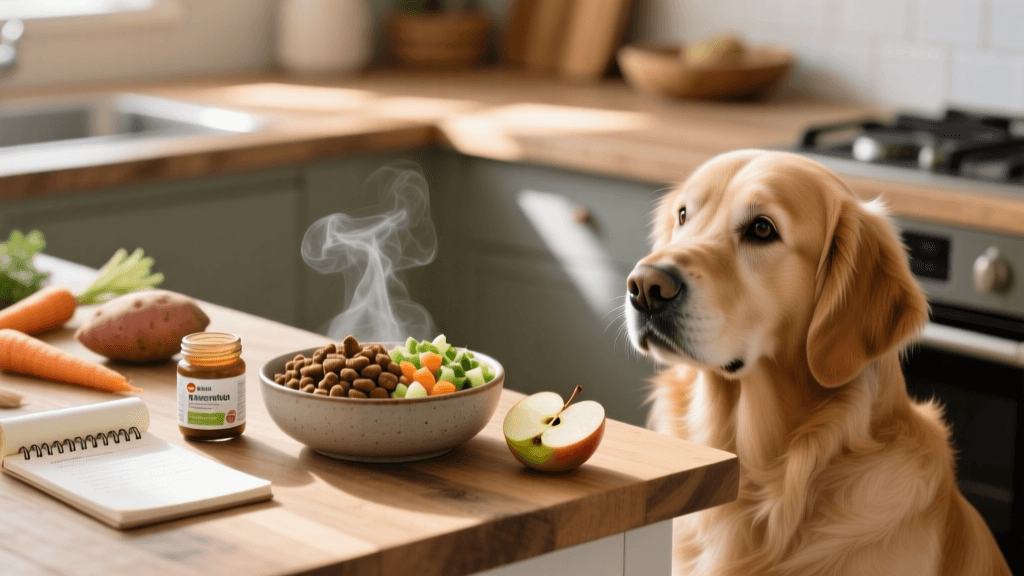
Instead of feeding your dog from a bowl, utilize their daily food ration for enrichment activities. Scatter their kibble in the grass for a natural foraging session, or freeze their meals inside a rubber KONG Classic toy with a little bit of plain pumpkin puree or dog-safe peanut butter. Lick mats are another phenomenal tool; spreading wet food or plain yogurt on a textured silicone mat and freezing it provides a soothing, anxiety-reducing activity that is perfect for crate training or keeping them occupied while you take a work call.
Essential Products for Routine Success
Having the right tools on hand will smooth out the bumps in your daily schedule. Here is a quick checklist of must-haves for the first-time owner:
- Primary Crate: A wire or plastic crate that is large enough for them to stand, turn around, and lie down, but not so large that they can eliminate in one corner and sleep in the other. Use a divider panel for growing puppies.
- Long-Line Leash (15 to 30 feet): Essential for safe decompression walks where your dog can practice recall and engage in deep sniffing without being restricted by a standard six-foot lead.
- Snuffle Mat: A fabric mat with hidden pockets to hide dry treats or kibble, encouraging natural foraging instincts and slowing down fast eaters.
- Enzymatic Cleaner: An absolute necessity for breaking down the biological compounds in urine and feces to prevent repeat indoor accidents.
- Treat Pouch: Wear this around your waist during the first few months. You never know when an opportunity to reward a spontaneous good behavior, like a quiet settle or a voluntary sit, will present itself.
Weekend vs. Weekday Routines
One of the most common mistakes first-time owners make is drastically altering the schedule on the weekends. While it is tempting to sleep in until noon on a Saturday, doing so will confuse your dog's internal clock and almost guarantee an early morning potty accident or a bout of separation anxiety when Monday morning rolls around. Try to keep your weekend wake-up times within thirty minutes of your weekday alarm. If you want to spend more time with your dog on the weekends, use that extra time for a longer morning hike, a trip to a dog-friendly patio, or an extended training session, rather than shifting the fundamental timeline of their meals and potty breaks.
Conclusion
Building a daily routine for your new dog requires patience, discipline, and a willingness to stick to the plan even when you are tired. As a first-time owner, you are laying the groundwork for the next decade or more of your life together. By prioritizing a consistent schedule for potty breaks, meals, exercise, and rest, you are communicating clearly with your dog in a language they understand. The chaos of the first few weeks will eventually fade, replaced by the deep, comforting rhythm of a well-adjusted dog who feels safe, secure, and perfectly at home in your shared routine.
robin-maitland
All our authors care for dogs every day — read more of their work on the authors page.