How to Introduce a New Puppy to Your Older Resident Dog
Learn how to safely introduce a new puppy to your older resident dog with this step-by-step training guide, timeline, and expert multi-pet tips.
The Challenge of Multi-Pet Households
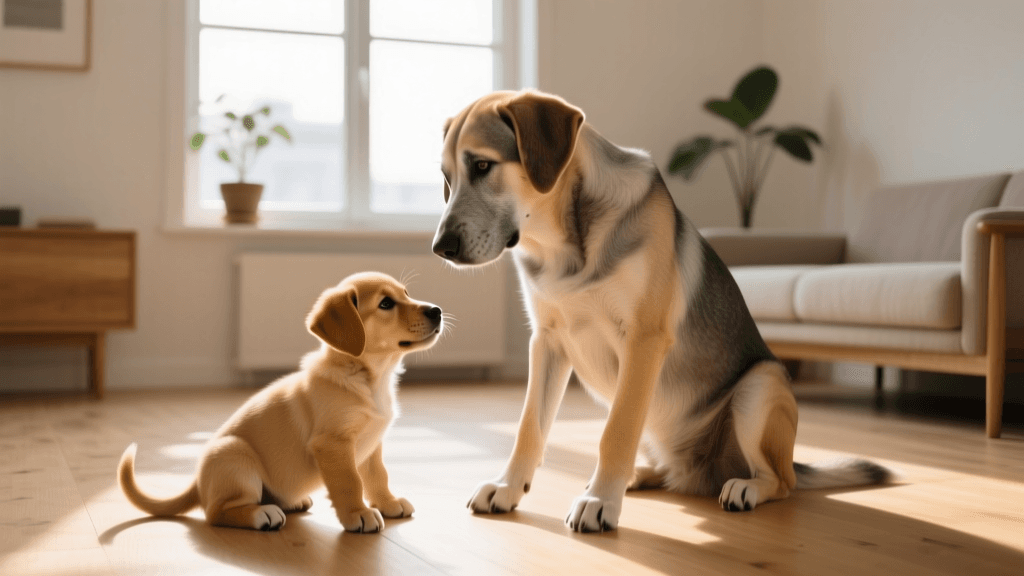
Bringing a new puppy into a home with an older resident dog is a joyous but delicate transition. While puppies are typically eager to play, senior or adult dogs often find their boundless energy overwhelming, rude, or even threatening. A poorly managed introduction can lead to long-term resource guarding, anxiety, and behavioral issues. However, with a structured, step-by-step training approach, you can foster a peaceful and loving bond between your canine companions.
This guide provides a comprehensive, actionable roadmap for integrating a new puppy into your multi-pet household, focusing on scent swapping, neutral territory meetings, and boundary management.
Essential Gear for a Smooth Introduction
Before bringing your puppy home, invest in the right management tools. Proper gear prevents unwanted interactions and keeps both dogs safe during the training process.
- Hardware-Mounted Baby Gates: Opt for a gate like the Carlson Extra Tall Walk-Thru Gate (29 inches high, approx. $60). Pressure-mounted gates can be knocked over by a determined older dog or a climbing puppy.
- Front-Clip Harnesses: Equip both dogs with a front-clip harness, such as the Ruffwear Front Range (approx. $40). This gives you superior steering control without putting pressure on their tracheas during tense moments.
- High-Value Training Treats: Stock up on soft, fast-chewing treats like Zuke's Mini Naturals or boiled chicken breast (approx. $8-$15). You need treats that can be consumed in under one second to maintain training momentum.
- Enzymatic Cleaners: Puppies will have accidents. Use Nature's Miracle Advanced Stain and Odor Eliminator (approx. $15) to completely remove urine markers that could trigger territorial stress in your older dog.
Step 1: Scent Swapping (Days 1 to 3)
Dogs experience the world primarily through their olfactory senses. According to the Humane Society of the United States, allowing dogs to investigate each other's scent before meeting face-to-face drastically reduces territorial aggression.
Action Plan:
- Before the puppy enters your home, take a clean towel and rub it gently along the puppy's neck and back.
- Place this towel near your older dog's feeding area or favorite sleeping spot, pairing the new scent with high-value treats.
- Swap blankets between the puppy's temporary confinement area and the older dog's bed.
- Allow the older dog to sniff the puppy's toys and crate without the puppy being present.
Pro Tip: Never force the older dog to interact with the scented items. Let them approach at their own pace, and reward calm sniffing with a verbal 'yes' and a treat.
Step 2: The Parallel Walk (Days 4 to 7)
The first physical meeting should never happen inside your home or yard, as these are highly territorial spaces for your resident dog. The American Kennel Club strongly recommends introducing dogs on neutral territory, such as a quiet park or an empty tennis court.
Action Plan:
- Enlist a second handler. Each person should hold one dog on a standard 6-foot leather or nylon leash. Avoid retractable leashes, which offer poor control.
- Begin walking in the same direction, keeping the dogs parallel to each other at a distance of 10 to 15 feet.
- Watch the older dog's body language. If they are walking with a loose, wagging tail and relaxed ears, gradually decrease the distance by 2 feet every few minutes.
- If the older dog stiffens, stares, or lunges, immediately increase the distance and toss high-value treats on the ground to redirect their focus.
- Keep the walk to 15-20 minutes. End on a positive note before either dog becomes fatigued or overstimulated.
Step 3: Barrier Introductions at Home (Days 8 to 10)
Once the dogs can walk side-by-side calmly outdoors, it is time to bring the introduction indoors using a physical barrier.
Action Plan:
- Install your hardware-mounted baby gate in a central doorway, such as the entrance to the living room.
- Have the older dog on a leash on one side, and the puppy on a leash on the other.
- Allow them to approach the gate. Puppies often rush the gate and bark; this can trigger a corrective snap from an older dog.
- Call the puppy away from the gate the moment they lock eyes with the older dog. Reward the puppy heavily for disengaging.
- Simultaneously, feed the older dog high-value treats (like frozen Kongs stuffed with peanut butter) while they observe the puppy from a distance. This builds a positive classical conditioning association: Puppy equals delicious food.
Step 4: Supervised Leashed Integration (Weeks 2 to 4)
When both dogs show relaxed body language through the gate, you can allow them into the same room. Keep both dogs leashed, but allow the leashes to drag on the floor so you can step on them if a scuffle breaks out.
Keep these initial indoor sessions incredibly short—no more than 3 to 5 minutes. Puppies lack social boundaries and will often bite the older dog's ears or tail. It is your job to advocate for the older dog by interrupting the puppy's harassment before the older dog feels forced to correct them.
Introduction Timeline and Milestones
Use this structured timeline to gauge your progress. Remember, every dog is different; if your older dog shows signs of stress, revert to the previous step for a few more days.
| Phase | Timeframe | Primary Goal | Key Action & Metric |
|---|---|---|---|
| Phase 1 | Days 1-3 | Olfactory Familiarization | Scent swapping; 3-5 towel exchanges daily. |
| Phase 2 | Days 4-7 | Neutral Territory Tolerance | Parallel walking; maintaining 10ft distance with loose leashes. |
| Phase 3 | Days 8-10 | Indoor Barrier Desensitization | Gate meetings; rewarding disengagement and calm observation. |
| Phase 4 | Weeks 2-4 | Shared Space Cohabitation | Leashed indoor sessions; 3-5 minute intervals, 4x daily. |
| Phase 5 | Month 2+ | Unsupervised Trust | Off-leash play; only when 100% reliable recall and boundaries are established. |
Reading Canine Body Language
Understanding subtle stress signals is critical for preventing dog fights. Fear Free Happy Homes emphasizes that punishment-based corrections for growling only suppress warning signs, leading to unpredictable bites. Instead, learn to read the signs of discomfort and intervene early.
Signs of Stress in the Older Dog:
- Whale Eye: Showing the whites of their eyes while looking away from the puppy.
- Lip Licking & Yawning: Repeatedly licking lips or yawning when not tired.
- Stiff Posture: A rigid body, closed mouth, and high, stiffly wagging tail.
- Avoidance: Actively hiding behind furniture or leaving the room.
Signs of Healthy Play:
- Play Bows: Front elbows on the ground, rear end in the air.
- Role Reversal: Taking turns chasing and being chased, or taking turns being on top during wrestling.
- Sneezing: Short, rapid sneezes are a canine signal that the interaction is just play.
Managing Resources and Safe Spaces
Resource guarding is a leading cause of conflict in multi-pet households. Your older dog must know that their food, toys, and resting places are secure from the puppy.
Setting Up Safe Zones
Create a 'puppy-free' sanctuary for your older dog. Use a 36-inch or 42-inch wire crate (depending on your dog's size) placed in a quiet bedroom or elevated on a sturdy table. Alternatively, use a baby gate to block off a specific room where the older dog can retreat. The puppy must never be allowed to follow the older dog into this safe zone.
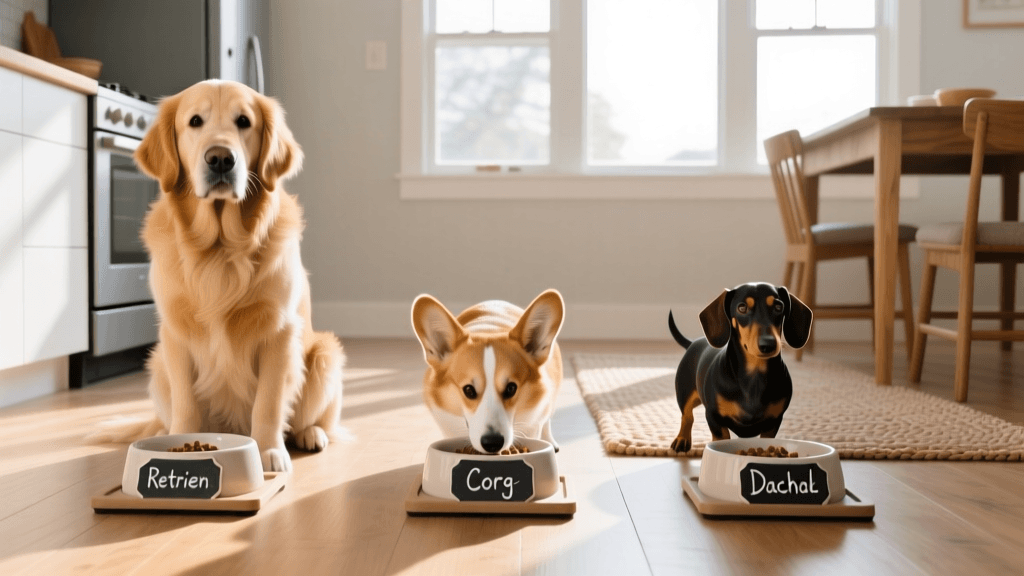
Feeding Protocols
Feed the dogs in completely separate areas. If you have a small home, feed the older dog on a kitchen counter or inside their closed crate, and feed the puppy in a separate room. Pick up all food bowls immediately after meals. Never leave high-value chews (like bully sticks or raw bones) out unattended, as these are prime triggers for guarding behavior.
When to Call a Professional Behaviorist
While mild grumbling or a corrective bark from an older dog is normal canine communication, you should immediately separate the dogs and consult a Certified Professional Dog Trainer (CPDT-KA) or a Veterinary Behaviorist if you observe:
- The older dog snapping with intent to make contact or drawing blood.
- The puppy relentlessly bullying the older dog, causing the older dog to cower or hide constantly.
- Severe resource guarding over spaces, doorways, or human attention.
Patience, consistency, and proactive management are the keys to a harmonious multi-dog household. By respecting your older dog's boundaries and teaching your puppy proper manners, you are laying the groundwork for a lifelong, peaceful friendship.
anouk-beaumont
All our authors care for dogs every day — read more of their work on the authors page.