First-Time Dog Owner Guide: Puppy-Proofing & Day One Essentials
Discover essential puppy-proofing tips and first-day supplies for first-time dog owners. Learn costs, measurements, and how to prepare your home safely.
The Ultimate First-Time Owner Guide to Puppy-Proofing and Day One Setup
Bringing a new dog home is one of life is most exciting milestones, but for first-time owners, the transition can quickly become overwhelming. Between the joy of puppy kisses and the reality of chewed baseboards, preparing your environment is the single most important step you can take before your new dog crosses the threshold. According to the Humane Society of the United States, setting up a safe, structured environment before arrival drastically reduces behavioral issues and anxiety in newly adopted dogs.
This comprehensive guide will walk you through exactly how to puppy-proof your home, the specific first-day essentials you need to purchase (including exact measurements and estimated costs), and a survival timeline for your first 24 hours together.
Room-by-Room Puppy-Proofing Checklist
Puppies and newly adopted adult dogs explore the world primarily through scent and taste. If it is on the floor, within reach, or smells interesting, it is fair game. Here is how to secure your home room by room.
The Living Room: Securing Hazards
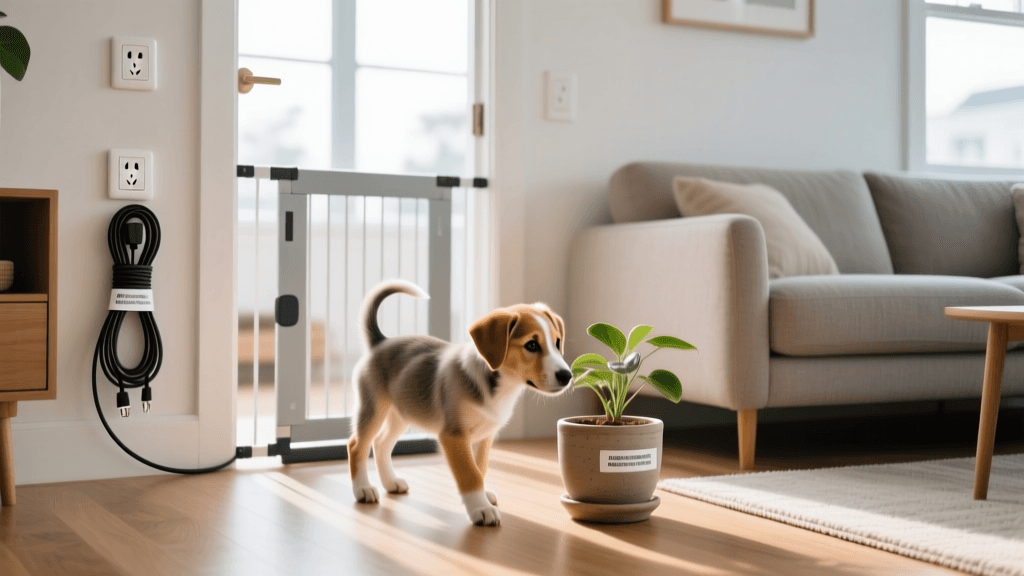
The living room is often where the dog will spend most of its time, making it a primary zone for hazards. Electrical cords are incredibly dangerous; a single chew can result in severe burns or fatal electrocution. Invest in split-loom wire conduit or cable management sleeves (such as the JOTO Cable Management Sleeves, typically costing around $12 to $15 for a 10-foot kit) to encase all visible TV and lamp wires.
Next, audit your houseplants. Many common decorative plants are highly toxic to dogs. Sago palms, lilies, aloe vera, and pothos can cause gastrointestinal distress, liver failure, or worse. Always cross-reference your indoor and outdoor flora with the ASPCA Animal Poison Control toxic plant database before bringing your dog home. Relocate toxic plants to high, unreachable shelves or rehome them entirely.
The Kitchen and Bathrooms: Trash and Toxins
Kitchens and bathrooms hold the highest concentration of lethal hazards, from cleaning chemicals to food scraps like xylitol (a common artificial sweetener found in sugar-free gum and peanut butter, which is highly toxic to dogs). Swap out your open kitchen trash can for a heavy-duty, locking-lid model. The Simplehuman Locking Trash Can (ranging from $60 to $150 depending on size) features a secure latch that prevents clever paws and snouts from foraging.
In the bathroom, ensure all toilet lids are kept closed. Toilet bowl cleaners and residual chemicals in the water can poison a dog looking for a drink. Store all medications, vitamins, and cleaning supplies in upper cabinets, as child-proof latches on lower cabinets are easily defeated by determined canine teeth.
The Backyard: Perimeter and Surface Checks
Before letting your dog off-leash in your yard, conduct a physical perimeter walk. Measure the gaps in your fencing. For small breeds or puppies, any gap larger than 2 inches is an escape route. Repair loose boards and bury chicken wire at the base of the fence if your dog is prone to digging. Additionally, check your landscaping mulch. Cocoa bean mulch smells like chocolate and is highly toxic if ingested; replace it with pet-safe cedar or pine mulch.
First-Day Essentials: What to Buy Before Arrival
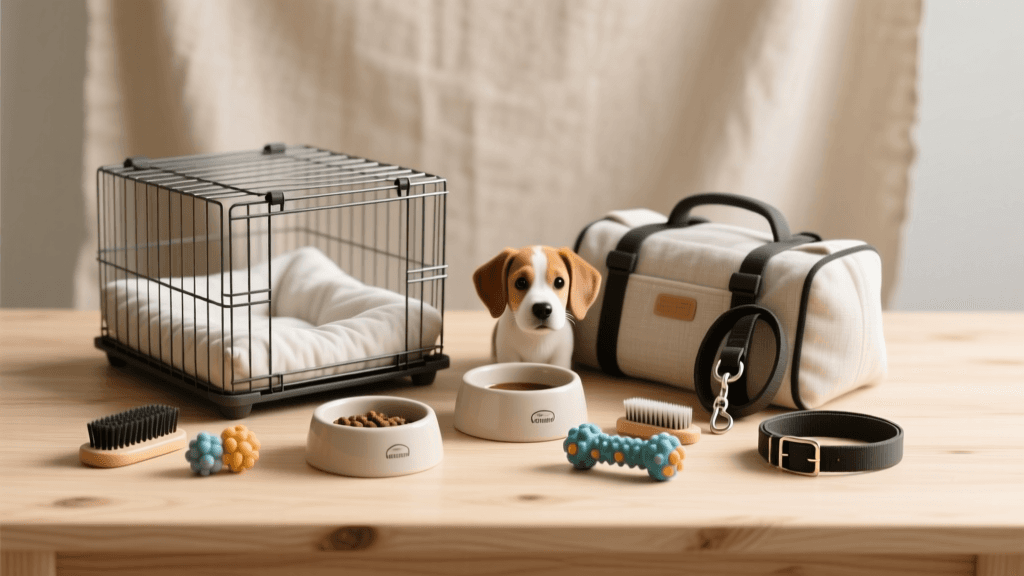
Walking into a pet store without a list is a recipe for overspending and forgetting crucial items. Here are the non-negotiable first-day essentials, complete with specifications and average costs.
1. The Crate and Bedding
A crate is not a cage; it is your dog is den and the most effective tool for housebreaking and anxiety management. For a first-time owner, a double-door wire crate with a divider panel is ideal because it grows with your puppy. The MidWest Homes for Pets iCrate is an industry standard, costing between $50 and $80.
Sizing Measurements: To find the correct size, measure your dog from the tip of their nose to the base of their tail, and add 4 inches. Then, measure from the floor to the top of their head (or ears, if erect) and add 4 inches. The dog should be able to stand up, turn around, and lie down comfortably without touching the top or sides.
2. Harness, Leash, and Collar
Skip the standard flat collar for walks, as it can cause tracheal damage if a dog pulls. Instead, invest in a front-clip, no-pull harness. The Ruffwear Front Range Harness (approximately $40) features four points of adjustment and a front chest leash ring that gently redirects pulling dogs back toward you. Pair this with a standard 6-foot nylon or leather leash. Avoid retractable leashes for the first few months, as they teach dogs that pulling extends their range and offer poor control in emergencies.
3. Enzymatic Cleaners
Accidents will happen. Standard household cleaners only mask the scent of urine to human noses, but dogs can still smell the uric acid and will return to the same spot to eliminate again. You must use an enzymatic cleaner that biologically breaks down the uric acid crystals. Nature is Miracle Advanced Stain and Odor Eliminator (around $12 to $15 per bottle) is a staple for first-time owners. Buy at least two large bottles before your dog arrives.
Pro Tip: Never use ammonia-based cleaners on pet accidents. Ammonia is a primary component of urine, and cleaning with it will actually signal to your dog that this is an approved bathroom spot.
First-Time Owner Budget: Initial Setup Costs
Budgeting accurately prevents sticker shock. Below is a structured breakdown of the estimated initial setup costs for a first-time dog owner, focusing on durable, mid-range products.
| Item Category | Recommended Product Type | Estimated Cost | First-Time Owner Notes |
|---|---|---|---|
| Crate & Divider | Wire Crate (e.g., MidWest iCrate) | $50 - $85 | Must include divider panel for growing puppies. |
| Bedding | Chew-resistant orthopedic bed | $30 - $60 | Avoid plush beds initially; wait until chewing phase passes. |
| Walking Gear | Front-clip Harness & 6ft Leash | $50 - $75 | Front-clip prevents tracheal damage from pulling. |
| Food & Water Bowls | Stainless Steel (2 to 4 cup capacity) | $15 - $25 | Avoid plastic bowls which harbor acne-causing bacteria. |
| Cleaning Supplies | Enzymatic Cleaner (2 large bottles) | $25 - $30 | Essential for breaking down uric acid in carpets. |
| Puppy Proofing | Cord covers, baby gates, trash locks | $40 - $100 | Cost varies heavily based on home layout and size. |
| Initial Vet Visit | Exam, vaccines, microchip, deworming | $150 - $300 | Schedule within 48 hours of bringing the dog home. |
| Total Estimated Setup | Comprehensive First-Day Prep | $360 - $675 | Excludes ongoing costs like food, treats, and pet insurance. |
The First 24 Hours: A Survival Timeline
The American Veterinary Medical Association emphasizes that routine and predictability are vital for a dog is psychological well-being. Here is a structured timeline for your first day to establish immediate boundaries and comfort.
Hour 1: The Arrival and Immediate Potty Break
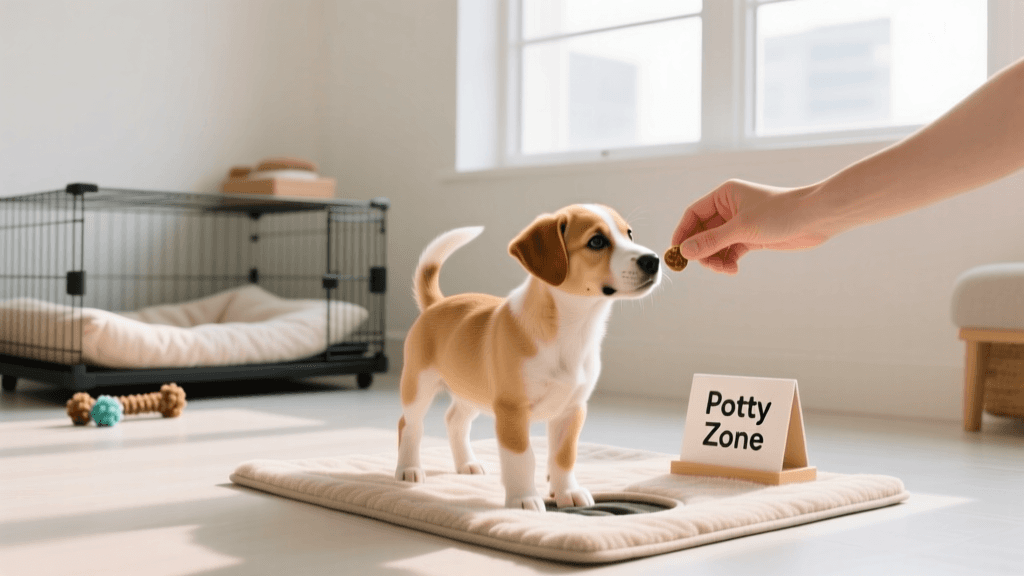
When you arrive home, do not carry the dog inside. Put them on their leash immediately and walk them to the designated outdoor potty spot. Stand in one area and use a consistent cue word like "go potty." Praise heavily and reward with a high-value treat (like freeze-dried chicken liver) the moment they finish. This establishes the yard as the bathroom before they ever see the inside of your house.
Hours 2 to 4: Decompression and Guided Exploration
Allow your dog to explore the home on a leash. This is known as an "umbilical cord" method and prevents them from sneaking off to chew on a baseboard or have an accident in a hidden corner. Keep the energy calm. Avoid inviting friends and family over on the first day; overstimulation leads to stress-biting and sleep regression. Provide a long-lasting chew, like a stuffed KONG toy frozen with plain pumpkin puree, to help them self-soothe in their crate or on their bed.
Hours 5 to 12: Establishing the Feeding and Potty Routine
Puppies under six months need to eliminate roughly every 1 to 2 hours, and always immediately after eating, drinking, or waking up from a nap. Set a timer on your phone. Feed your dog their measured meals at the exact same times (e.g., 7:00 AM, 12:00 PM, and 5:00 PM) to regulate their digestive tract, making potty breaks highly predictable. Pick up the water bowl two hours before bedtime to minimize overnight accidents.
Nighttime: Surviving the First Night
Place the crate in your bedroom, close to your bed, so the dog can hear and smell you. It is normal for a dog to whine or cry during the first night due to separation from their littermates or previous environment. If they cry, wait a moment to see if they settle. If the crying escalates, they likely need to eliminate. Take them out on a leash, in the dark, with zero play or talking. Once they eliminate, return them immediately to the crate. Consistency on night one sets the foundation for a lifetime of good sleep habits.
Final Thoughts for the First-Time Owner
Preparing for a dog is much like preparing for a toddler, but with the added challenge of sharp teeth and a lack of spoken language. By thoroughly puppy-proofing your home, investing in the correct ergonomic and behavioral tools, and sticking to a rigid 24-hour routine, you are not just surviving the first day—you are actively building a foundation of trust, safety, and clear communication that will define your relationship for the next decade or more. Take a deep breath, trust your preparation, and enjoy the incredible journey of dog ownership.
aaron-whyte
All our authors care for dogs every day — read more of their work on the authors page.