First 30 Days: Daily Wellness Routine for New Dogs
Discover the ideal daily wellness routine and schedule for your new dog's first 30 days. Learn feeding, potty, and sleep tips for a smooth transition.

Welcome Home: Setting the Stage for Canine Wellness
Bringing a new dog into your home is one of the most rewarding experiences in life, but it also marks the beginning of a critical adjustment period. Whether you have adopted a rescue from a local shelter or brought home a purebred puppy, the first 30 days are foundational. During this time, your new companion is learning the rules of their new environment, bonding with your family, and adjusting to a completely new lifestyle. Establishing a comprehensive daily wellness routine is not just about keeping your dog busy; it is about proactively managing their physical health, mental stimulation, and emotional stability.
Many new owners make the mistake of winging it, assuming the dog will naturally adapt to the household's chaotic flow. However, dogs thrive on predictability. A structured daily schedule reduces anxiety, accelerates potty training, and prevents destructive behaviors born from boredom or stress. In this guide, we will break down the ultimate daily wellness routine for your new dog's first month, complete with specific product recommendations, timing, and actionable advice.
Why Routine is Crucial for a New Dog's Wellness
Dogs are inherently creatures of habit. In the wild, their ancestors followed strict patterns of hunting, resting, and patrolling. In our modern homes, we must replicate this sense of order. According to The Humane Society of the United States, establishing a predictable schedule from day one is one of the most effective ways to help a new dog feel secure and accelerate their adjustment to a new home.
When a dog knows exactly when they will eat, walk, play, and sleep, their baseline cortisol (stress) levels drop significantly. This is especially vital for rescue dogs who may have experienced trauma or neglect. A reliable routine communicates to the dog that their new humans are dependable leaders, fostering deep trust and mitigating separation anxiety before it even begins.
'A predictable routine does not stifle a dog's life; rather, it provides the secure foundation from which their confidence and wellness can flourish.'
The Ideal Daily Schedule for a New Dog
While every dog is unique, a baseline schedule provides a framework you can adapt. Here is a highly effective daily timeline designed to balance physical exercise, mental enrichment, and necessary rest.
Morning: Wake Up and Reset (6:00 AM - 8:00 AM)
- 6:00 AM - Immediate Potty Break: Take your dog outside the moment they wake up. Keep this trip strictly business—no playing. Use a consistent command like 'Go potty' and reward immediately with a high-value treat (e.g., Zuke's Mini Naturals).
- 6:30 AM - Breakfast: Serve a measured meal. For accuracy, use a digital kitchen scale to weigh kibble in grams rather than relying on volume-based measuring cups, which can lead to overfeeding.
- 7:15 AM - Morning Walk & Sniffing: A 20 to 30-minute walk. Allow your dog to engage in 'sniffaris.' Mental enrichment through scent work tires a dog out just as much as physical running.
Mid-Day: Rest and Enrichment (12:00 PM - 2:00 PM)
- 12:00 PM - Mid-Day Potty Break: A quick 10-minute outdoor trip.
- 12:30 PM - Mental Enrichment & Rest: Instead of feeding treats from a bowl, use a Snuffle Mat or a KONG Classic stuffed with frozen plain yogurt and pumpkin puree. This encourages natural foraging instincts and promotes licking, which releases endorphins and soothes the canine nervous system. Afterward, enforce a mandatory crate or mat nap. Puppies and newly adopted adults need up to 14-18 hours of sleep per day to process new information.
Evening: Training and Bonding (5:00 PM - 8:00 PM)
- 5:00 PM - Potty and Active Play: Engage in a game of fetch or tug-of-war using a durable toy like the Mammoth Flossy Chews Cottonblend Rope. This helps burn off the 'zoomies' that often hit in the late afternoon.
- 6:00 PM - Dinner & Training: Serve the second measured meal. Dedicate 15 minutes to basic obedience training (sit, stay, recall) using their dinner kibble as rewards to prevent caloric overload.
- 7:00 PM - Decompression Walk: A relaxed, leash-guided walk around the neighborhood to practice loose-leash walking and socialization at a distance.
Night: Winding Down (9:00 PM - 10:30 PM)
- 9:00 PM - Hygiene Check: Wipe down paws and underbelly with Earthbath Dog Grooming Wipes to remove outdoor allergens and dirt before they settle onto their bedding.
- 10:00 PM - Final Potty Break: A quiet, dimly-lit outdoor trip to empty the bladder before sleep.
- 10:30 PM - Crate or Sleep Area: Settle the dog into their designated sleep space. Covering the crate with a breathable blanket can help mimic a den environment and promote deeper sleep.
Core Wellness Pillars to Include Daily
Beyond the timeline, your daily routine must address three core pillars of canine wellness: Nutrition, Hygiene, and Environmental Management.
1. Precision Nutrition and Hydration
Wellness starts in the gut. Ensure your dog has access to fresh, filtered water at all times. A general veterinary rule of thumb is that dogs should drink approximately one ounce of water per pound of body weight daily. For a 30-pound dog, this means roughly 30 ounces (nearly a liter) of water per day. If you notice excessive drinking or a sudden drop in water intake, log it immediately, as this can be an early indicator of metabolic issues or stress.
2. Proactive Hygiene and Sanitation
Accidents will happen during the first 30 days. How you clean them dictates your long-term potty training success. Never use ammonia-based cleaners, as ammonia smells like urine to a dog and will encourage them to re-soil the area. Instead, invest in an enzymatic cleaner like Nature's Miracle Advanced Stain & Odor Eliminator. Enzymatic cleaners break down the uric acid crystals at a molecular level, completely erasing the scent marker from your dog's highly sensitive nose.
3. Environmental Management
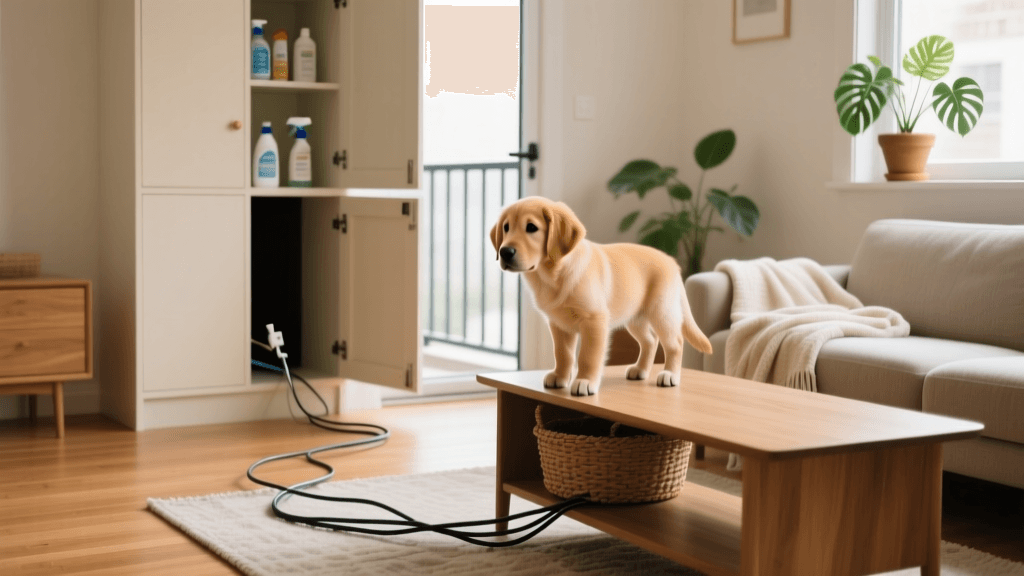
A new dog should not be given free roam of the entire house immediately. Use baby gates or an exercise pen to restrict access to one or two dog-proofed rooms. This prevents the dog from developing bad habits (like chewing baseboards or stealing laundry) and reduces the anxiety of having to monitor a massive territory.
First 30 Days Wellness Schedule Progression
Your routine should evolve as your dog settles in. Below is a structured progression chart to guide you through the first month.
| Phase | Primary Wellness Focus | Exercise & Enrichment | Training & Socialization |
|---|---|---|---|
| Week 1 | Decompression, bonding, and establishing potty baselines. | Short, low-stress sniffing walks. High-value chew toys for anxiety relief. | Name recognition, crate conditioning, and basic handling exercises. |
| Week 2 | Introducing household rules and boundary setting. | Introduction of puzzle feeders and 15-minute structured play sessions. | Sit, down, and introducing the 'place' or 'mat' command. |
| Week 3 | Building confidence and mild environmental exposure. | Longer walks, introducing new textures (grass, gravel, metal grates). | Recall practice in low-distraction environments and leash manners. |
| Week 4 | Solidifying routines and testing boundaries gently. | Structured games like hide-and-seek to build mental endurance. | Proofing commands with mild distractions; introducing gentle grooming routines. |
Adjusting the Routine for Breed and Age
It is vital to tailor this baseline schedule to your specific dog. The American Kennel Club (AKC) notes that exercise and routine requirements vary wildly depending on developmental stages and breed drives. For instance, a young Border Collie will require significantly more mental enrichment and physical exertion than a senior Basset Hound.
For puppies, adhere to the 'five-minute rule' for structured physical exercise: five minutes of walking per month of age, up to twice a day. A four-month-old puppy should only have about 20 minutes of continuous, structured walking per session to protect their developing growth plates. Mental enrichment, however, has no such physical limits and should be heavily prioritized for high-drive breeds.
Tracking Your Dog's Wellness
You cannot manage what you do not measure. During the first 30 days, keep a dedicated wellness journal or use a pet-tracking app to log daily metrics. The ASPCA emphasizes that monitoring daily habits is key to early disease detection and behavioral assessment. Track the following daily:
- Stool Quality: Use a 1-to-5 scale to rate firmness. Consistent loose stools may indicate dietary intolerance or stress-induced colitis.
- Appetite & Water Intake: Note any skipped meals or excessive thirst.
- Sleep Patterns: Track how long they nap and if they wake up restless during the night.
- Trigger Log: Note any environmental triggers (e.g., garbage trucks, men in hats) that cause fear or reactivity so you can address them with desensitization later.
Consider investing in a Furbo Dog Camera to monitor your dog's behavior when you are away. This allows you to see if they are sleeping peacefully or exhibiting signs of separation distress, such as pacing or vocalizing, enabling you to adjust their mid-day enrichment accordingly.
Conclusion: Patience and Consistency
The first 30 days with a new dog require immense patience, consistency, and proactive management. By implementing a structured daily wellness routine, you are doing far more than just keeping your dog occupied; you are actively shaping their neurological responses, building their confidence, and laying the groundwork for a lifetime of health and happiness. Stick to the schedule, track their progress, and give your new best friend the grace and time they need to realize that they are finally, truly, home.
robin-maitland
All our authors care for dogs every day — read more of their work on the authors page.