The Ultimate First-Day Puppy Essentials Buyer's Guide
Discover must-have first-day puppy essentials. Our buyer's guide covers crates, beds, and bowls to help you prepare your home for your new dog.
Welcome Home: Preparing for Your New Puppy
Bringing a new puppy home is one of life's most exciting milestones, but it can also be incredibly overwhelming. Between the potty training, the teething, and the endless energy, new dog owners often find themselves scrambling to the pet store to replace items they didn't realize they needed. Preparing your home before your puppy's paws ever touch your floors is the secret to a smooth transition. According to the American Kennel Club (AKC), having the right supplies on hand not only reduces stress for the owner but also helps the puppy feel secure in an entirely new environment.
In this comprehensive buyer's guide, we will break down the absolute first-day puppy essentials. We will review specific product types, provide sizing measurements, compare materials, and outline realistic costs so you can build a puppy survival kit that actually works.
Crates and Confinement: Choosing the Right Size and Style
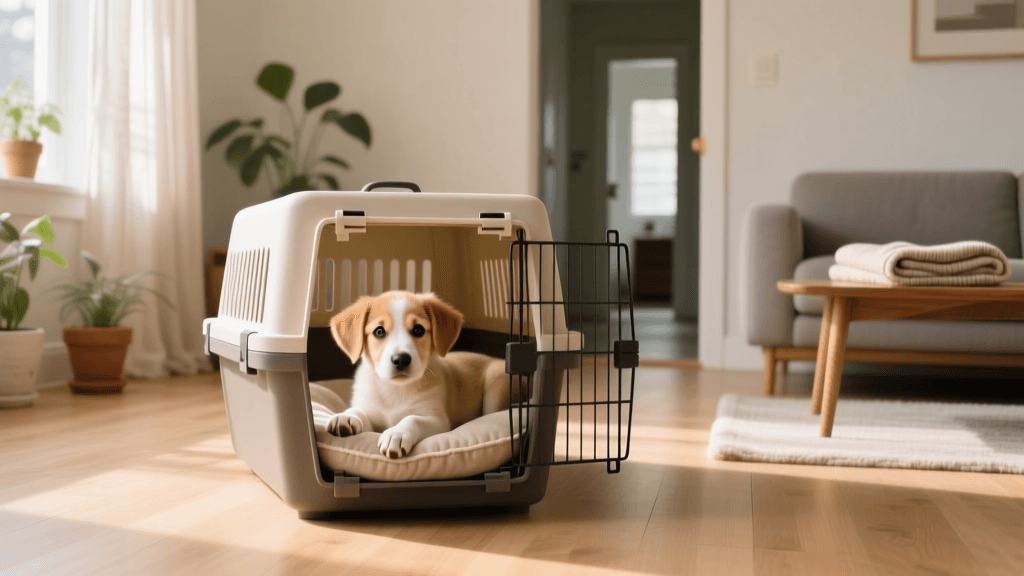
A crate is not just a bed; it is a den, a potty-training tool, and a safe space for your puppy when you cannot supervise them. The Humane Society of the United States strongly advocates for crate training as a means to keep puppies safe from household hazards like electrical cords and toxic plants.
Sizing Your Puppy's Crate
The golden rule of crate sizing is that your puppy should be able to stand up, turn around, and lie down comfortably, but not have so much extra space that they can eliminate in one corner and sleep in the other. For growing puppies, buy a crate sized for their estimated adult weight and use a movable divider panel.
- Small Breeds (under 20 lbs): 24-inch crate
- Medium Breeds (20-50 lbs): 30-inch to 36-inch crate
- Large Breeds (50-90 lbs): 42-inch crate
- Giant Breeds (90+ lbs): 48-inch or larger crate
Crate Type Comparison Chart
| Crate Type | Best For | Pros | Cons | Estimated Cost |
|---|---|---|---|---|
| Wire Crate (e.g., MidWest Homes for Pets) | Potty training, home use | Excellent ventilation, foldable, includes divider | Heavy, not aesthetically pleasing, noisy | $40 - $80 |
| Plastic/Airline (e.g., Petmate Sky Kennel) | Travel, anxious dogs | Den-like feel, travel-approved, easy to clean | Poor ventilation in hot weather, bulky | $50 - $120 |
| Soft-Sided (e.g., EliteField) | Fully trained adult dogs | Lightweight, portable, cozy | Useless for teething puppies (will be destroyed) | $30 - $60 |
Buyer's Verdict: For first-day essentials, a heavy-duty wire crate with a divider panel is the undisputed champion for puppyhood.
Beds and Bedding: Balancing Comfort and Durability
It is tempting to buy a plush, expensive orthopedic dog bed on day one, but puppies are notorious chewers. During the teething phase (which peaks around 4 to 6 months of age), a $150 memory foam bed can be shredded into a dangerous, stuffing-filled mess in minutes.
What to Buy Instead
For the first six months, opt for durability and washability over luxury. The KONG Tough line or beds made from ballistic nylon (like those from K9 Ballistics) are excellent investments. They feature ripstop materials and hidden zippers that deter chewing. Expect to spend between $60 and $90 on a chew-resistant bed.
Additionally, consider a Snuggle Puppy (approx. $40). This plush toy features a physical heartbeat simulator and a heat pack. Placing this in your puppy's crate on the first night mimics the feeling of sleeping against their littermates and drastically reduces separation anxiety and midnight whining.
Collars, Harnesses, and Leashes: Safety First
While a flat collar is necessary for holding your puppy's ID tags, you should never use a collar for leash walking a young puppy. Puppies have delicate tracheas, and the sudden pulling and lunging common in early leash training can cause severe neck injuries.
The Harness Advantage
A front-clip or dual-clip harness is a first-day essential. The Ruffwear Front Range Harness (approx. $40) is a top-tier choice because it features both a front chest clip (to gently redirect pulling) and a back clip (for casual walks). It is padded, highly adjustable, and built to withstand the elements.
The Two-Finger Rule for Sizing
When fitting any collar or harness, you must use the two-finger rule. You should be able to comfortably slide two fingers between the strap and your puppy's skin. If you can fit your whole hand, it is too loose and poses an escape risk; if you cannot fit two fingers, it is too tight and will cause chafing. Check the fit weekly, as puppies grow in sudden, massive spurts.
Pair your harness with a standard 4-to-6-foot nylon or leather leash. Avoid retractable leashes entirely during the puppy phase, as they teach the dog that pulling extends the leash, directly contradicting your loose-leash training goals.
Food and Water Bowls: Materials Matter
The material of your dog's bowl impacts their health and your cleaning routine. Plastic bowls are porous, harboring bacteria that can cause 'puppy acne' (canine folliculitis) on your dog's chin.
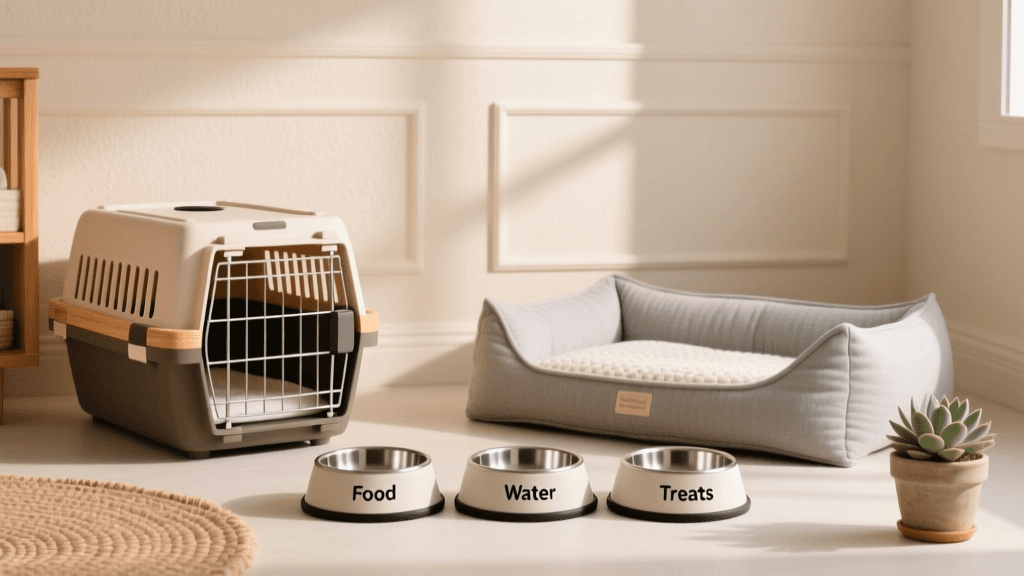
- Stainless Steel: The gold standard. They are dishwasher safe, unbreakable, and non-porous. The Yeti Boomer or standard MidWest stainless steel bowls ($10-$30) are excellent choices.
- Ceramic: Heavy and aesthetically pleasing, but they can chip and harbor bacteria in the micro-cracks. Only use if they are food-grade and lead-free.
- Slow Feeders: If you have a Labrador, Beagle, or any breed prone to gulping food and experiencing bloat or vomiting, a slow feeder bowl like the Outward Hound Fun Feeder ($15) is mandatory. The maze-like ridges force the puppy to forage for their kibble, slowing down eating time by up to 10x.
Enrichment and Teething Toys
Puppies explore the world with their mouths. If you do not provide appropriate chewing outlets, your baseboards, shoes, and furniture will become the alternatives. The American Veterinary Medical Association (AVMA) notes that appropriate chew toys are vital for dental health and behavioral enrichment.
The Starter Toy Box
- KONG Classic (Red or Puppy Pink): ($15) Stuff this hollow rubber toy with plain yogurt, peanut butter (xylitol-free), and kibble, then freeze it. The cold rubber soothes teething gums, and the mental effort required to extract the food tires the puppy out faster than a 30-minute walk.
- Nylabone Puppy Chew Keys: ($8) Made of softer polymer designed specifically for developing teeth, these satisfy the urge to gnaw without risking tooth fractures.
- Flirt Pole: ($25) A giant cat wand for dogs. This is the ultimate tool for burning off high-octane puppy energy in a small backyard or indoors while teaching the 'drop it' command.
Budgeting for Your First-Day Essentials
Preparing for a puppy requires a financial commitment. Below is a realistic breakdown of what you should expect to spend on high-quality, durable first-day essentials. Skimping on gear often leads to replacing items multiple times, costing more in the long run.
| Category | Recommended Item | Estimated Cost |
|---|---|---|
| Confinement | Wire Crate with Divider | $60.00 |
| Bedding | Chew-Resistant Bed + Snuggle Puppy | $110.00 |
| Walking Gear | Dual-Clip Harness + 6ft Leash | $65.00 |
| Feeding | Stainless Steel Bowls + Slow Feeder | $35.00 |
| Enrichment | KONG, Nylabone, Flirt Pole | $48.00 |
| Cleanup | Enzymatic Cleaner (e.g., Nature's Miracle) | $15.00 |
| Total | Comprehensive Puppy Starter Kit | $333.00 |
Final Thoughts on Puppy Prep
The transition into a new home is a massive psychological shift for a puppy. They have left their mother, their littermates, and the only environment they have ever known. By investing in the right crate, a comforting bed, a safe harness, and engaging enrichment toys, you are doing more than just buying products; you are building a foundation of trust and security.
'Preparation is the key to a successful adoption. Having your supplies ready before the dog arrives allows you to focus entirely on bonding and establishing routines rather than rushing to the store.' — The Humane Society of the United States
Take the time to measure your space, research the brands that align with your training goals, and set up your puppy's 'safe zone' before their arrival. With these first-day essentials in place, you will be ready to tackle the beautiful, chaotic journey of raising a happy, well-adjusted dog.
aaron-whyte
All our authors care for dogs every day — read more of their work on the authors page.