The Ultimate First-Day Home Prep Guide for New Dog Owners
Prepare your home for a new dog with our complete beginner's handbook. Discover essential supplies, safety tips, and a first-day timeline for success.

Welcome to Dog Ownership: Setting the Stage
Bringing a new dog home is one of the most exciting milestones in life, but it can also be incredibly overwhelming for both you and your new furry companion. Whether you are adopting a rescue from a local shelter or bringing home a puppy from a reputable breeder, the first 24 hours set the tone for your dog's entire transition. As a complete beginner, it is easy to underestimate the amount of preparation required to create a safe, welcoming environment. This comprehensive handbook will walk you through the exact steps, measurements, and timelines you need to master before your dog's paws ever touch your floors.
Phase 1: Tactical Dog-Proofing Your Home
Before you even think about buying toys or treats, you must secure your living space. Dogs explore the world with their mouths and noses, which means everyday household items can quickly become deadly hazards. According to the American Kennel Club (AKC), getting down on your hands and knees to view your home from a dog's eye level is the single most effective way to identify hidden dangers.
The 'Hands and Knees' Inspection Checklist
- Electrical Cords: Use 1/2-inch split loom tubing or cord concealers to protect wires from chewing. A shocked puppy can suffer severe internal burns or fatal electrocution.
- Toxic Houseplants: Remove lilies, sago palms, pothos, and aloe vera from accessible areas. Place safe plants on shelves at least 4 feet off the ground.
- Trash Cans: Replace open bins with 13-gallon stainless steel cans featuring locking lids or foot pedals that require human weight to open.
- Chemicals and Medications: Install child-proof magnetic locks on lower kitchen and bathroom cabinets. Ensure all cleaning supplies, ibuprofen, and xylitol-containing products (like sugar-free gum) are stored in upper cabinets.
- Small Choking Hazards: Pick up stray socks, children's toys, rubber bands, and coins. If it can fit inside a standard toilet paper tube, it is a choking hazard for a medium-sized dog.
Phase 2: The Essential Shopping List
Beginners often fall into the trap of buying every cute accessory they see. However, your dog only needs a few high-quality essentials for their first week. Avoid bulk-buying treats or food until you know your dog's dietary tolerances, and skip the expensive dog clothing until they are fully settled. Focus your budget on safety, hygiene, and comfort.
| Item | Specification / Size | Estimated Cost | Purpose & Beginner Tip |
|---|---|---|---|
| Wire Dog Crate | 36x23x25 inches (for 30-50 lb dogs) | $50 - $80 | Provides a safe den. Buy a crate with a divider panel so you can adjust the space as a puppy grows. The dog should be able to stand, turn around, and lie down comfortably. |
| Orthopedic Bed | Machine-washable cover, 3-inch foam | $40 - $70 | Supports joints. Place it inside the crate or in a quiet corner. Avoid fluffy, stuffed beds for teething puppies as they will be shredded and ingested. |
| Food & Water Bowls | Stainless steel, 4-cup capacity | $15 - $25 | Stainless steel is non-porous and resists bacteria buildup, unlike plastic bowls which can cause canine acne and harbor germs. |
| Leash & Collar | Nylon, 6-foot leash, adjustable collar | $20 - $30 | A 6-foot leash offers the perfect balance of control and freedom for training. Avoid retractable leashes for beginners, as they teach dogs to pull. |
| Enzymatic Cleaner | Nature's Miracle or Rocco & Roxie, 32oz | $12 - $15 | Crucial for accidents. Standard household cleaners do not break down uric acid crystals, meaning your dog will still smell the urine and return to the same spot. |
Phase 3: Creating the 'Safe Zone'
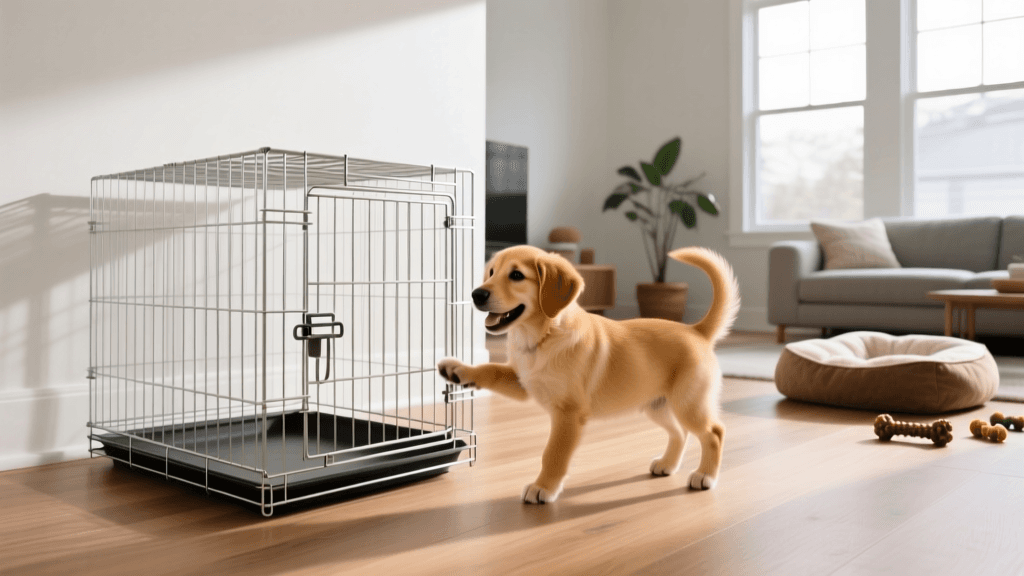
Dogs are den animals by nature, and a designated safe zone is critical for their mental health. This zone should be a quiet area of your home, such as a corner of the living room or a spare bedroom, away from heavy foot traffic and direct sunlight. Set up the wire crate with the door securely tied open for the first few days. Place the orthopedic bed inside, along with a safe chew toy like a classic red KONG. To make the crate highly appealing, stuff the KONG with a small amount of dog-safe peanut butter (ensure it contains absolutely no xylitol) and freeze it overnight. This provides a long-lasting, soothing activity that builds positive associations with the space.
Phase 4: The First 24 Hours Timeline
The first day is about decompression, not obedience training. The Humane Society of the United States emphasizes that a new dog needs time to decompress and learn the rhythms of their new household. Follow this structured timeline to keep stress levels low.
- Hour 1: The Arrival and Potty Break. Before bringing the dog inside, take them immediately to the designated outdoor potty spot on a leash. Use a consistent cue word like 'Go potty' and reward with a high-value treat the second they finish.
- Hour 2: The Leashed House Tour. Keep the dog on their 6-foot leash and walk them through the main areas of the house. Do not give them full free-roam access yet. Let them sniff and observe while you maintain calm, quiet energy.
- Hour 3: Safe Zone Introduction. Lead them to their crate and safe zone. Toss a few treats inside, let them eat, and allow them to settle on their bed. Sit quietly nearby and read a book or work on your laptop to show them that relaxing is the goal.
- Hour 4: Hydration and a Small Meal. Offer a small bowl of fresh water and a modest portion of the food they were eating at the shelter or breeder. Sudden diet changes cause gastrointestinal upset, so stick to their current food for at least a week before transitioning.
- Evening: Low-Key Settling. Avoid turning on loud televisions or hosting welcome parties. Dim the lights, speak in soft tones, and prepare for an early bedtime.
Surviving the First Night
The first night is notoriously difficult. Your dog is sleeping in a strange place, surrounded by unfamiliar scents, and missing their littermates or shelter companions. Expect some whining or crying. To manage this, place the crate in your bedroom for the first few nights so they can hear you breathing and smell your scent. Set an alarm for 2:00 AM and 4:00 AM to take them out for a boring, strictly business potty break. Keep the lights dim, do not make eye contact, and do not play. Once they eliminate, return them immediately to the crate. This teaches them that nighttime waking is only for bathroom needs, not for socializing.
Common Beginner Mistakes to Avoid on Day One
Even with the best intentions, new owners often make critical errors that can hinder the bonding process. Avoid these three common pitfalls:
- Overstimulation: Inviting friends and family over to meet the new dog on day one is a recipe for disaster. It floods the dog's nervous system and can lead to fear-based reactivity or hiding. Wait at least a week before introducing new people, and always do it on neutral territory like a sidewalk.
- Free-Feeding: Leaving a bowl of kibble out all day prevents you from monitoring your dog's appetite (a key indicator of health) and ruins your ability to use meal times for potty-training schedules. Dogs generally need to eliminate 20 to 30 minutes after eating.
- Inconsistent Rules: If the dog is not allowed on the couch on day one, they cannot be allowed on the couch just because they look sad on day three. Establish your household boundaries immediately and ensure every family member enforces them identically.
'Patience is your most valuable tool. Your dog is not giving you a hard time; they are having a hard time adjusting to a completely alien environment. Grace and consistency will build trust faster than any training treat.'
Final Thoughts
Preparing for a new dog requires logistical planning, financial foresight, and emotional patience. By dog-proofing your home, investing in the right foundational gear, and sticking to a calm, structured first-day timeline, you are laying the groundwork for a confident, well-adjusted pet. Remember that the transition period—often referred to as the 3-3-3 rule (3 days to decompress, 3 weeks to learn your routine, 3 months to feel at home)—is a marathon, not a sprint. Take a deep breath, trust your preparation, and enjoy the incredible journey of welcoming your new best friend home.
priya-sutaria
All our authors care for dogs every day — read more of their work on the authors page.