Questions to ask before adopting an adult dog
A practical 12-question checklist for prospective adopters — what to ask the rescue, what to ask yourself, and how to spot a dog that will fit your home.
What You Need to Know Before Bringing an Adult Dog Home
Adopting an adult dog is one of the most rewarding decisions a person can make — but it comes with a distinct set of questions that puppy adoption simply doesn't raise. Adult dogs arrive with history: habits formed over months or years, attachments made and sometimes broken, and a personality that's already largely set. That's not a drawback. It's actually one of the clearest advantages. What you see is largely what you get. But before you sign the paperwork at your local rescue, there are practical, financial, and emotional questions worth sitting with honestly.
According to the American Society for the Prevention of Cruelty to Animals (ASPCA, 2023), approximately 3.1 million dogs enter U.S. shelters every year, and roughly 390,000 are euthanized annually — the majority of those being adult dogs passed over in favour of puppies. In the UK, Dogs Trust reported in 2023 that over 47,000 dogs passed through their rehoming centres in a single year, with dogs over three years old consistently waiting the longest for placement. These numbers aren't meant to guilt you into a decision. They're context for understanding that adult dog adoption is a genuine need, and that the dogs available are overwhelmingly healthy, trainable, and capable of deep bonds.
Is Your Home Environment Actually Ready?
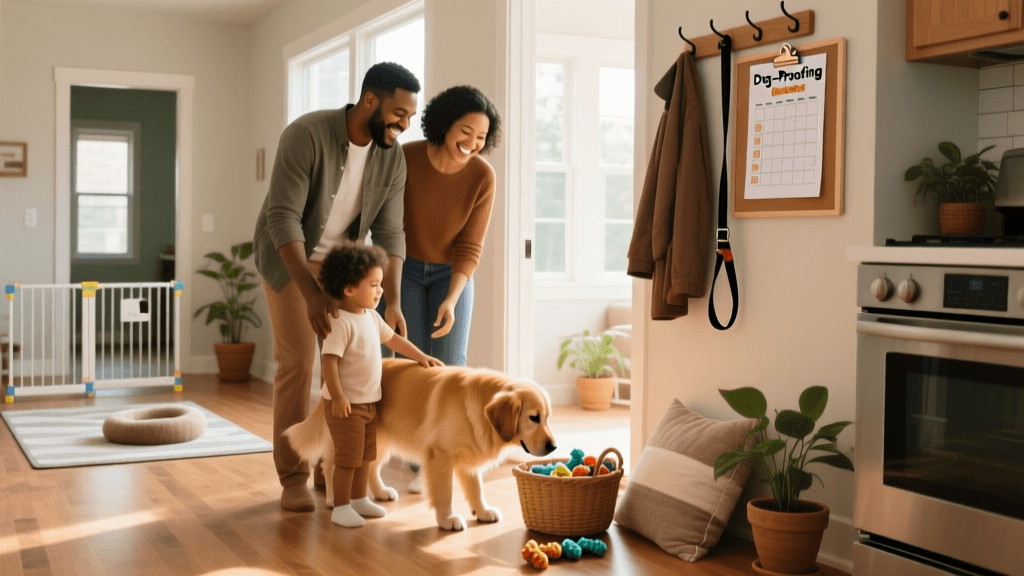
Before asking whether a dog is right for you, ask whether your home is right for the dog. Adult dogs from rescue environments have often come from chaotic or unpredictable situations. A calm, structured environment isn't a luxury for them — it's often a medical necessity for their mental health.
Walk through your home with fresh eyes. Are there secure fences in the garden? The UK's Dogs Trust recommends a minimum fence height of 1.8 metres (6 feet) for larger breeds, and many rescues will conduct a home check to verify this before approving an adoption. In the US, shelters like the San Francisco SPCA conduct similar assessments, particularly for dogs flagged as escape artists or with high prey drive.
Consider your flooring. Older adult dogs, or those with joint issues common in larger breeds, can struggle on polished hardwood or tile. Non-slip mats, especially near food and water bowls and sleeping areas, make a meaningful difference. This is a small cost — typically £20–£60 in the UK or $25–$75 in the US — but it's the kind of detail that separates a prepared home from an unprepared one.
Other Pets and Children in the Household
If you have cats, other dogs, or young children, this question becomes the most important one you'll ask. Most reputable rescues will have already assessed the dog's behaviour around other animals and children, but you should ask for specifics, not generalities. "Good with kids" means very little. "Has lived successfully with children aged 4 and 7 for two years" means something.
Request a meet-and-greet on neutral ground before committing. Battersea Dogs & Cats Home in London, one of the UK's most established rescue organisations, routinely facilitates these introductions and will advise on whether a particular dog's history suggests caution around specific household members.
Space and Exercise Requirements
A common misconception is that larger dogs need larger homes. In practice, a calm, older Greyhound can thrive in a flat, while a young Border Collie in a five-bedroom house with no mental stimulation will redecorate your walls. The question isn't square footage — it's whether your daily routine can meet the dog's exercise and enrichment needs.
Most adult dogs need between 30 minutes and 2 hours of exercise per day depending on breed and age. Ask the rescue for the specific dog's current exercise routine. Abrupt changes — either too much or too little — can trigger anxiety or physical strain, particularly in dogs over seven years old.
What Are the Real Costs Involved?
Adoption fees are just the beginning. Being financially unprepared is one of the leading reasons dogs are returned to shelters within the first year, so this question deserves a thorough, unsentimental answer.
| Expense Category | Estimated UK Cost (Annual) | Estimated US Cost (Annual) |
|---|---|---|
| Food (medium dog) | £400–£700 | $500–$900 |
| Veterinary care (routine) | £300–£600 | $700–$1,500 |
| Pet insurance | £200–£800 | $300–$900 |
| Grooming | £100–£400 | $150–$500 |
| Training classes | £80–£200 | $100–$300 |
| Boarding/dog sitting | £200–£600 | $300–$800 |
Pet insurance is worth particular attention when adopting an adult dog. Many insurers apply age limits or exclusions for pre-existing conditions. A dog that arrived at the rescue with a known hip issue may be uninsurable for that condition, meaning any related treatment comes entirely out of pocket. Hip replacement surgery in the UK averages £3,500–£5,000 per hip. In the US, the same procedure typically runs $3,500–$7,000. These aren't scare figures — they're planning figures.
The adoption fee itself is usually modest: UK rescues typically charge £100–£250, while US shelters range from $50 to $500 depending on the organisation and whether the dog has received extensive veterinary care prior to adoption. Some rescues include vaccinations, microchipping, neutering, and an initial health check within that fee, which represents significant value.
What Does the Dog's History Actually Tell You?
Every adult dog in rescue has a story, and the quality of information you receive about that story varies enormously between organisations. A well-run rescue will have detailed behavioural assessments, notes from foster carers, and honest documentation of any known triggers or challenges. A less thorough operation may hand you a dog with a one-paragraph description and a hopeful smile.
Ask direct questions. Not "is this dog friendly?" but "has this dog ever bitten or snapped, and if so, what were the circumstances?" Not "does this dog have any health issues?" but "what veterinary records do you have, and can I see them before I commit?"
Understanding Kennel Stress
Dogs in shelter environments often display behaviours that don't reflect their true personality. Kennel stress — a well-documented phenomenon characterised by repetitive behaviours, hyperactivity, withdrawal, or aggression — affects a significant proportion of shelter dogs. A 2019 study published in the journal Applied Animal Behaviour Science found that cortisol levels in shelter dogs were measurably elevated within 72 hours of arrival and remained high for weeks in some individuals.
This means the dog you meet at the shelter may be a stressed, diminished version of the dog you'll actually live with. It also means that the first few weeks at home — often called the "decompression period" — are not representative of the dog's long-term behaviour. Most experienced rescue advisors recommend allowing three months before drawing firm conclusions about a dog's personality. The informal rule of thumb used by many foster carers is the "3-3-3 rule": three days to feel overwhelmed, three weeks to learn the routine, three months to feel at home.
Are You Prepared for the Adjustment Period?
Sarah Okafor, who adopted a five-year-old Staffordshire Bull Terrier named Biscuit from a rescue in Birmingham in 2022, describes the first month as "genuinely harder than I expected, even though I'd had dogs before." Biscuit was house-trained and gentle, but he was terrified of the dishwasher, refused to walk past certain parked cars, and woke her at 3am for the first two weeks. "By month two, he was sleeping through and the dishwasher thing had mostly resolved. By month three, I couldn't imagine life without him. But that first month required patience I had to consciously choose."
Her experience is typical. The adjustment period is real, and it's worth asking yourself honestly whether your current life circumstances — work schedule, travel commitments, emotional bandwidth — can absorb it. This isn't about whether you love dogs. It's about timing.
James Whitfield, a veterinary behaviourist based in Edinburgh, advises prospective adopters to take at least one week off work when bringing an adult rescue dog home. "The dog needs to learn that you leave and you come back. That sounds simple, but for a dog that's experienced abandonment, it's a significant lesson. Being present for the first week to establish that pattern makes a measurable difference to separation anxiety outcomes."
Questions to Ask the Rescue Before You Commit
Walking into a rescue without a prepared list of questions is a bit like buying a house without a survey. The emotional pull is strong, and without structure, it's easy to leave with a dog whose needs you're not equipped to meet — through no fault of your own or the dog's.
- What is this dog's full known history, including previous owners and reason for surrender?
- Has the dog been assessed around other dogs, cats, and children? What were the results?
- What is the dog's current daily routine, including feeding times, exercise, and sleep location?
- Does the dog have any known medical conditions, and what ongoing treatment or monitoring is required?
- Has the dog shown any resource guarding, fear-based reactivity, or aggression? Under what circumstances?
- What training has the dog received, and what commands does it reliably respond to?
- Does the rescue offer post-adoption support, and for how long?
- What is the return policy if the adoption doesn't work out?
That last question is not defeatist — it's responsible. Reputable rescues will have a clear return policy and will not judge you for asking. Organisations like the RSPCA in the UK and the Humane Society of the United States actively encourage adopters to ask it, because a dog returned to a rescue is far better than a dog surrendered to an unknown situation.
- Request all available veterinary records before signing adoption paperwork.
- Ask to meet the dog at least twice, ideally in different settings, before committing.
- Speak directly with any foster carer who has housed the dog — their observations are often more detailed than formal assessments.
- Confirm whether the adoption fee includes microchipping, vaccinations, and neutering, or whether these are additional costs.
- Ask about the rescue's post-adoption helpline and whether they offer behavioural support.
"The best adopters aren't the ones who fall in love fastest. They're the ones who ask the most questions and still fall in love anyway." — Rehoming coordinator, Dogs Trust Manchester, 2023
Adopting an adult dog is not a compromise. It's a considered choice that, when made with clear eyes and honest preparation, tends to produce some of the most devoted, settled, and grateful animal companions imaginable. The questions above aren't obstacles to that outcome — they're the path to it.
Beth Carrasco
All our authors care for dogs every day — read more of their work on the authors page.