Avoid These 7 Critical First-Week Dog Owner Mistakes
Bringing a new dog home is exciting, but early errors cause long-term issues. Discover 7 critical first-week dog mistakes to avoid for a smooth transition.

The Honeymoon Phase: Why the First Week Matters
Bringing a new dog or puppy into your home is a milestone filled with joy, tail wags, and endless photo opportunities. However, the transition from a shelter, foster home, or breeder environment to your living room is highly stressful for the animal. Many well-intentioned pet parents unknowingly make critical errors during the first seven days that can lead to behavioral issues, health scares, and prolonged adjustment periods. By understanding what not to do, you can set the foundation for a lifetime of trust and obedience. Here are seven critical first-week dog mistakes you must avoid to ensure a smooth transition for your new best friend.
1. Hosting an 'Open House' on Day One
It is incredibly tempting to invite friends, family, and neighbors over to meet the new addition to your household. Do not do this. Dogs, especially rescues, need a quiet decompression period. Animal behaviorists often refer to the 3-3-3 rule: three days to decompress from the initial stress, three weeks to learn your daily routine, and three months to truly feel at home and bond with you. Forcing a shy, exhausted, or overwhelmed dog to greet a dozen strangers in the first 48 hours can trigger fear-based aggression, resource guarding, or severe anxiety. Keep your inner circle limited to immediate household members for the first week, allowing the dog to map out their new territory in peace.
2. Superficial Puppy-Proofing and Ignoring Toxic Plants
Hiding your favorite leather sneakers and putting away children's toys is simply not enough. You must view your home from a dog's eye level. One of the most fatal mistakes new owners make is leaving toxic houseplants within reach. According to the ASPCA Animal Poison Control Center, common household plants like the Sago Palm, Aloe Vera, Pothos, and Peace Lily are highly toxic to dogs and can cause severe liver failure, neurological damage, or fatal gastrointestinal distress. Remove all toxic plants immediately.
Furthermore, do not rely on flimsy, pressure-mounted baby gates for the top of stairways. A determined 40-pound puppy can easily push a pressure gate loose and tumble down the stairs. Invest in a hardware-mounted gate, such as the Regalo Easy Step Walk Thru Gate (which fits openings 29 to 39 inches wide), screwed directly into your wall studs for maximum security.
3. Buying an Oversized Crate Without a Divider
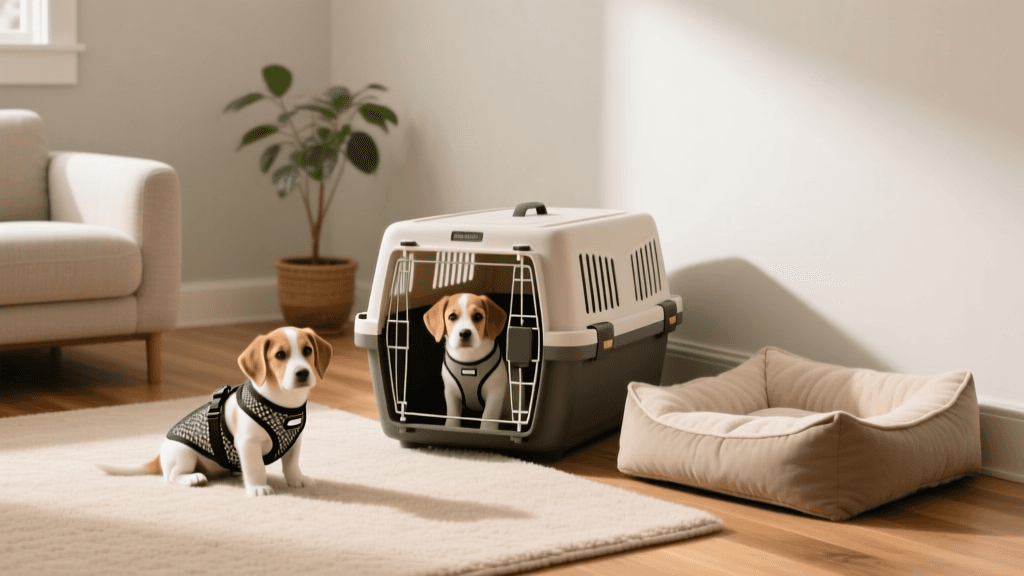
Crate training is essential for housebreaking, travel safety, and providing your dog with a secure 'den.' However, buying a massive 48-inch wire crate for a 15-pound puppy is a major error. Dogs possess a natural instinct to avoid soiling their immediate sleeping area. If the crate is too large, the puppy will simply designate one corner for sleeping and the opposite corner as a bathroom, completely defeating the purpose of the crate and prolonging the potty-training process.
Instead, purchase a wire crate like the MidWest Homes for Pets iCrate, which includes a movable metal divider panel. Adjust the divider so the dog has just enough room to stand up, turn around in a full circle, and lie down comfortably without touching the walls. As your dog grows, simply move the divider back a few inches every couple of weeks.
4. Cleaning Accidents with Ammonia-Based Products
When your new dog inevitably has a house-training accident on your rug, your instinct might be to grab a standard household floor cleaner. Never use products containing ammonia. Canine urine contains ammonia. If you clean a spot with an ammonia-based chemical, the dog's highly sensitive nose will interpret that area as an officially marked bathroom spot, encouraging them to urinate there again.
Instead, you must use an enzymatic cleaner like Nature's Miracle Advanced Stain and Odor Remover or Rocco & Roxie Professional Strength Stain & Odor Eliminator. Enzymatic cleaners utilize specific bacteria to break down the uric acid crystals at a molecular level, permanently eliminating the scent marker rather than just masking it with a floral perfume.
5. Free-Feeding to 'Make Up' for Lost Time
Some owners leave a massive bowl of kibble out all day, assuming the dog might be hungry from the stress of moving or previous neglect. Do not free-feed. Free-feeding destroys your ability to monitor their appetite, which is a primary indicator of underlying health issues. More importantly, it makes potty training incredibly difficult because you cannot predict when their digestive tract will require them to eliminate.
Feed measured meals twice a day for adult dogs, or three to four times a day for puppies under six months. Use a high-quality diet recommended by your veterinarian, put the bowl down at the exact same times every day, and pick it up after 15 to 20 minutes, even if the dog hasn't finished. This establishes you as the provider of resources and creates a predictable biological schedule for bathroom breaks.
6. Delaying the Initial Veterinary Exam
Do not wait until your dog seems sick, or until their next round of vaccines is supposedly due, to visit the vet. The American Veterinary Medical Association (AVMA) strongly recommends establishing a relationship with a local veterinarian immediately upon acquiring a new pet. Schedule a comprehensive wellness exam within 48 to 72 hours of bringing your dog home.
The vet will check for congenital issues, listen to their heart, check for parasites, and establish a baseline weight. This visit is also crucial for verifying vaccination records provided by a shelter or breeder, setting up a heartworm and flea prevention schedule, and discussing microchipping. According to the Centers for Disease Control and Prevention (CDC), routine veterinary care is vital not only for the pet's longevity but also for preventing zoonotic diseases that can be transmitted to humans in the household.
7. Enforcing Inconsistent Household Rules
If one partner allows the new dog to jump on the couch and cuddle, while the other partner scolds them for getting hair on the upholstery, the dog will become deeply confused and anxious. Inconsistency breeds behavioral problems and erodes trust. Before the dog crosses the threshold of your home, hold a family meeting to establish the rules. Will the dog be allowed on the furniture? Will they sleep in the bedroom or the kitchen? What are the designated outdoor potty spots? What verbal commands will be used (e.g., 'Off' vs. 'Down')? Everyone in the household must enforce the exact same boundaries from minute one.
First-Week Supply Checklist: Do's and Don'ts
To help you prepare, review this structured guide on what to buy and what to avoid during your first-week shopping trip.
| Supply Category | DO Buy / Use | DON'T Buy / Use | Est. Cost |
|---|---|---|---|
| Confinement | Wire crate with adjustable divider panel | Oversized plastic travel kennel for daily home use | $50 - $80 |
| Stair Safety | Hardware-mounted gate screwed into wall studs | Pressure-mounted gate at the top of stairs | $40 - $70 |
| Cleaning | Enzymatic pet stain and odor eliminator | Bleach, ammonia, or standard pine-scented cleaners | $15 - $25 |
| Identification | Adjustable nylon collar with engraved metal ID tag | Retractable leashes or choke chains for initial walks | $15 - $30 |
| Chew Toys | Solid rubber toys (e.g., Kong Classic) stuffed with treats | Cooked bones, rawhide, or toys smaller than the dog's mouth | $10 - $20 |
Conclusion: Patience is Your Greatest Tool
Getting a new dog is a marathon, not a sprint. The first week is entirely about establishing safety, routine, and trust. By avoiding the common pitfalls of over-socialization, improper proofing, and inconsistent rules, you save yourself months of frustrating behavioral corrections down the line. Give your new dog the grace and time they need to decompress, stick to a rigid schedule, and rely on positive reinforcement. The patience you invest in these first seven days will pay dividends in the form of a confident, well-adjusted, and deeply bonded companion for the next decade or more.
priya-sutaria
All our authors care for dogs every day — read more of their work on the authors page.