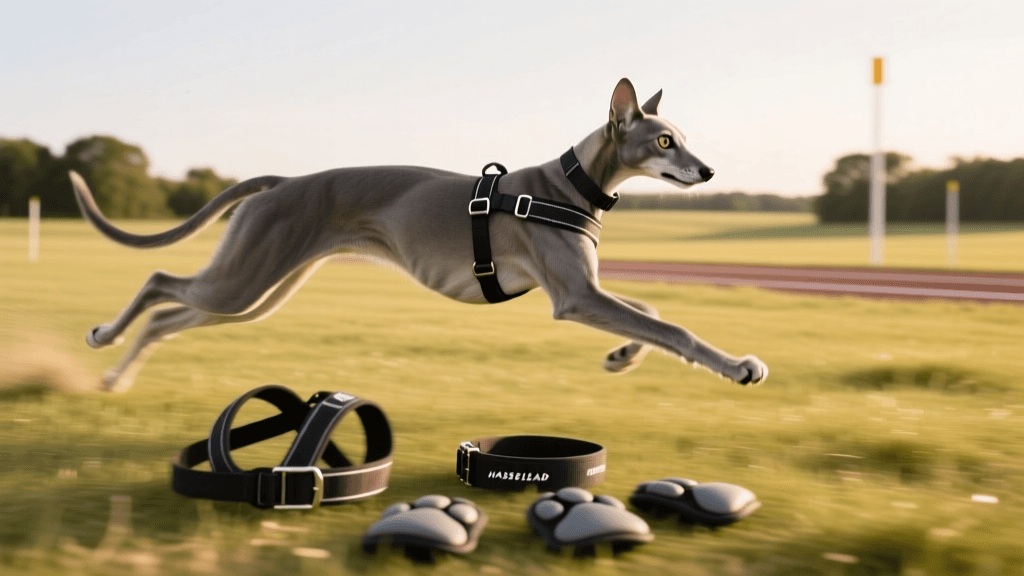
Fast CAT Lure Coursing Gear & Conditioning Guide 2026
Master Fast CAT lure coursing in 2026 with our expert guide on sprint conditioning, essential gear, injury prevention, and breed-specific speed targets.
The Rise of Fast CAT in 2026
Fast CAT (Coursing Ability Test) has firmly established itself as one of the most exhilarating and accessible dog sports in the world. Unlike traditional lure coursing, which requires massive open fields and complex pulley systems, Fast CAT is a straightforward 100-yard dash. Dogs chase a white plastic lure across a straight, flat track, and their time is converted into miles per hour (MPH). As we move through the 2026 season, the sport has seen a massive surge in participation from mixed breeds, rescue dogs, and handlers looking for a high-adrenaline outlet for their dogs' natural prey drive.
Whether you are aiming for your first BCAT (Beginner Coursing Ability Test) title or pushing for the elite FCAT (Fast CAT) rankings, success in this sport requires more than just letting your dog off-leash. It demands precise gear selection, structured sprint conditioning, and a deep understanding of canine biomechanics. According to the American Kennel Club's official dog sports hub, proper preparation is the key to preventing injuries and maximizing your dog's top speed on the track.
Understanding the Course and AKC Titling
The Fast CAT course is exactly 100 yards long. At the finish line, a handler or designated caller waits to catch the dog. The timing system records the exact second the dog crosses the start and finish lines. The formula to calculate speed is simple: (204.54 / time in seconds) = MPH. For example, a dog that completes the 100-yard dash in 6.00 seconds is running at an impressive 34.09 MPH.
In 2026, the AKC titling structure remains highly motivating for handlers:
- BCAT (Beginner): Achieve a minimum speed based on your dog's height (15 inches and over must run at least 15 MPH; under 15 inches must run at least 12 MPH).
- DCAT (Dog Coursing Ability Test): Earn 500 total MPH points across multiple runs.
- FCAT (Fast CAT): Earn 1,000 total MPH points, requiring consistent, high-speed performance.
Essential Gear for the 2026 Season
Using the wrong equipment can shave crucial fractions of a second off your dog's time or, worse, cause soft tissue injuries. Here is the top-tier gear recommended for the 2026 competitive season.
1. The Right Harness: Non-stop dogwear Freemotion vs. Ruffwear Flagline
Never run your dog in a standard collar or a restrictive step-in harness. You need a harness that allows for full shoulder extension and spinal flexion. The Non-stop dogwear Freemotion Harness is widely considered the gold standard for sprint sports. Its open-back design ensures the dog's spine can fully extend during the double-suspension gallop phase of the sprint. Alternatively, the Ruffwear Flagline Harness is a fantastic, lightweight option for smaller breeds or dogs who find bulky harnesses distracting. It offers excellent lift-assist at the handle, which is great for post-run control.
2. Paw Protection and Traction
At speeds exceeding 30 MPH, the friction on a dog's paw pads during the initial launch and the final deceleration is immense. For grass tracks, natural paw pads are usually sufficient, provided they are conditioned. However, for dirt or artificial turf tracks, applying a high-quality paw wax like Musher's Secret 20 minutes before your run provides a vital semi-breathable barrier against friction burns. If your dog has sensitive pads, custom-fitted dog racing booties with rubberized soles are a must.
3. Active Cooling: Hurtta Cooling Vest
Sprint sports generate massive internal heat. The Hurtta Cooling Vest utilizes advanced evaporative cooling technology. By soaking the vest in cold water and wringing it out before placing it on your dog during the staging and warm-up periods, you can effectively lower their core temperature, ensuring they step up to the start line with optimal cardiovascular efficiency.
The 8-Week Sprint Conditioning Protocol
You cannot take a couch-potato dog and immediately run them at top speed; doing so is a recipe for torn cruciate ligaments or hamstring strains. The American College of Veterinary Sports Medicine and Rehabilitation emphasizes the importance of periodized training for canine athletes. Follow this 8-week protocol to safely build your dog into a sprint champion.
Weeks 1-2: Base Building & Proprioception
Focus on core strength and joint stability. Use cavaletti poles set at your dog's hock height to encourage deliberate foot placement and spinal flexion. Incorporate balance disc work (having your dog place their front paws on an unstable air disc while holding a sit or stand). This builds the micro-stabilizer muscles in the shoulders and hips. Keep cardiovascular work to steady-state trotting for 20-30 minutes, avoiding sudden stops or sharp turns.
Weeks 3-4: Acceleration & Drive
Introduce short, controlled bursts of speed. Use a flirt pole on a soft grassy surface to encourage 10-yard sprints. Focus on the "launch" phase. Practice uphill sprints on a mild 5-degree incline; the incline naturally limits top speed while forcing the dog to engage their hindquarters and build explosive starting power. Keep these sessions short—no more than 5 to 7 sprints per session, with 2 minutes of rest in between.
Weeks 5-6: Top Speed & Lure Focus
Now we extend the distance. Set up a 50-yard straight line using a long line or a safe, fenced corridor. Use a high-visibility white lure to mimic the official Fast CAT equipment. Encourage your dog to track the lure visually rather than just running blindly. Introduce the "recall" at the end of the run, ensuring your dog knows to brake and turn sharply into your arms upon reaching the finish line to prevent them from running past the catch area.
Weeks 7-8: Tapering & Peak Performance
In the final two weeks before a competition, reduce the volume of your training by 50%. This is known as tapering. It allows the muscle fibers to fully repair and the central nervous system to recover, resulting in a "supercompensation" effect where your dog will feel explosive and fresh on race day. Replace intense sprinting with active recovery, such as leisurely sniffaris and canine massage.
Nutrition, Hydration, and Joint Health
A canine sprint athlete requires targeted nutritional support. While a high-performance kibble is necessary for overall caloric needs, joint supplementation is non-negotiable. The Orthopedic Foundation for Animals strongly advocates for proactive joint care in athletic dogs. Incorporate a high-quality Omega-3 fish oil (rich in EPA and DHA) to reduce systemic inflammation, alongside a glucosamine and chondroitin complex to support cartilage health.
Hydration is equally critical. Many dogs will not drink plain water when highly aroused. Train your dog to drink "baited water" (water mixed with a low-sodium chicken or bone broth) during their conditioning phase so they readily accept it on the high-stress competition day.
2026 Average Fast CAT Speeds by Breed
Understanding where your dog naturally falls in the speed spectrum helps set realistic expectations and tailor your conditioning. Below is a data table outlining the average and top recorded speeds for popular Fast CAT breeds and categories based on 2026 competitive trends.
| Breed / Category | Average MPH (2026) | Top Recorded MPH | Biomechanical Advantage |
|---|---|---|---|
| Greyhound | 35 - 40 MPH | 45.2 MPH | Deep chest, double-suspension gallop |
| Whippet | 30 - 35 MPH | 40.1 MPH | Rapid acceleration, extreme spinal flexion |
| Vizsla | 25 - 30 MPH | 34.5 MPH | Lean muscle mass, high endurance |
| Border Collie | 22 - 27 MPH | 31.8 MPH | Agility, sharp turning radius, high drive |
| Mixed Breed (Medium) | 18 - 24 MPH | 29.4 MPH | Varies heavily by genetic makeup |
| Jack Russell Terrier | 15 - 20 MPH | 25.6 MPH | Explosive start, tenacious lure focus |
Injury Prevention and Post-Race Recovery
The most common injuries in Fast CAT occur not during the sprint, but during the deceleration phase or from inadequate warm-ups. Always ensure your run-out area is at least 50 yards past the finish line, free of holes, rocks, or slippery mud.
After your dog crosses the finish line, do not immediately put them in a crate. Walk them on a leash for at least 5 to 10 minutes to allow their heart rate to drop gradually and to flush lactic acid from their hindquarters. Once they are fully cooled down, perform gentle passive range-of-motion (PROM) exercises on their hips and stifles. If you notice any asymmetry in their gait, stiffness the next morning, or reluctance to jump into the car, consult a certified canine sports rehabilitation veterinarian immediately.
By combining the right gear, a scientifically backed conditioning program, and meticulous recovery protocols, you and your dog are primed to dominate the 2026 Fast CAT season. Remember that the ultimate goal is to celebrate your dog's natural instincts while keeping them safe, healthy, and joyfully chasing the lure for years to come.
robin-maitland
All our authors care for dogs every day — read more of their work on the authors page.