Dog Sleep Myths Debunked: Nighttime Routines and Crate Facts
Debunk common dog sleep myths, from crate training to nighttime routines. Learn facts, timings, and actionable tips for a restful night with your pup.
The Truth About Your Dog's Nighttime Routine
Sharing your life with a dog brings immense joy, but it also comes with a mountain of unsolicited advice, especially regarding nighttime routines and sleep habits. From well-meaning relatives to outdated internet forums, new and seasoned dog owners alike are bombarded with myths about where dogs should sleep, how much sleep they actually need, and how to prepare them for bedtime. Believing these misconceptions can lead to fragmented sleep for both you and your canine companion, increased behavioral issues, and unnecessary stress. In this comprehensive guide, we are debunking the most common dog sleep myths and replacing them with science-backed facts, actionable advice, and precise routines to ensure your household enjoys a restful, peaceful night.
Myth 1: Crate Training is Cruel and Causes Anxiety
One of the most pervasive and damaging myths in dog ownership is that crate training is inherently cruel or akin to imprisonment. In reality, dogs are den animals by nature. According to the ASPCA, when introduced properly, a crate becomes a safe haven—a personal sanctuary where your dog can retreat to decompress from household chaos. The anxiety some dogs experience in crates is usually a result of improper introduction, using the crate as punishment, or incorrect sizing, rather than the crate itself.
Actionable Crate Setup Guide
To create a positive den environment, sizing and setup are critical.
- Measurements: Measure your dog from the tip of their nose to the base of their tail, then add 2 to 4 inches for length. Measure from the floor to the top of their head (or ears, if erect) and add 2 to 4 inches for height. Your dog should be able to stand up, turn around, and lie down stretched out without touching the walls.
- Product Recommendation: For growing puppies, invest in a wire crate with a divider panel, such as the MidWest Homes for Pets iCrate (approximately $45 to $70 depending on size). The divider allows you to expand the space as your puppy grows, preventing them from using one end of an oversized crate as a bathroom.
- Comfort: Add a washable, chew-resistant bed like the K9 Ballistics Tough Rip-Stop Dog Bed ($120-$150). Avoid plush, easily shredded beds for puppies or heavy chewers, as ingesting stuffing can lead to life-threatening intestinal blockages.
Myth 2: Dogs Sleep Through the Night Exactly Like Humans
Many owners assume that once the lights go out, their dog will sleep continuously for eight hours just like a human adult. However, canine sleep architecture is fundamentally different. Dogs are polyphasic sleepers, meaning they sleep in multiple shorter bouts throughout a 24-hour period. Furthermore, while humans typically take about 90 minutes to enter the REM (Rapid Eye Movement) stage of sleep, dogs can enter REM in as little as 20 minutes. However, their REM cycles are much shorter. As noted by the American Kennel Club, dogs spend only about 10% of their sleep time in REM, compared to the 25% seen in humans. This is why dogs need significantly more total hours of sleep to achieve the same restorative benefits.
Canine Sleep Requirements by Age
| Life Stage | Total Sleep Needed (24 hrs) | Sleep Characteristics |
|---|---|---|
| Puppies (0-6 months) | 18 - 20 hours | Frequent naps, high REM needs for brain development, easily awakened. |
| Adults (1-7 years) | 12 - 14 hours | Polyphasic sleepers, adaptable to owner's schedule, deeper sleep cycles. |
| Seniors (8+ years) | 16 - 18 hours | More fragmented sleep, increased daytime napping, may experience cognitive dysfunction. |
Understanding these cycles helps you manage expectations. If your senior dog wakes up, shifts around, or sighs heavily during the night, they are likely just transitioning between sleep cycles, not necessarily experiencing insomnia or distress.
Myth 3: You Must Exhaust Your Dog to Get Them to Sleep
The phrase 'a tired dog is a good dog' has been wildly misinterpreted to mean that you must physically exhaust your dog right before bed to ensure they sleep through the night. Engaging in high-intensity physical exercise (like a vigorous game of fetch or a fast-paced run) within two hours of bedtime actually spikes your dog's cortisol and adrenaline levels. This leaves them in a state of physiological arousal, making it incredibly difficult for them to settle down. Instead of physical exhaustion, focus on mental enrichment to induce natural sleepiness.
Actionable Wind-Down Enrichment
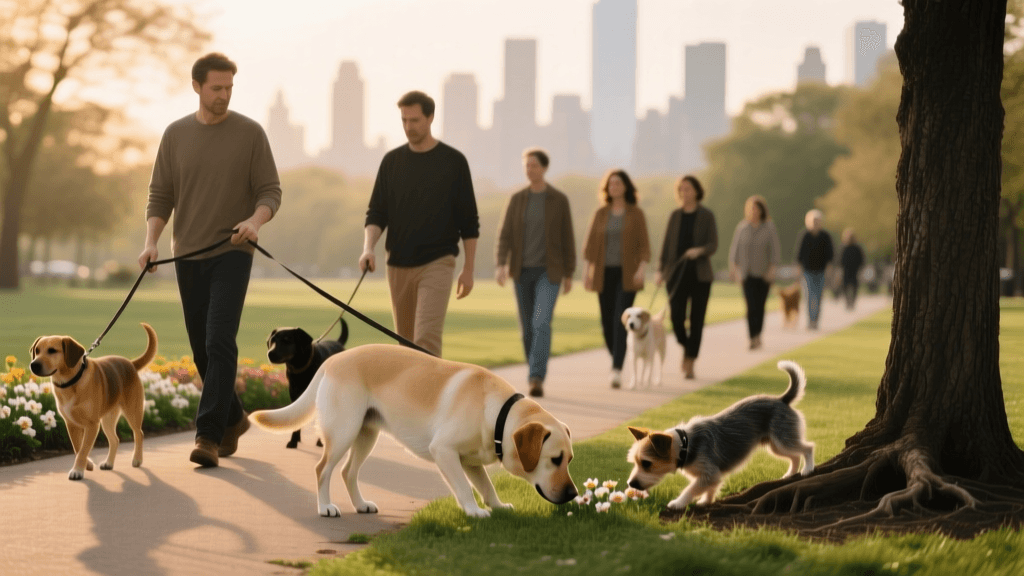
- Replace the late-night run with a 15-minute 'sniffari' on a long leash, allowing your dog to process environmental scents. Sniffing lowers a dog's heart rate and provides immense mental fatigue.
- Alternatively, provide a frozen enrichment toy. Take a classic KONG ($15), fill it with a mixture of plain canned pumpkin puree and a spoonful of xylitol-free peanut butter, and freeze it for at least four hours. Licking and chewing are self-soothing behaviors that release endorphins, naturally prepping your dog's brain for sleep.
Myth 4: Sleeping on the Bed Creates Dominance Issues
For decades, the outdated 'alpha dog' theory suggested that allowing your dog on your bed or furniture would elevate their status in the 'pack hierarchy,' leading to dominance and behavioral issues. Modern veterinary behaviorists have thoroughly debunked the dominance theory in domestic dogs. According to resources from VCA Hospitals and the American Veterinary Society of Animal Behavior, dogs do not view their human families as a wolf pack to be dominated. If a dog guards the bed or growls when asked to move, it is a resource guarding issue or a lack of boundary training, not an attempt to become the 'alpha.'
Whether your dog sleeps on the bed is entirely a matter of personal preference and relationship dynamics. If you enjoy co-sleeping and your dog is well-behaved, it can actually increase oxytocin levels in both you and your pet, promoting bonding. However, if your dog is a restless sleeper, kicks, or takes up too much space, investing in a high-quality orthopedic floor bed (like the Big Barker 7-inch Pillow Top Orthopedic Dog Bed, starting around $250) placed right next to your bed is an excellent compromise that preserves your sleep quality while maintaining proximity.
The Ideal Nighttime Wind-Down Routine
Consistency is the cornerstone of a successful nighttime routine. Dogs thrive on predictability, and a structured schedule signals to their internal clock that it is time to power down. Here is a highly effective, actionable timeline for a household where the owners go to bed at 10:30 PM:
- 6:30 PM - Dinner Time: Feed your dog their final meal. This allows ample time for digestion and ensures they will need to eliminate before bedtime.
- 8:00 PM - Mental Enrichment: Engage in low-energy mental stimulation. Use a snuffle mat ($20-$30) for their evening treat portion, or practice 10 minutes of gentle trick training using low-value treats.
- 9:30 PM - The Final Potty Break: Take your dog outside on a leash for a boring, business-only potty break. Keep the lights dim and avoid playful interaction. Use a specific cue like 'go potty' and reward calmly with a quiet 'good dog' and a small treat.
- 10:00 PM - Settle and Chew: Dim the household lights. Provide a long-lasting, digestible chew like a Himalayan yak cheese chew or a bully stick (approx. $5-$8 each) in their crate or on their designated bed.
- 10:30 PM - Lights Out: Guide your dog to their sleeping area. A consistent verbal cue like 'bedtime' paired with a calm demeanor will eventually trigger a conditioned relaxation response.
Conclusion
Navigating the myriad of dog care myths can be overwhelming, but relying on science-backed facts and structured routines makes life with your dog significantly more harmonious. By providing a properly sized crate, understanding their unique polyphasic sleep cycles, prioritizing mental over physical exhaustion at night, and abandoning outdated dominance theories, you set the stage for a healthier, happier pup. Implement these actionable steps tonight, and both you and your canine companion will reap the restorative benefits of a truly good night's sleep.
beth-carrasco
All our authors care for dogs every day — read more of their work on the authors page.