Best Smart Treat Cameras for Dog Separation Anxiety 2026
Discover the best smart treat cameras for dog separation anxiety in 2026. Learn actionable desensitization routines to help your pup thrive alone.
The 2026 Landscape of Canine Separation Anxiety
As hybrid work models have fully solidified in 2026, millions of dogs are adjusting to predictable but frequent periods of alone time. While many pets adapt seamlessly, a significant subset develops canine separation anxiety—a distress response triggered by isolation. According to the ASPCA, separation anxiety is characterized by destructive behavior, excessive vocalization, and house-soiling that occurs exclusively when the dog is left alone or separated from their primary attachment figure.
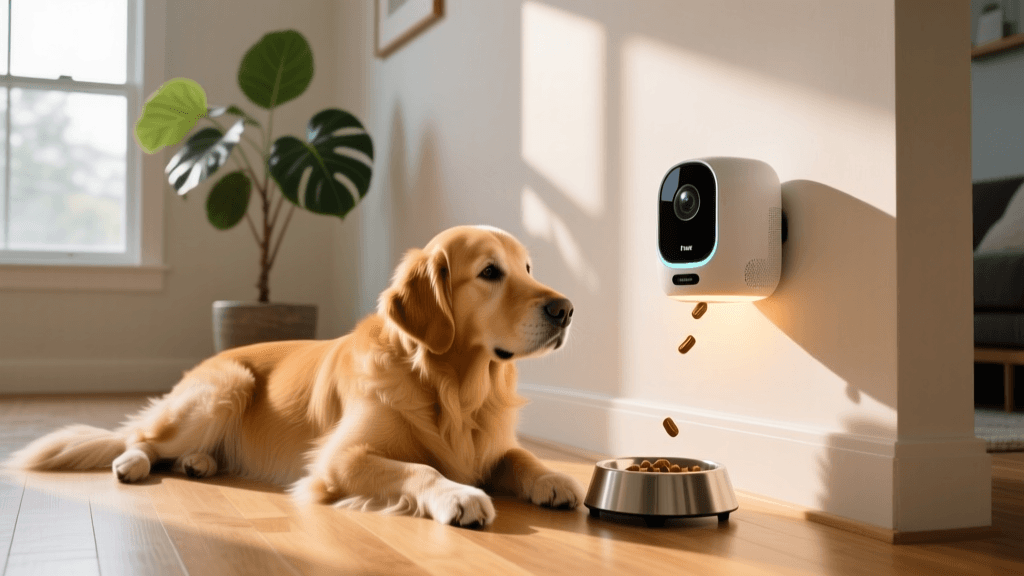
Managing this condition requires patience, consistency, and the right tools. In recent years, smart treat-dispensing cameras have evolved from simple pet monitors into essential behavioral training devices. Equipped with AI-driven bark detection, pet-specific facial recognition, and remote treat-tossing capabilities, these 2026 models allow owners to actively participate in desensitization training even when they are miles away.
Why Smart Treat Cameras Aid Desensitization
The gold standard for treating mild to moderate separation anxiety is systematic desensitization paired with counterconditioning. The American Kennel Club emphasizes that changing a dog's emotional response to departure cues is critical. Smart cameras facilitate this by allowing you to reward calm behavior remotely, interrupting the anxiety cycle before it escalates into a full-blown panic attack.
Instead of your dog associating the sound of the front door closing with immediate abandonment, the camera allows you to create a new association: the door closes, but a high-value treat mysteriously appears, and your reassuring voice plays through the two-way audio. This transforms alone time from a source of terror into an engaging, rewarding experience.
2026 Smart Treat Camera Comparison Chart
Choosing the right hardware is the first step in your training protocol. Below is a comparison of the top three smart treat-dispensing cameras available in 2026, evaluated on treat capacity, AI features, and suitability for anxiety training.
| Feature | Furbo 360 Dog Camera | Petcube Bites 2 Lite | PETLIBRO Granary Smart Feeder |
|---|---|---|---|
| Best For | Active dogs needing 360° monitoring | Budget-conscious owners wanting laser play | Food-motivated dogs needing scheduled meals |
| Camera View | 360° Rotating, 1080p HD | Fixed Wide-Angle, 1080p HD | Fixed Wide-Angle, 1080p HD with Night Vision |
| Treat Capacity | 1 Cup (approx. 100 treats) | 0.5 Cup (approx. 50 treats) | 6 Liters (Dry kibble/meals only) |
| AI Alerts | Bark, Vomiting, Dog Crying, Person Detection | Sound and Motion Alerts | Low Food, Jamming, Motion Detection |
| 2026 Retail Price | $199.00 | $149.00 | $129.00 |
Note: For pure behavioral training using high-value, soft treats (like freeze-dried liver or Zuke's Mini Naturals), the Furbo 360 is the superior choice due to its adjustable tossing mechanism and 360-degree tracking, which keeps anxious dogs engaged as they follow the movement.
Setting Up Your Environment for Success
Before initiating your training protocol, optimize your camera setup. Place the device at your dog's eye level, secured to a stable surface to prevent tipping during enthusiastic treat retrieval. Ensure your home Wi-Fi network is operating on a dedicated 2.4GHz or 5GHz band with sufficient upload speeds to prevent audio lag, which can confuse dogs during two-way communication. Pair the camera with an Adaptil Calm Pheromone Diffuser plugged in within the same room to provide a continuous baseline of synthetic dog-appeasing pheromones, which clinical studies show can reduce stress-related behaviors.
The 4-Week Camera-Assisted Desensitization Protocol
This structured routine is designed for dogs exhibiting mild to moderate distress (whining, pacing, mild door scratching). If your dog exhibits severe panic (breaking through windows, self-mutilation, continuous howling for hours), skip to the section on professional help.
Week 1: Creating Positive Departure Cues
Anxious dogs often begin panicking during 'pre-departure' routines, such as putting on shoes or picking up keys.
- Days 1-3: Pick up your keys, toss a treat via the camera app, and sit back down. Do not leave. Repeat 10 times a day.
- Days 4-7: Put on your coat, open the front door, close it, and immediately toss a treat via the camera. Stay inside. The goal is to strip the predictive value from your departure cues.
Week 2: Micro-Departures and Remote Rewards
Now you will introduce actual isolation, starting with durations below your dog's anxiety threshold.
- Days 8-10: Step outside, close the door, and wait exactly 10 seconds. Use the camera app to toss a treat, then re-enter. Repeat 5 times.
- Days 11-14: Extend the time outside to 30 seconds, then 1 minute. If your dog paces or barks, you have exceeded their threshold. Return calmly, do not scold, and reduce the time on the next attempt. Use the two-way audio to speak in a calm, low-pitch voice only when the dog is sitting or lying down.
Week 3: Extending the Threshold
By week three, your dog should anticipate a treat when the door closes.
- Days 15-18: Leave for 5 minutes. Use the camera's AI bark alerts to monitor their state. If the app notifies you of a bark, wait for a 5-second window of silence before tossing a treat and speaking through the speaker.
- Days 19-21: Extend absences to 15 minutes. Introduce a long-lasting enrichment toy, like a frozen Kong stuffed with peanut butter, right before you leave. Use the camera to check in, but avoid tossing treats continuously, which can create hyper-vigilance.
Week 4: Real-World Alone Time
Transition to realistic 2026 hybrid-work schedules.
- Days 22-28: Leave for 1 to 2 hours. Rely on the camera's activity timeline to review your dog's behavior post-departure. Most dogs with mild anxiety will pace for 5-10 minutes, then settle. If your dog settles within 15 minutes, the protocol is working. Continue to use the treat tosser sparingly to reinforce prolonged resting.
Complementary Calming Tools for Alone Time
Technology alone cannot cure anxiety; it must be part of a holistic management plan. Consider integrating the following into your 2026 routine:
- L-Theanine Supplements: Products containing L-theanine and L-tryptophan (such as Zylkene or Virbac Anxitane) can help regulate neurotransmitters associated with stress. Administer 30 minutes before your departure.
- Audio Masking: Use a smart speaker to play classical music or specially designed canine calming frequencies. This masks external neighborhood noises that might trigger reactive barking while you are away.
- Physical Exhaustion: A 45-minute sniffari or vigorous fetch session before you leave lowers cortisol levels and promotes restorative sleep during your absence.
When Technology Isn't Enough: Seeking Professional Help
It is vital to recognize the limits of at-home tech training. As noted by VCA Animal Hospitals, severe separation anxiety is a genuine panic disorder that often requires adjunctive pharmacological intervention. If your dog refuses high-value treats when you are gone, injures themselves attempting to escape, or exhibits extreme physiological distress (excessive drooling, panting, loss of bowel control), stop the camera training immediately.
In these cases, consult a board-certified veterinary behaviorist. They may prescribe short-acting anti-anxiety medications like trazodone or long-term SSRIs like fluoxetine, which lower the dog's baseline panic response enough for desensitization training to actually take hold. Remember, a smart camera is a powerful bridge to better communication with your pet, but it is not a substitute for professional veterinary medicine when true panic is present. By combining 2026's best pet technology with empathetic, science-based training, you can help your dog finally feel safe, secure, and relaxed in their own home.
tom-renshaw
All our authors care for dogs every day — read more of their work on the authors page.