The Science of Canine Sleep: Optimizing Your Dog's Rest
Discover science-backed insights to optimize your dog's sleep environment. Learn how temperature, sound, and bed types improve canine rest and cognition.
The Neurological Architecture of Canine Sleep
Understanding how your dog sleeps is the first step toward optimizing their daily routine and long-term health. Unlike humans, who typically experience monophasic sleep (one long block per night), dogs are polyphasic sleepers. According to the American Kennel Club, the average adult dog sleeps between 12 and 14 hours a day, with puppies and seniors requiring up to 18 hours. However, the quantity of sleep is only half the equation; the quality of their sleep cycles is where the true biological magic happens.
Dogs experience Rapid Eye Movement (REM) sleep, the stage associated with vivid dreaming and memory consolidation. Research highlighted by canine cognition expert Dr. Stanley Coren in Psychology Today suggests that dogs process and consolidate the events, commands, and social interactions of their waking hours during REM cycles. If a dog's sleep environment is constantly disrupted by noise, temperature fluctuations, or physical discomfort, they are deprived of this crucial neurological maintenance. This chronic sleep fragmentation can lead to increased behavioral reactivity, poor training retention, and elevated cortisol levels.
Environmental Optimization: Thermoregulation and Acoustics
To facilitate uninterrupted REM cycles, we must mimic the environmental conditions that align with canine biology. Dogs have a normal core body temperature ranging from 101°F to 102.5°F (38.3°C to 39.2°C). Because they lack widespread eccrine sweat glands, they rely heavily on panting and vasodilation (expanding blood vessels in the skin and ears) to dissipate heat. Sleeping in a room that is too warm forces their bodies to work harder to cool down, preventing them from entering deep, restorative sleep stages.
Temperature and Humidity Targets
- Ideal Room Temperature: Maintain your thermostat between 68°F and 72°F (20°C to 22°C) during sleeping hours.
- Humidity Levels: Keep indoor humidity between 40% and 50%. High humidity impairs a dog's ability to cool down via panting, while low humidity can cause respiratory irritation and dry skin.
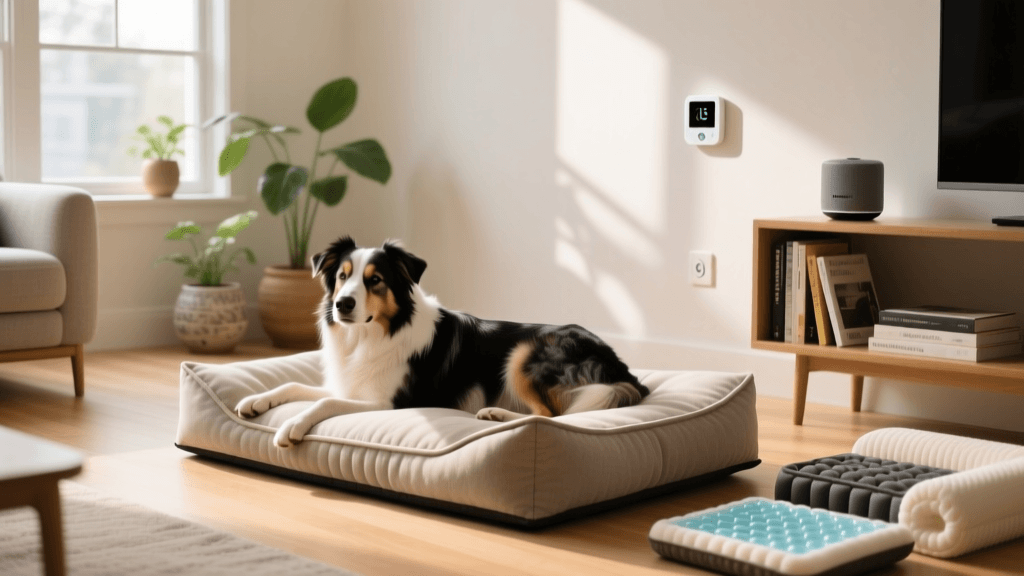
- Cooling Interventions: For double-coated breeds or brachycephalic (flat-faced) dogs like Bulldogs and Pugs, consider a pressure-activated cooling mat, such as the Arf Pets Self-Cooling Dog Bed, which absorbs body heat without requiring electricity or refrigeration.
Acoustic Masking for High-Frequency Hearing
A dog's hearing range extends from roughly 40 Hz up to 60,000 Hz, compared to the human limit of about 20,000 Hz. This means your dog can hear the high-pitched whine of electronics, distant sirens, and neighborhood wildlife long after you have fallen asleep. Sudden acoustic spikes trigger the amygdala, pulling the dog out of REM sleep into a state of hyper-vigilance.
To combat this, utilize acoustic masking. However, standard 'white noise' is often too high-pitched and harsh for canine ears. Instead, opt for brown noise or pink noise, which emphasize lower frequencies and mimic the soothing sound of distant thunder or a heavy waterfall. Use a device like the LectroFan Evo, placing it about six feet from your dog's bed and setting the volume to roughly 50 to 60 decibels—just loud enough to mask sudden environmental sounds without causing auditory fatigue.
Orthopedic Support and Sleep Architecture
Just as human sleep quality is tied to mattress ergonomics, canine sleep architecture is heavily influenced by joint support. Micro-arousals—brief awakenings that the dog may not even remember—often occur when pressure points on the hips, elbows, or shoulders become painful or numb. Over time, sleeping on unsupportive surfaces accelerates joint degradation, particularly in large breeds prone to hip dysplasia or senior dogs with osteoarthritis.
Comparative Analysis of Canine Sleep Surfaces
| Bed Type | Best Suited For | Scientific Benefit | Recommended Product Example |
|---|---|---|---|
| Orthopedic Memory Foam | Seniors, Giant Breeds, Post-Surgery | Distributes weight evenly, reducing joint compression and minimizing pain-induced micro-arousals. | Big Barker 7" Pillow Top Orthopedic Bed |
| Bolster / Cave Beds | Small Breeds, Anxious Dogs, Terriers | Provides tactile boundary feedback, satisfying the evolutionary 'denning' instinct and lowering resting heart rate. | FurHaven Velvet Waves Bolster Bed |
| Elevated Cot / Mesh | Hot Climates, Heavy Chewers, Damp Areas | Maximizes airflow for thermoregulation and prevents mold/bacteria accumulation that can trigger allergies. | Kuranda Chewproof Elevated Dog Bed |
| Cooling Gel Mats | Brachycephalic Breeds, Summer Months | Absorbs and dissipates core body heat, preventing heat-stress interruptions during deep sleep phases. | The Green Pet Shop Dog Cooling Mat |
Note: Memory foam beds should be covered with a waterproof, hypoallergenic liner to prevent the accumulation of dust mites and dander, which are known to disrupt sleep via mild respiratory irritation.
Circadian Rhythms and the 90-Minute Wind-Down
Dogs possess circadian rhythms regulated by light exposure and melatonin production, much like humans. In modern households, artificial lighting and screen time can severely disrupt this biological clock. Blue light emitted by televisions, smartphones, and LED bulbs suppresses the natural secretion of melatonin, the hormone responsible for signaling to the brain that it is time to sleep.
Implementing a Science-Backed Bedtime Routine
To optimize your dog's circadian rhythm, implement a structured 90-minute wind-down protocol before their final sleep period:
- T-Minus 90 Minutes (Lighting): Dim the lights in your home. Switch to warm-toned bulbs (under 3000 Kelvin) or use amber lamps. This signals the pineal gland to begin melatonin production.
- T-Minus 60 Minutes (Activity): Cease all vigorous play, fetch, or high-arousal training. Engage only in low-stakes activities like gentle petting, slow sniffing games on a snuffle mat, or chewing on a natural digestible chew (like a bully stick), which releases endorphins and promotes relaxation.
- T-Minus 30 Minutes (Elimination): Take your dog out for their final bathroom break. Keep the lights low and the interaction boring to avoid spiking their adrenaline.
- T-Minus 0 Minutes (Settling): Guide them to their designated sleep space. Turn on your brown noise machine and ensure the room temperature is within the 68°F to 72°F range.
Aging, Cognitive Dysfunction, and Sleep Interventions
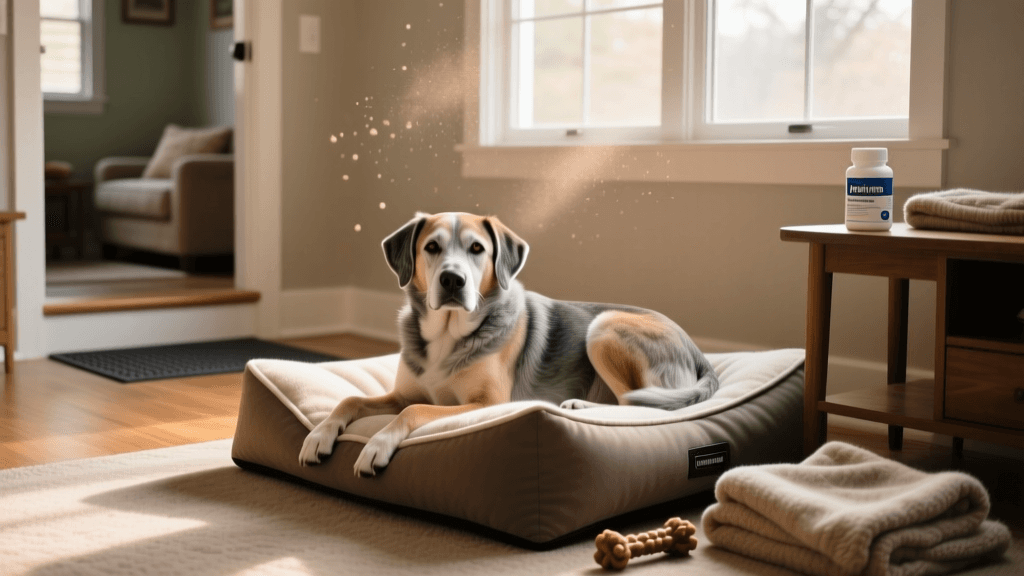
As dogs age, their sleep architecture naturally changes, but severe disruptions are not a normal part of aging. Canine Cognitive Dysfunction (CCD), a condition similar to Alzheimer's disease in humans, affects a significant portion of senior dogs. According to the ASPCA, symptoms of CCD include disorientation, changes in social interactions, and severe sleep-wake cycle inversions—often referred to as 'sundowning,' where a dog paces, pants, or vocalizes anxiously throughout the night.
Targeted Interventions for Senior Sleep Issues
If environmental optimizations do not resolve nighttime restlessness in an older dog, veterinary-guided interventions are necessary:
- Melatonin Supplementation: Under veterinary supervision, melatonin can help reset a senior dog's circadian rhythm. Dosages typically range from 1mg to 3mg depending on the dog's weight, administered 30 minutes before bedtime.
- Omega-3 Fatty Acids: High-quality fish oil supplements rich in EPA and DHA (dosed at roughly 50-75mg per kg of body weight) have been shown to support brain health, reduce neuro-inflammation, and alleviate joint pain that may be keeping older dogs awake.
- Pheromone Therapy: Plug-in diffusers like Adaptil release synthetic dog-appeasing pheromones (DAP) that mimic the comforting signals produced by a nursing mother dog, clinically proven to reduce nighttime anxiety and pacing in stressed or aging canines.
Conclusion: Sleep as a Pillar of Canine Health
Treating your dog's sleep as a critical component of their overall health—rather than just a passive state of rest—can profoundly impact their behavior, immune function, and longevity. By applying science-backed adjustments to their thermal environment, acoustic landscape, orthopedic support, and circadian cues, you are actively participating in their neurological maintenance. A well-rested dog is not just a quieter companion; they are a healthier, more resilient, and more cognitively engaged member of your family.
tom-renshaw
All our authors care for dogs every day — read more of their work on the authors page.