Force-Free Leash Reactivity: Engage-Disengage Guide 2026
Master force-free leash reactivity in 2026 with the Engage-Disengage game. Learn timing, treat choices, and harness fitting for calmer walks.
The Shift to Force-Free Reactivity Training in 2026
As we navigate through 2026, the dog training community has overwhelmingly solidified its stance on canine behavioral modification: force-free, positive reinforcement methods are not just a passing trend; they are the undisputed gold standard. For dog owners dealing with leash reactivity—manifested as barking, lunging, or freezing at the sight of other dogs or strangers—the shift away from aversive tools has been a game-changer. Modern behavioral science confirms that punishing a reactive dog only suppresses the outward symptoms while increasing internal anxiety and stress.
According to the American Veterinary Society of Animal Behavior (AVSAB), aversive tools and punishment-based techniques carry severe risks of behavioral fallout, including heightened aggression and a breakdown of the human-animal bond. Instead, certified behavior consultants in 2026 rely on desensitization and counter-conditioning protocols. The most effective, accessible, and widely recommended protocol for leash reactivity is the Engage-Disengage game, a brilliant fusion of classical and operant conditioning that empowers your dog to make calm, voluntary choices in the presence of their triggers.
Understanding the Engage-Disengage Game
Originally developed by force-free trainer Alice Tong, the Engage-Disengage game is a structured protocol designed to change your dog’s emotional response to a trigger. It operates in two distinct phases:
- Phase 1 (Classical Conditioning): The dog looks at the trigger (Engage), and the handler marks the behavior and provides a high-value treat. The dog learns that seeing a trigger predicts good things.
- Phase 2 (Operant Conditioning): The dog looks at the trigger, then voluntarily turns away to look at the handler (Disengage) to earn the treat. The dog learns that they have the power to “ask” for a reward by disengaging from the trigger.
This dual-phase approach is heavily endorsed by modern force-free organizations. The American Kennel Club (AKC) emphasizes that positive reinforcement builds confidence and trust, which are the foundational elements required for a reactive dog to feel safe on walks.
Essential 2026 Gear for Force-Free Walks
Success in reactivity training requires the right equipment. In 2026, force-free gear is more ergonomic and durable than ever. You must avoid choke chains, prong collars, and electronic shock collars, as these inflict pain and directly contradict the principles of counter-conditioning. Below is a comparison of the top recommended force-free gear for reactivity training this year.
| Gear Category | 2026 Recommended Model | Estimated Cost | Force-Free Benefit |
|---|---|---|---|
| Harness | Ruffwear Front Range (2026 Ed.) | $45.00 | Front chest clip safely redirects pulling without choking or tracheal damage. |
| Leash | Mendota Pets Biothane 6ft | $32.00 | Waterproof, easy to clean, and provides a secure grip without leash burns. |
| Treat Pouch | Dog Gone Smart Ninja Pouch | $24.00 | Magnetic closure allows for lightning-fast treat delivery, crucial for timing. |
| Marker | PetSafe Clik-R Clicker | $8.00 | Provides a consistent, unique acoustic marker that cuts through environmental noise. |
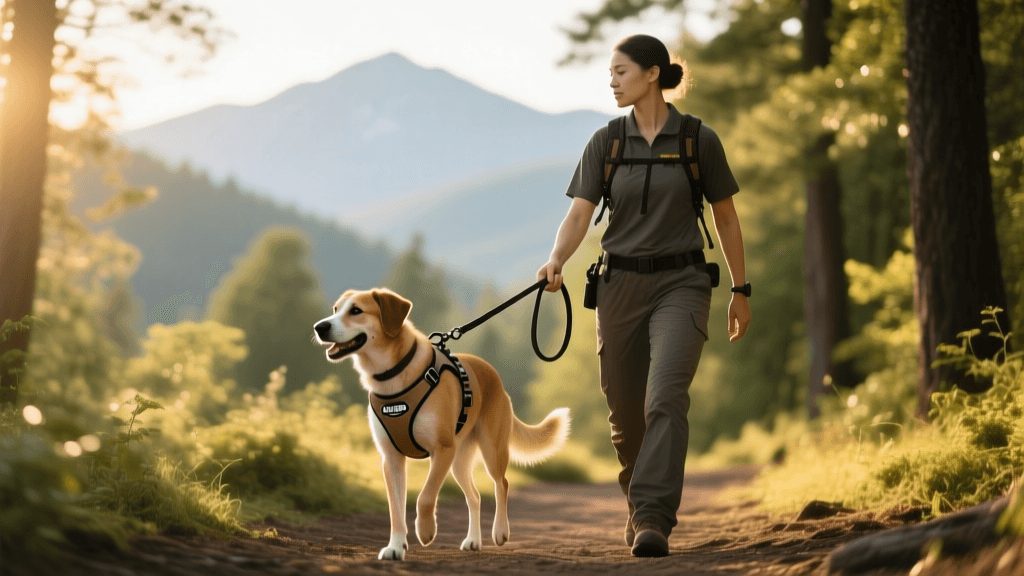
When fitting the Ruffwear Front Range or any similar Y-shaped harness, ensure you can slide two fingers comfortably under the chest strap. A poorly fitted harness can cause gait restriction and physical discomfort, which will lower your dog’s threshold for reactivity.
Step-by-Step: Playing the Engage-Disengage Game
Step 1: Find the Sub-Threshold Distance
Before you begin, you must identify your dog’s “threshold”—the distance at which they notice the trigger but do not react with barking, lunging, or panic. If your dog is over threshold, their brain is in a fight-or-flight state, and learning is biologically impossible. Start at a park or quiet street where you can control the distance (e.g., 50 to 100 feet away from other dogs).
Step 2: Phase One (Engage)
- Stand at your sub-threshold distance with your dog on a relaxed 6-foot leash.
- Wait for your dog to look at the trigger (another dog, a person, a skateboard).
- The exact second they look, click your clicker (or use a verbal marker like “Yes!”).
- Immediately deliver a high-value treat directly to your dog’s mouth.
- Repeat this 10 to 15 times until your dog begins to anticipate the treat immediately after looking at the trigger.
Step 3: Phase Two (Disengage)
- Once Phase One is solid, change the contingency. When your dog looks at the trigger, do not click immediately.
- Wait for your dog to voluntarily turn their head away from the trigger and look back at you.
- The moment they make eye contact with you, click and deliver a jackpot of treats.
- If they stare at the trigger for more than 3 seconds without turning away, they are likely over threshold. Increase your distance and revert to Phase One.
Reading Canine Body Language and Thresholds
A critical component of force-free training is understanding that reactivity is rooted in fear or frustration. The Fear Free Pets initiative highlights the importance of recognizing subtle stress signals before they escalate into explosive reactions. In 2026, modern handlers are trained to look for the “canine ladder of aggression.”
Before your dog barks or lunges, they will display micro-signals of discomfort. These include:
- Lip licking and yawning: Often mistaken for tiredness, these are classic calming signals indicating rising stress.
- Whale eye: Showing the whites of the eyes while the head is turned away from the trigger.
- Freezing: A stiff, rigid posture with a closed mouth and intense stare.
- Curved approach or sniffing: Displacement behaviors used to avoid direct confrontation.
Pro Tip for 2026: Keep a digital training journal on your smartphone. Record the distance, the trigger type, and your dog’s body language score (1-10) for every session. Data-driven tracking helps you identify patterns and adjust your sub-threshold distances accurately.
High-Value Rewards: Fueling the Counter-Conditioning Process
You cannot counter-condition a deep-seated emotional response with dry kibble. The treats you use must be potent enough to override the adrenaline of the trigger. In 2026, the top force-free behaviorists recommend the following high-value reward hierarchy:
- Top Tier (For high-stress triggers): Freeze-dried beef liver, boiled plain chicken breast, or low-sodium string cheese. These should be reserved exclusively for reactivity walks.
- Mid Tier (For moderate distractions): Commercial soft chews, hot dog pieces, or sardines packed in water.
- Low Tier (For baseline obedience at home): Kibble or standard training biscuits.
Ensure your treats are pea-sized. You want your dog to swallow the treat quickly so they can immediately re-engage with the environment and continue the game. Fumbling with large treats ruins the precise timing required for the Engage-Disengage protocol.
Troubleshooting Common Hurdles
My Dog Won’t Take the Treat
If your dog refuses food, they are over threshold. Their digestive system has essentially shut down due to the sympathetic nervous system’s fight-or-flight response. Calmly increase the distance from the trigger by 20 feet and try again. Never force a treat into a panicked dog’s mouth.
My Dog Keeps Lunging Before I Can Click
This indicates a failure in management, not a failure in the dog. You are working too close to the trigger. Utilize environmental blockers like parked cars, hedges, or fences to break the line of sight. You can also use a “Find It” scatter feed on the grass to keep your dog’s nose down and engaged with you before the trigger even rounds the corner.
Progress Feels Too Slow
Behavioral modification is a marathon, not a sprint. Neural pathways associated with fear take time to rewire. Celebrate micro-victories: a softer gaze, a relaxed tail carriage, or a quicker disengage time. Consistency in your force-free approach will yield a confident, happy dog who trusts you to keep them safe in a complex world.
Conclusion
Leash reactivity is one of the most challenging behavioral issues a dog owner can face, but it is entirely manageable through force-free, science-based methods. By utilizing the Engage-Disengage game, investing in ergonomic 2026 gear like the Ruffwear Front Range harness, and respecting your dog’s emotional thresholds, you can transform your daily walks from a source of dread into an opportunity for connection. Commit to the process, prioritize your dog’s emotional well-being, and watch as your reactive dog blossoms into a confident, engaged companion.
beth-carrasco
All our authors care for dogs every day — read more of their work on the authors page.