Best Puppy Teething Toys for Bite Training in 2026
Discover the best puppy teething toys for 2026 to master bite inhibition, redirect destructive chewing, and soothe gums with expert training protocols.
Understanding the Canine Teething Window
As we navigate the dog training landscape in 2026, veterinary behaviorists have fundamentally shifted their perspective on puppy teething. No longer viewed merely as a biological inconvenience, the teething phase is now recognized as a critical window for behavioral conditioning and bite inhibition training. Puppies typically begin losing their deciduous teeth around 12 to 16 weeks of age, with the process concluding by the time they are six months old. According to the American Kennel Club (AKC), this intense period of oral exploration is driven by both the discomfort of emerging adult teeth and a hardwired neurological need to map their environment through tactile feedback.
During this window, puppies are highly susceptible to developing destructive chewing habits or poor bite inhibition if their oral fixation is not properly managed. The goal of modern teething toy selection is not simply to pacify the puppy, but to actively condition them to understand what is appropriate to bite and what is off-limits. By pairing the right teething tools with structured redirection protocols, owners can transform a frustrating developmental stage into a foundational obedience training opportunity.
The 2026 Shift: Toys as Active Training Tools
In the past, pet stores were flooded with passive pacifiers designed solely to numb sore gums. However, the best teething toys of 2026 are engineered with behavioral psychology in mind. Modern canine behaviorists emphasize that a toy must serve a dual purpose: it must provide immediate sensory relief for inflamed gingiva while simultaneously acting as a high-value reward for redirection exercises. The ASPCA notes that destructive chewing is often a symptom of under-stimulation combined with teething pain. Therefore, the most effective toys on the market today incorporate puzzle elements, varied textures, and food-dispensing capabilities to engage the puppy's brain and soothe their mouth simultaneously.
When selecting a teething toy for training, you must evaluate it based on three criteria: texture variability (to massage different parts of the gums), stuffability (to create a high-value conditioning reward), and structural safety (to prevent choking hazards during unsupervised moments). Below, we break down the top three teething toys dominating the 2026 training market and how to use them effectively.
Top 3 Teething Toys for Behavioral Redirection
1. Kong Puppy Teething Stick
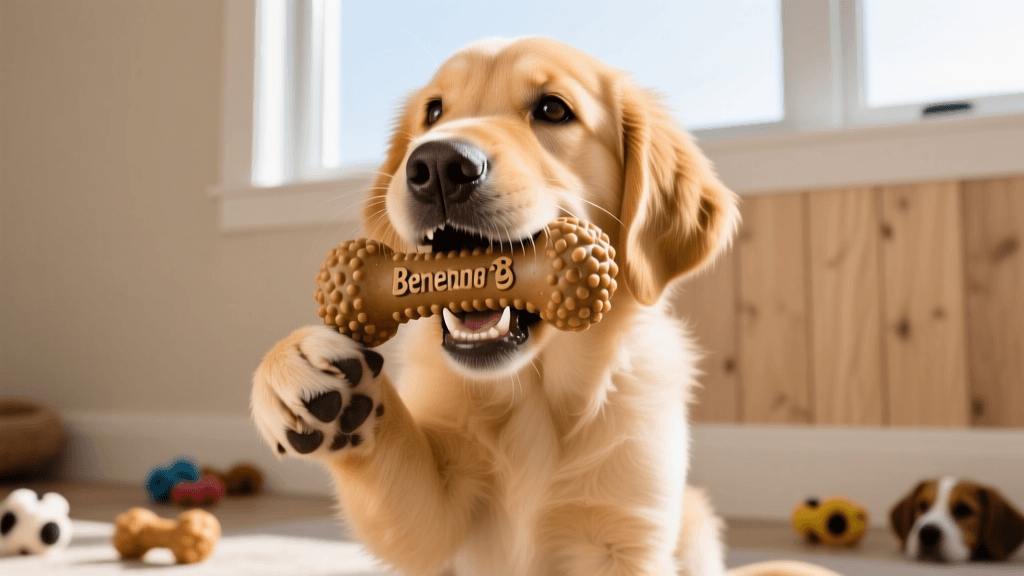
Unlike the classic Kong shape, the 2026 Puppy Teething Stick features patented dental ridges specifically designed to clean teeth and massage sore gums. Made from a proprietary, ultra-soft rubber formula, it is gentle on developing enamel. Its primary training advantage is its hollow core, which can be packed with puppy-safe peanut butter or frozen bone broth. This makes it the ultimate tool for 'settle' training and crate conditioning.
2. West Paw Zogoflex Toppl
The Toppl is an interlocking puzzle toy that has become a staple in modern positive reinforcement training. Its unique design features inner ridges that hold treats and kibble securely. For teething puppies, the Toppl can be filled with a soothing yogurt and pumpkin puree mixture, then frozen. The act of licking and working the frozen treat out of the ridges releases endorphins, naturally calming the puppy's nervous system while satisfying their urge to chew.
3. Nylabone Puppy Power Chew Freezer Toy
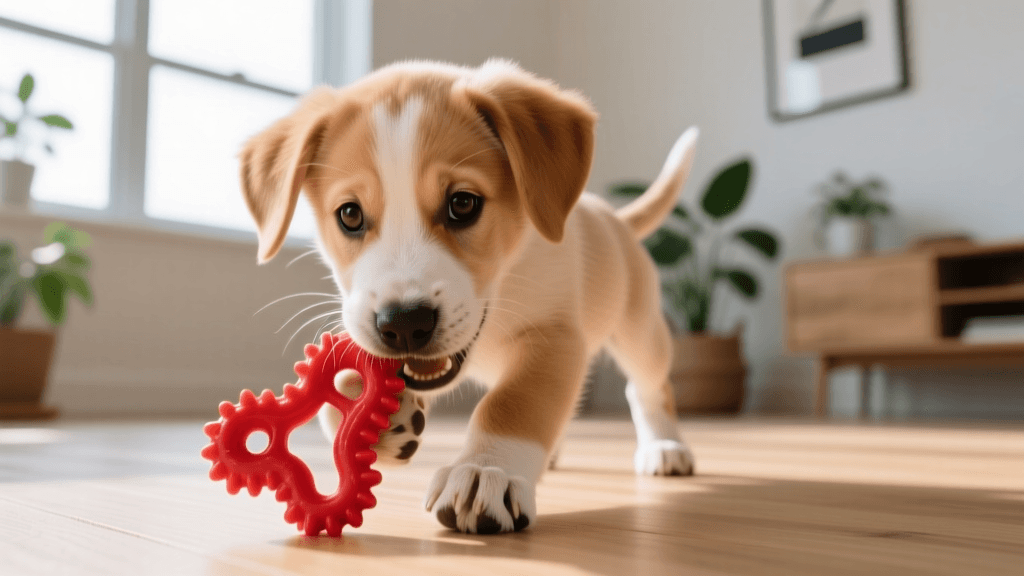
Designed for the most aggressive puppy chewers, this toy combines a textured nylon chew with a freezable gel core. While it is less effective for food-based operant conditioning, it excels in pure redirection. When a puppy begins to gnaw on furniture or baseboards, the Nylabone offers a superior textural alternative that mimics the resistance of wood or hard plastic without the associated splintering risks.
2026 Teething Toy Comparison Chart
| Toy Model | Primary Training Use | 2026 Avg Price | Durability Rating |
|---|---|---|---|
| Kong Puppy Teething Stick | Crate conditioning and soothing | $14.99 | High |
| West Paw Zogoflex Toppl | Cognitive engagement and licking | $21.95 | Very High |
| Nylabone Puppy Power Chew | Hard-surface redirection | $12.49 | Extreme |
Step-by-Step Bite Inhibition and Redirection Protocol
Owning the best teething toy is only half the equation; the other half is executing a consistent training protocol. The AKC Training Guide emphasizes that consistency and timing are paramount when teaching bite inhibition. Follow this three-step protocol to effectively use your teething toys for behavioral conditioning.
Step 1: The 'Trade-Up' Redirection Game
Never simply snatch a forbidden item from your puppy's mouth, as this can trigger resource guarding or turn the interaction into a game of chase. Instead, keep a loaded Kong Teething Stick or frozen Toppl within arm's reach at all times. When you catch your puppy chewing on a shoe or a table leg, calmly approach them and present the high-value frozen toy right at their nose. The moment they drop the forbidden item to investigate the toy, praise them calmly and let them engage with the toy. You are teaching the puppy that trading up for an approved toy always yields a superior reward.
Step 2: The Freeze Protocol for Hyperactivity
Teething pain often manifests as hyperactive, frantic nipping. When your puppy enters this state, verbal corrections are usually ineffective. Instead, utilize the 'Freeze Protocol.' Hand your puppy a frozen West Paw Toppl and guide them onto their designated mat or bed. The cold temperature will immediately constrict the blood vessels in their inflamed gums, providing rapid pain relief, while the licking action will naturally lower their heart rate. Reward them with quiet praise for staying on their mat with the toy, reinforcing the 'place' command simultaneously.
Step 3: The 'Ouch' Method for Bite Inhibition
If your puppy's teeth make contact with your skin during play, immediately let out a high-pitched, genuine-sounding 'Ouch!' and go completely still, withdrawing your hands and attention for exactly five seconds. This mimics the feedback they would receive from littermates. After the five-second pause, present an approved teething toy like the Nylabone or Kong Stick. When they bite the toy instead of your skin, resume enthusiastic play. This clear contrast teaches the puppy that human skin ends the fun, while approved toys keep the game going.
Common Training Mistakes to Avoid in 2026
Even with the best tools, owners frequently undermine their own training efforts through common behavioral missteps. First, avoid the temptation to give your puppy old shoes or socks as teething toys. Puppies cannot distinguish between an old, ruined sneaker and your brand-new running shoes; they only recognize the scent and texture of footwear. Allowing them to chew old shoes actively conditions them to destroy all shoes.
Second, avoid using plush squeaky toys as primary teething pacifiers. While great for fetch, the internal squeaker mimics the sound of dying prey, which can actually heighten a puppy's arousal levels and encourage harder, more frantic biting. For teething and bite inhibition training, stick to rubber, nylon, and food-dispensing toys that promote licking and gnawing rather than shaking and tearing.
Finally, never punish a puppy for chewing. Chewing is a biological imperative, not an act of defiance. Punishing a puppy for chewing on the wrong item will not stop the urge to chew; it will only teach the puppy to hide from you when they do it, leading to sneaky, destructive behavior when you are not in the room. By utilizing the 2026 lineup of advanced teething toys and pairing them with proactive redirection, you will guide your puppy through this challenging developmental phase while building a foundation of trust, obedience, and excellent bite inhibition.
hannah-wickes
All our authors care for dogs every day — read more of their work on the authors page.