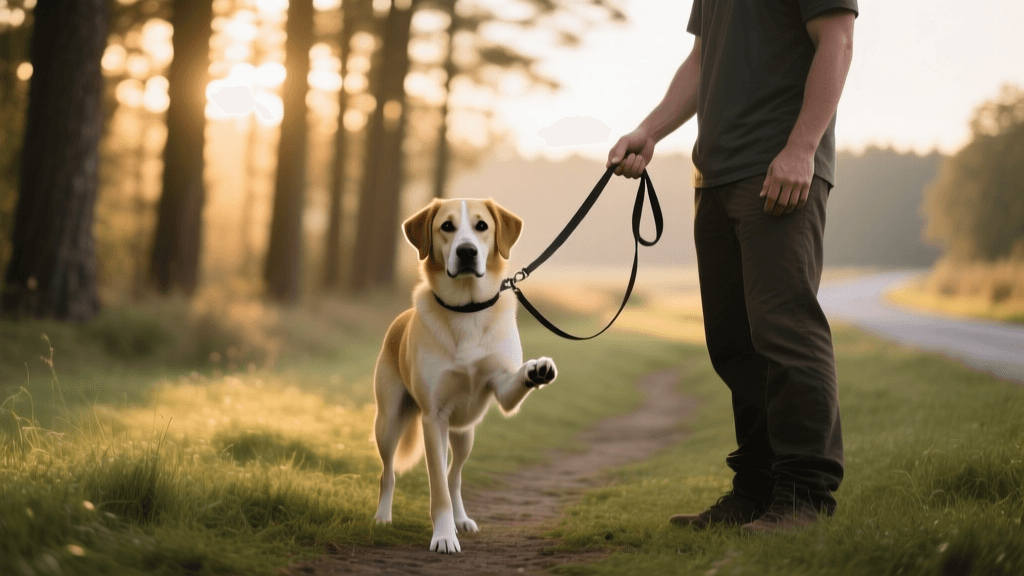
Force-Free Leash Reactivity: Engage-Disengage Protocol for 2026
Master force-free leash reactivity training in 2026 with the Engage-Disengage protocol. Learn positive reinforcement techniques and top treat gear.
Understanding Leash Reactivity Through a Force-Free Lens
Leash reactivity is one of the most common and distressing behavioral challenges faced by dog owners today. Characterized by barking, lunging, or growling when on a leash, this behavior is often misunderstood as outright aggression or stubborn disobedience. However, modern veterinary behaviorists and certified force-free trainers recognize that the vast majority of leash reactivity is rooted in fear, anxiety, or barrier frustration. As we navigate the dog training landscape in 2026, the industry has firmly moved away from aversive tools like prong collars, slip leads, and electronic shock collars. Instead, the gold standard for addressing reactivity relies on positive reinforcement, desensitization, and counter-conditioning.
When a dog reacts on a leash, their sympathetic nervous system is triggered, flooding their body with cortisol and adrenaline. In this heightened state of arousal, learning is virtually impossible. Punishing a reactive dog only serves to increase their underlying anxiety, confirming their belief that the trigger (such as another dog or a stranger) is indeed dangerous. By adopting a force-free methodology, we focus on changing the dog's emotional response to the trigger rather than merely suppressing the outward symptoms of their distress. The American Veterinary Society of Animal Behavior (AVSAB) strongly advocates against the use of punishment in dog training, noting that aversive methods can lead to increased aggression and long-term psychological harm.
The Science Behind the Engage-Disengage Protocol
The Engage-Disengage protocol, originally developed by Alice Tong and widely refined by force-free professionals, is a cornerstone technique for treating leash reactivity. It brilliantly combines classical conditioning (changing the emotional response) with operant conditioning (rewarding a specific, incompatible behavior). The protocol is divided into two distinct phases, designed to be executed when the dog is strictly 'under threshold'—meaning they are far enough away from the trigger that they can notice it without reacting with panic or aggression.
In 2026, certified trainers emphasize the importance of the 'three-second rule' during this protocol. When a dog spots a trigger, the handler has approximately three seconds to mark the behavior and deliver a high-value reward before the dog's brain transitions from observation to reaction. This precise timing leverages the dog's dopamine pathways, creating a positive association with the previously feared stimulus. Organizations like Fear Free Pets consistently highlight that reducing fear, anxiety, and stress (FAS) during training sessions is critical for neurological rewiring to occur. If a dog is over threshold, their prefrontal cortex essentially shuts down, and no amount of treat delivery will facilitate learning.
Essential Force-Free Gear for Reactivity Training in 2026
Success in the Engage-Disengage game relies heavily on your ability to deliver rapid-fire, high-value treats with minimal fumbling. In 2026, the market offers several exceptional treat-dispensing tools designed specifically for the split-second timing required in reactivity training. Fumbling with a zipper or a drawstring can cost you the three-second window, causing the dog to cross the threshold into reactivity.
| Product Model | 2026 Retail Price | Best Use Case | Key Force-Free Feature |
|---|---|---|---|
| Ruffwear Treat Trader | $39.95 | Rapid-fire marking and open-hand delivery | Magnetic auto-close flap allows instant access without looking |
| Dog Gone Smart Pouch | $24.99 | Messy, ultra-high-value treats (e.g., liver, cheese) | Removable silicone inner liner for easy sanitation |
| FroggleDog Treat Belt | $32.50 | Long trail sessions and multi-dog households | Integrated waist belt with three separate magnetic compartments |
When stocking your pouch, avoid standard dry kibble. Reactivity training requires 'jackpot' level rewards to compete with the environmental distraction. Current top-tier recommendations for 2026 include Zuke's Mini Naturals (ideal for high-repetition marking due to their low-calorie, small size), Stella & Chewy's Freeze-Dried Raw Bites, and homemade boiled chicken breast. The goal is to provide a sensory experience that the dog finds more rewarding than the urge to lunge.
Step-by-Step Guide to the Engage-Disengage Game
To implement this protocol effectively, you will need a secure, force-free harness (such as a front-clip or dual-clip Y-harness), a sturdy 6-foot biothane or leather leash, and your loaded treat pouch. Avoid retractable leashes, as they offer poor leverage and can increase a dog's frustration by mimicking tension.
Phase 1: Engage (Classical Conditioning)
Find an environment where your dog is under threshold. This might mean starting in your quiet backyard, or finding a park bench 100 feet away from a walking path. When your dog looks at the trigger (e.g., a distant dog), immediately use a marker word like 'Yes!' or a clicker. The exact moment they look at the trigger, mark it, then deliver the treat directly to their mouth. You are not asking them to look away; you are simply paying them for noticing the trigger without reacting. Repeat this until the dog begins to anticipate a treat the moment they see the trigger.
Phase 2: Disengage (Operant Conditioning)
Once Phase 1 is solid, you advance to Phase 2. When your dog looks at the trigger, do not mark immediately. Instead, wait for them to voluntarily turn their head away from the trigger and look back at you. The moment they make eye contact or orient their body toward you, mark with 'Yes!' and deliver a jackpot reward. This teaches the dog an active coping mechanism: 'When I see something scary, I should look at my human because good things happen.' This disengagement behavior is incompatible with lunging and barking, effectively rewiring their default response to stressors.
Troubleshooting Common Setbacks
Even with meticulous planning, setbacks are a normal part of the behavioral conditioning journey. If your dog refuses to eat the treats, this is the clearest biological indicator that they are over threshold. When a dog's digestive system shuts down due to the fight-or-flight response, food becomes unappetizing. If this happens, do not force the training. Simply increase your distance from the trigger by 50 feet or more, or retreat to a quieter environment. In 2026, force-free professionals advocate for 'decompression walks'—using a long line in a secluded, nature-rich area to allow the dog's nervous system to reset after a stressful reactivity session.
Another common issue is 'trigger stacking.' This occurs when a dog experiences multiple minor stressors in a single day (e.g., a loud garbage truck, a slipped collar, and then seeing a strange dog). Each stressor adds cortisol to their bloodstream, lowering their reactivity threshold. If your dog reacts explosively to a trigger they normally tolerate, recognize that trigger stacking is likely at play. Manage their environment, reduce their overall stress load, and return to Phase 1 of the Engage-Disengage protocol at a greater distance.
Conclusion
Overcoming leash reactivity is not about achieving perfect obedience; it is about building a foundation of trust and emotional resilience. By utilizing the Engage-Disengage protocol, investing in rapid-delivery treat gear, and respecting your dog's neurological thresholds, you can transform your daily walks from a source of dread into an opportunity for connection. Remember that force-free training is a marathon, not a sprint. Celebrate the micro-victories—a brief glance at you, a relaxed ear flick, or a deep sigh—and trust the science of positive reinforcement to guide your dog toward a calmer, happier life in 2026 and beyond.
jonas-cole
All our authors care for dogs every day — read more of their work on the authors page.