Nina Ottosson Dog Brick Puzzle Training Guide 2026
Master the Nina Ottosson Dog Brick puzzle in 2026. Learn step-by-step mental enrichment training, safety tips, and DIY foraging alternatives for dogs.
The Rise of Canine Cognitive Enrichment in 2026
As we navigate through 2026, the paradigm of dog training has shifted dramatically from purely physical exhaustion to deep cognitive engagement. Veterinary behaviorists now recognize that mental enrichment is just as critical as physical exercise, particularly for high-energy working and herding breeds. According to resources from the American Veterinary Medical Association (AVMA), providing structured cognitive challenges can significantly reduce anxiety, prevent destructive behaviors, and delay the onset of canine cognitive dysfunction in senior dogs.
Urban living trends in 2026 mean many dogs reside in apartments or homes with limited yard space. While a three-mile run might tire a Border Collie's muscles, it does little to satisfy their innate problem-solving drive. This is where interactive puzzle games come into play. By simulating the foraging and hunting sequences of their wild ancestors, puzzle toys transform mealtime into a stimulating brain workout that burns mental energy.
Product Spotlight: The Nina Ottosson Dog Brick
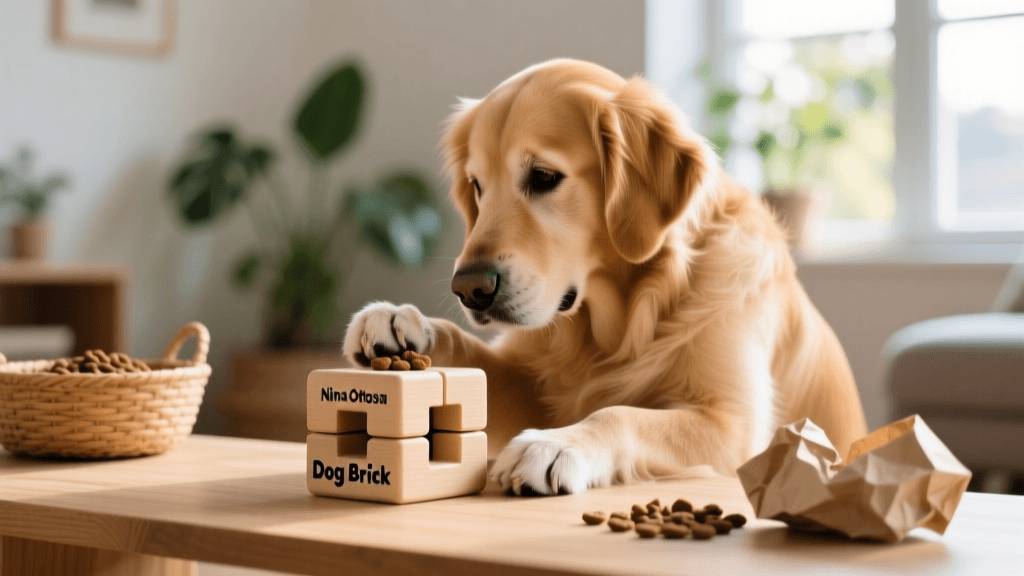
Among the myriad of puzzle toys available on the market this year, the Nina Ottosson Dog Brick Interactive Puzzle remains a gold standard for intermediate canine enrichment. Manufactured by Outward Hound, this Level 2 puzzle is specifically designed to teach dogs sequential problem-solving.
Key Specifications for 2026 Models
- Dimensions: 12.5 x 9 x 2 inches
- Material: BPA-free, phthalate-free, and PVC-free composite
- Difficulty Level: Level 2 (Intermediate)
- Current Retail Price: $16.99 USD
- Cleaning: Top-rack dishwasher safe (gentle cycle)
The Dog Brick features three types of treat-hiding mechanisms: flip covers, sliding blocks, and removable white bone pegs. This multi-tiered approach ensures that dogs cannot rely on a single physical action to access their rewards, thereby engaging multiple neural pathways simultaneously.
Step-by-Step Dog Brick Training Protocol
Introducing a puzzle toy to your dog requires patience and a structured training protocol. Never simply hand your dog a loaded puzzle and expect them to figure it out. Follow this three-phase training guide to ensure success and prevent frustration.
Phase 1: Scent Loading and Easy Wins (Days 1-3)
Begin by making the puzzle incredibly easy. Slide the blocks completely open and leave the flip covers propped up. Place high-value, strongly scented treats (like freeze-dried liver or small pieces of hot dog) directly in the open compartments. Allow your dog to eat the treats immediately. This phase teaches the dog that the plastic apparatus is a source of food, building positive associations and confidence.
Phase 2: Guided Sliding and Flipping (Days 4-7)
Once your dog eagerly approaches the puzzle, begin closing the sliding blocks and flip covers halfway. Point to the hidden treats and encourage your dog to use their paws or nose. If they struggle, gently demonstrate the sliding motion with your own hand. Reward any interaction with the moving parts with verbal praise. The goal is to teach the mechanics of the puzzle without overwhelming the animal.
Phase 3: The Bone Peg Challenge (Week 2 and Beyond)
The white bone pegs are the most advanced feature of the Dog Brick. Place them over the sliding blocks. Your dog must now learn to remove the pegs (or nudge them aside) before they can slide the blocks open. Note: Always supervise this phase closely, as some dogs may attempt to chew and swallow the plastic bones.
Pro Tip: To increase the difficulty without introducing new physical mechanics, try using a spreadable treat like plain pumpkin puree or dog-safe peanut butter in the sliding tracks. This forces the dog to use licking and sustained focus rather than quick snapping motions, extending the enrichment session.
Puzzle Toy Comparison Chart
While the Dog Brick is excellent for sliding and flipping mechanics, a well-rounded mental enrichment routine in 2026 should incorporate various puzzle types. Below is a comparison of top-tier enrichment tools.
| Puzzle Toy | Primary Skill Targeted | Best For | Avg. 2026 Price |
|---|---|---|---|
| Nina Ottosson Dog Brick | Sequential sliding & flipping | Methodical problem solvers | $16.99 |
| KONG Classic Extreme | Chewing & licking endurance | Power chewers & separation anxiety | $19.99 |
| Outward Hound Hide-A-Squirrel | Plucking & shaking prey drive | Terriers & high prey-drive breeds | $14.99 |
| Snuffle Mat (DIY or Commercial) | Olfactory foraging & sniffing | Senior dogs & hyperactive puppies | $10.00 - $25.00 |
DIY Snuffle Mat: The Budget-Friendly Alternative
If your dog is highly motivated by scent rather than mechanical puzzles, a snuffle mat is an invaluable addition to your training arsenal. The canine olfactory system is a marvel of nature; dogs possess up to 300 million scent receptors compared to a human's mere 6 million. Tapping into this biological hardware is incredibly tiring and satisfying for them.
While commercial versions are widely available, creating a DIY snuffle mat in 2026 is a cost-effective and highly customizable project.
Materials Needed:
- 1 Rubber sink mat with evenly spaced holes (approx. $5 at local hardware stores)
- 2-3 Yards of anti-pill fleece fabric in various colors (dogs see blue and yellow best)
- Scissors
Assembly Instructions:
Cut the fleece into strips measuring 1 inch wide and 8 inches long. Thread a strip through two adjacent holes in the sink mat and tie it into a secure double knot. Repeat this process until every hole is filled and the mat resembles a thick, shaggy rug. Scatter your dog's daily kibble ration deep within the fleece strips. Sniffing lowers a dog's heart rate and releases dopamine, making the snuffle mat an exceptional tool for decompression after a stressful event, such as a vet visit or a loud thunderstorm.
Safety Guidelines and Supervision
Mental enrichment should never come at the cost of your dog's physical safety. The U.S. Food and Drug Administration (FDA) emphasizes the importance of monitoring pets with interactive toys to prevent gastrointestinal blockages and dental fractures.
- Size Appropriateness: Ensure that any removable parts (like the Dog Brick's bone pegs) are too large to be swallowed whole. If your dog is an aggressive chewer, skip the bone pegs entirely and rely solely on the sliding blocks.
- Hygiene: Puzzle toys accumulate saliva and food residue, creating a breeding ground for bacteria. Wash the Dog Brick and snuffle mats weekly using pet-safe, unscented detergents to prevent gastrointestinal upset.
- Caloric Management: Puzzle toys often utilize high-value treats. To prevent obesity, ensure you deduct the calories used in training sessions from your dog's daily meal allowance. Using their standard kibble for puzzles is an excellent way to manage weight while providing enrichment.
- Frustration Monitoring: If your dog begins barking aggressively, pawing frantically, or attempting to flip the entire puzzle over to smash it, the difficulty level is too high. Revert to Phase 1 to rebuild their confidence and prevent them from abandoning the game.
Conclusion
Incorporating the Nina Ottosson Dog Brick and DIY foraging games into your daily routine is one of the most effective ways to nurture a balanced, happy, and cognitively sharp dog in 2026. By prioritizing mental enrichment, you are not just feeding your dog; you are engaging their brain, honoring their natural instincts, and deepening the bond you share. Start with simple scent games, progress to mechanical puzzles, and watch your canine companion thrive in a modern environment.
robin-maitland
All our authors care for dogs every day — read more of their work on the authors page.