Urban Leash Reactivity 2026: Master The Engage-Disengage Game
Master urban leash reactivity in 2026 with the Engage-Disengage game. Learn threshold tracking, timing, and high-value rewards for anxious dogs.
Understanding Urban Leash Reactivity in 2026
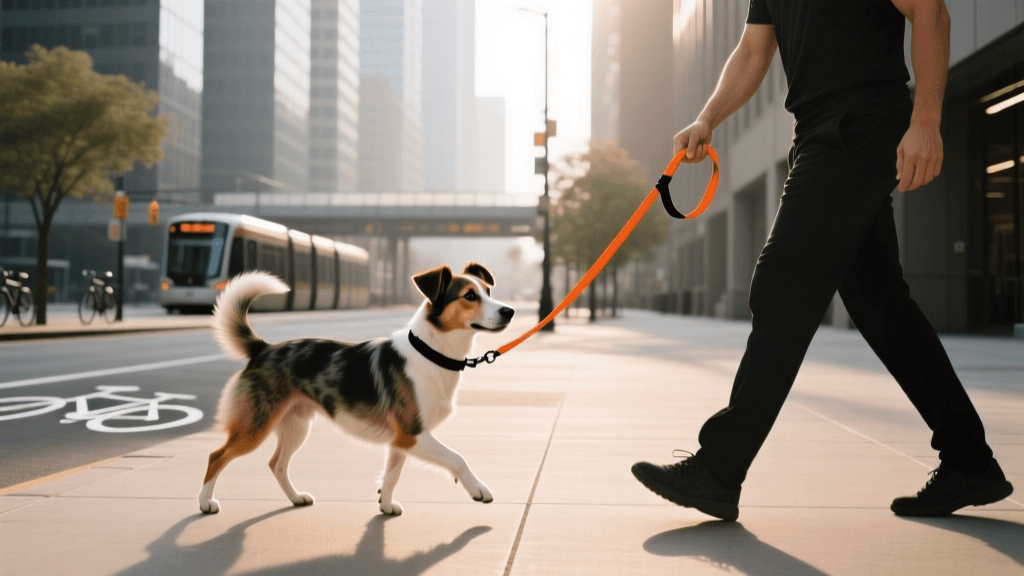
As urban landscapes continue to densify in 2026, dog owners are facing unprecedented challenges when navigating shared public spaces. City parks, crowded sidewalks, and multi-use trails mean that dogs are constantly exposed to a high volume of novel stimuli. For a subset of the canine population, this constant sensory input triggers leash reactivity—a behavioral response characterized by lunging, barking, or freezing when confronted with triggers like other dogs, cyclists, or strangers.
It is crucial to understand that reactivity is fundamentally a distance-increasing behavior rooted in fear, anxiety, or frustration, rather than outright malice or aggression. According to behavioral resources provided by the American Veterinary Medical Association, recognizing the emotional root of canine anxiety is the critical first step in any successful behavioral modification program. When a dog reacts on a leash, they are essentially communicating that they feel trapped and unable to flee from a perceived threat due to the physical constraint of the leash.
The Science of Thresholds and the Amygdala Hijack
Before diving into specific training protocols, you must understand the concept of the "threshold." A dog's threshold is the invisible boundary between feeling safe and feeling threatened. When a dog is "sub-threshold," they are aware of a trigger but remain under their stress tipping point. They can still process treats, respond to cues, and learn. When a dog goes "over-threshold," their sympathetic nervous system takes over, flooding their brain with cortisol and adrenaline. This is often referred to as an amygdala hijack.
Once over-threshold, learning is biologically impossible. No amount of treats or commands will penetrate the panic. In 2026, advanced biometric smart collars equipped with Heart Rate Variability (HRV) sensors allow owners to monitor their dog's physiological stress levels in real-time. By pairing HRV data with environmental observations, you can pinpoint your dog's exact threshold distance—whether that is 50 feet or 150 feet from a trigger—and ensure you always begin training in the sub-threshold zone.
Step-by-Step: The Engage-Disengage Game
Developed by renowned behavior expert Leslie McDevitt, the Engage-Disengage game is a cornerstone of force-free reactivity training. It relies on classical and operant conditioning to change your dog's emotional response to triggers. Here is how to execute the protocol effectively in modern urban settings.
Phase 1: Engage (Marking the Trigger)
In the first phase, your goal is simply to mark the moment your dog notices the trigger while remaining sub-threshold.
- Set Up the Environment: Position yourself at a distance where your dog can see the trigger (e.g., another dog walking by) but does not react with barking or pulling. This is your sub-threshold distance.
- Wait for the Look: The moment your dog looks at the trigger, immediately use a marker word like "Yes!" or click a mechanical clicker.
- Deliver the Reward: After marking, present a high-value treat directly to your dog's mouth. It is vital that the treat is delivered after the mark, not before. The sequence is: Dog looks at trigger -> You mark -> Dog turns to you for the treat.
Repeat this phase until your dog begins to anticipate the treat immediately upon seeing the trigger. This usually takes several sessions over a few weeks.
Phase 2: Disengage (Rewarding the Look Away)
Once your dog reliably expects a treat after looking at the trigger, you move to Phase 2. This phase shifts the cognitive load to the dog, empowering them to make the choice to look away.
- Wait for the Disengage: When your dog looks at the trigger, do not mark immediately. Instead, wait silently for one to two seconds.
- The Choice: Because of the conditioning in Phase 1, your dog should voluntarily turn their head away from the trigger and look back at you, expecting the reward.
- Mark and Reward: The exact moment your dog turns their head toward you, mark with your "Yes!" or clicker, and deliver a jackpot reward (three to five pieces of high-value food).
If your dog stares at the trigger for more than three seconds without turning away, they are likely over-threshold. Simply increase your distance from the trigger and try again. The Fear Free Pets initiative heavily emphasizes that reducing environmental pressure is paramount to preventing chronic stress in anxious animals.
Essential Gear for Reactive Dog Training in 2026
Having the right equipment prevents accidental leash corrections that can exacerbate fear and ensures you have rapid access to rewards. Below is a comparison of top-tier gear recommended for urban reactivity management this year.
| Equipment Type | Recommended Model (2026) | Key Feature for Reactivity | Estimated Cost |
|---|---|---|---|
| Front-Clip Harness | Ruffwear Front Range | Redirects forward momentum without choking; secure dual-clip options. | $45 - $55 |
| Hands-Free Treat Pouch | Ruffwear Treat Trader | Magnetic closure allows silent, instant access to high-value rewards. | $35 - $40 |
| Long Line | Biothane Waterproof Leash (15ft) | Provides drag-free freedom to create distance; easy to clean in city environments. | $30 - $45 |
| High-Value Rewards | Vital Essentials Freeze-Dried Beef | Single-ingredient, high-scent protein that cuts through environmental distractions. | $25 - $35 |
Note: Never use prong collars, slip leads, or e-collars for leash reactivity. As noted by the ASPCA, aversive tools suppress warning signs without addressing the underlying anxiety, often leading to sudden, unprovoked bites when the dog's suppression threshold is finally breached.
Troubleshooting Common Mistakes
Even experienced handlers can fall into bad habits when managing a reactive dog in a fast-paced city. Watch out for these common pitfalls:
- Poor Timing on the Marker: If you click or say "Yes" while the dog is already turning away, you are marking the disengage rather than the engage. In Phase 1, timing is everything. The marker must occur while the eyes are locked on the trigger.
- Using Low-Value Treats: Dry kibble or standard biscuits will not compete with the adrenaline of a passing dog. You must use real meat, cheese, or specialized freeze-dried treats to create a strong enough positive emotional association.
- Stagnant Positioning: Standing still on a sidewalk makes your dog a sitting duck. Keep moving in a gentle arc away from the trigger to give your dog the physical sensation of retreat, which naturally lowers cortisol levels.
- Pushing Past Threshold: Ego is the enemy of reactivity training. If your dog reacts, do not get frustrated. Simply note the distance, create space, and end the session on a positive note with a simple hand-targeting game.
"Behavior modification is not a race. It is a gradual rewiring of the canine brain. Celebrate the micro-victories—a single second of eye contact or a voluntary sit when a bicycle passes—and trust the process of counter-conditioning."
Tracking Progress and Adjusting Criteria
As you progress through 2026, you will notice your dog's threshold distance naturally decreasing. A dog that once needed 100 feet of buffer space may soon be comfortable at 40 feet. To track this, keep a digital training journal. Log the date, the environment, the trigger type, the starting distance, and the dog's HRV baseline if you are using a biometric collar.
When your dog successfully completes ten consecutive Engage-Disengage reps at a specific distance without a single bark or lunge, you can decrease the distance by 10%. If the dog reacts at the new distance, immediately increase the space again. This dynamic ebb and flow respects the dog's emotional state on any given day, accounting for variables like sleep deprivation, weather changes, or cumulative stress from the week.
Ultimately, managing an anxious, leash-reactive dog in a bustling urban environment requires patience, premium equipment, and a deep empathy for the canine experience. By consistently playing the Engage-Disengage game and honoring your dog's thresholds, you can transform terrifying city walks into confident, enriching adventures for both you and your best friend.
aaron-whyte
All our authors care for dogs every day — read more of their work on the authors page.