Master the Flyball Swimmer's Turn Training in 2026
Master the flyball swimmer's turn in 2026 with our expert box training guide. Learn footwork, conditioning, and timing for faster competition runs.
The Evolution of Flyball and the Swimmer's Turn in 2026
Flyball remains one of the most exhilarating and fast-paced canine sports in the world. As we navigate the 2026 competitive season, the margin of victory in Open and Multiregional tournaments is frequently measured in mere hundredths of a second. At the elite level, the race is rarely won on the flat; it is won and lost at the box. The 'swimmer's turn' (also known as the lateral turn or offset turn) has completely revolutionized the sport, replacing the older, more jarring four-paw braking methods. According to the North American Flyball Association (NAFA), teams that successfully train a fluid swimmer's turn consistently shave 0.2 to 0.4 seconds off their total relay times, a massive advantage in today's hyper-competitive landscape.
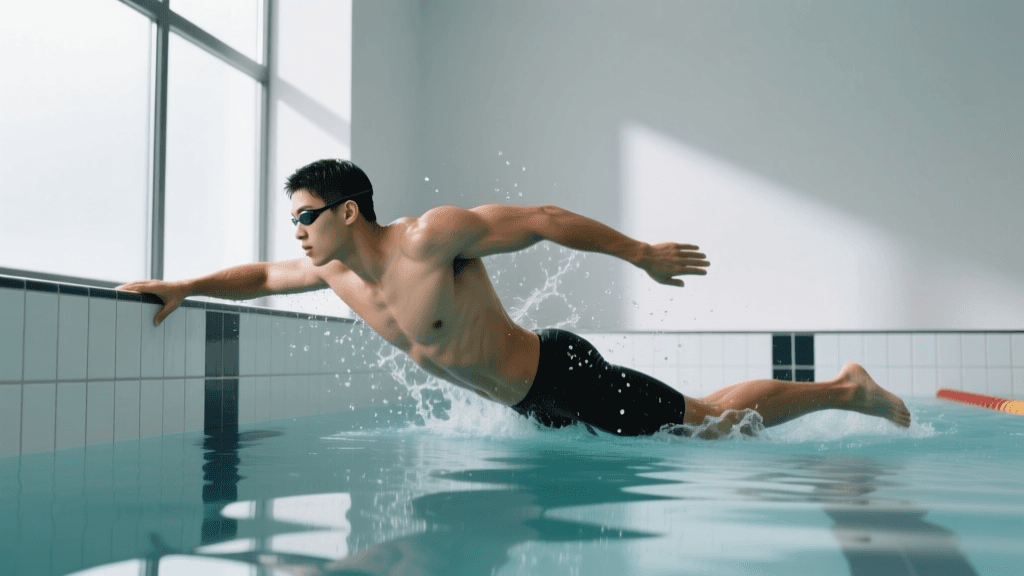
The swimmer's turn allows the dog to hit the angled box pedal with their hind feet while simultaneously reaching for the tennis ball, using the momentum of their approach to pivot and push off in one continuous, fluid motion. This technique not only maximizes speed but also significantly reduces the concussive forces on the dog's shoulders and carpal joints. In this comprehensive 2026 guide, we will break down the biomechanics, conditioning prerequisites, and step-by-step training protocols required to master the flyball swimmer's turn.
Biomechanics: Why the Swimmer's Turn Dominates Competition
Historically, dogs were taught to hit the box with their front paws, come to a near-complete stop, grab the ball, and turn around. This 'four-on' or 'front-paw' turn places immense deceleration forces on the canine front assembly. In contrast, the swimmer's turn utilizes the dog's powerful hindquarters for both pedal depression and propulsion. The dog approaches the box at a slight angle, plants one or both hind paws on the pedal, and uses a swimming motion with their front legs to grab the ball while their body arcs over the box. The AKC Canine Health Foundation notes that proper lateral turning techniques drastically reduce the long-term risk of carpal ligament injuries and shoulder strain in high-impact sports dogs.
Pre-Requisite Canine Conditioning for Box Work
Before introducing your dog to the flyball box, they must possess the core strength, proprioception, and rear-end awareness necessary to execute a swimmer's turn safely. Attempting box work without a solid conditioning foundation is a recipe for injury and poor form. For the 2026 training year, incorporate the following conditioning exercises into your weekly routine:
- Cavaletti Poles: Set poles at varying heights and distances to encourage hind-end engagement and stride lengthening.
- Proprioception Discs (e.g., FitPAWS): Have your dog place their front paws on a stable surface while moving their hind paws on an unstable inflatable disc. This builds the stabilizer muscles required for the offset pivot.
- Targeting Drills: Teach a strong 'paw target' command using a flat, non-slip mat. The dog must confidently place a specific paw (usually the dominant hind paw) on the target and hold it.
- Core Strengthening: Use a peanut or egg-shaped balance ball to perform gentle weight-shifting exercises, fortifying the abdominal and lumbar muscles.
Step-by-Step Swimmer's Turn Training Protocol
Training the swimmer's turn is a meticulous process that should never be rushed. Break the behavior down into four distinct phases, ensuring your dog is confident and successful at each step before progressing.
Phase 1: Paw Targeting and Box Familiarity
Begin with the flyball box turned off or disabled, with the pedal locked in the depressed position. Remove the ball entirely. Your goal is to teach the dog to target the pedal with their hind feet. Stand beside the box, lure the dog's front end past the box, and reward them for placing a hind paw on the pedal. Gradually shape this behavior until the dog confidently strides past the box, plants their hind foot on the pedal, and looks back at you for a reward. Do not introduce the ball or the spring mechanism until the dog is enthusiastically targeting the pedal with their hind foot from multiple angles.
Phase 2: The Dead Ball Turn
Once the hind-foot target is reliable, introduce a 'dead ball' (a ball that is not in the box hole, but rather held by you or placed in a static holder near the box). Have the dog approach the box, hit the pedal with their hind foot, and reach for the dead ball with their mouth. Reward heavily for any lateral movement of the front end. You are looking for the dog to naturally swing their front shoulders away from the box as their hind end pushes against the pedal. Keep your reward placement strategic; toss the treat or toy back down the lane to encourage the dog to carry the ball away from the box in a straight line.
Phase 3: Adding the Bounce and Catch
Now, activate the box spring and place the ball in the hole. The dog must now hit the pedal with enough force to trigger the mechanism and catch the ball on the rebound. Start from a very short distance (just a few feet away). Send the dog to the box, and the moment they trigger the pedal and catch the ball, mark the behavior with a clicker or a verbal 'Yes!' and engage in a high-value game of tug. If the dog misses the ball or uses their front paws, calmly reset and lower your criteria. Consistency in the trigger mechanism is vital; ensure your box spring tension is calibrated to your dog's weight and hitting force.
Phase 4: Speed and Distance Integration
With the mechanics established, slowly increase the distance from the box. Integrate the turn into your full lane routine, adding jumps one at a time. Use a digital timing system to monitor your dog's split times from the last jump to the box, and from the box back over the first jump. In 2026, many handlers use high-speed smartphone cameras (shooting at 240fps) to analyze their dog's box turn frame-by-frame, looking for inefficiencies like over-rotation, slipping hind paws, or wide front-end arcs.
Essential Flyball Training Equipment for 2026
Having the right equipment is non-negotiable for safe and effective training. Below is a comparison of standard training setups versus elite competition gear currently dominating the 2026 circuit.
| Equipment Type | Training Grade (Beginner/Intermediate) | Competition Grade (Elite/Open) |
|---|---|---|
| Flyball Box | Standard wooden box with adjustable spring tension and rubberized pedal. | Aerospace-grade aluminum frame, ultra-light carbon fiber pedal, micro-adjustable pneumatic springs. |
| Timing System | Manual stopwatch or basic infrared break-beam single timer. | Multi-lane laser matrix systems with 1/1000th second precision and wireless data syncing. |
| Training Balls | Standard tennis balls or soft rubber fetch balls. | Custom-molded, ultra-grip silicone balls sized precisely to the dog's dental structure for faster pickups. |
| Lane Surfacing | Standard grass or flat dirt. | Specialized rubberized matting or heavily groomed sand-clay mix for maximum hind-paw traction. |
Troubleshooting Common Swimmer's Turn Errors
Even with meticulous training, dogs can develop bad habits or encounter physical roadblocks. Use this troubleshooting chart to diagnose and correct common issues on the lane.
| Observed Error | Probable Cause | Training Correction |
|---|---|---|
| Dog hits box with front paws (Four-on turn) | Lack of rear-end awareness; approaching box too straight-on. | Return to Phase 1. Use a physical barrier (like a wire panel) on the front of the box to force the dog to approach at a lateral angle. |
| Hind paws slip off the pedal | Pedal surface lacks traction; dog's nails are too long; poor approach angle. | Apply high-grip skateboard tape to the pedal. Trim or Dremel the dog's nails. Widen the approach angle. |
| Dog drops ball before the first jump | Poor ball grip; anticipation of the reward; mouth fatigue. | Switch to a smaller or higher-grip custom ball. Reward only after the dog crosses the start/finish line with the ball in mouth. |
| Wide, looping return path | Reward placement is too wide; dog is looking at the handler instead of the lane. | Throw rewards strictly down the center of the lane. Use lane guides or temporary fencing to physically narrow the return path. |
Preparing for Your First 2026 Tournament
Transitioning from practice to competition requires mental preparation for both the handler and the dog. Tournament environments are loud, chaotic, and highly distracting. To prepare, host 'mock tournaments' with your local flyball club, complete with adjacent lane running, loud cheering, and unfamiliar dogs. The American Kennel Club (AKC) strongly recommends exposing sports dogs to variable environmental stimuli to build ring confidence and focus.
Ensure your dog's physical conditioning peaks just before the event, tapering their heavy box work in the final ten days to allow for muscle recovery. Check your equipment thoroughly: inspect box springs for metal fatigue, ensure your pedal traction tape is fresh, and verify that your custom balls meet current NAFA or UKC size regulations for the 2026 rulebook. By combining elite physical conditioning, biomechanically sound training methods, and strategic troubleshooting, you and your canine athlete will be perfectly positioned to dominate the flyball lanes this season.
robin-maitland
All our authors care for dogs every day — read more of their work on the authors page.