Decoding Canine Calming Signals For Reactive Dog Training In 2026
Learn to decode canine calming signals like whale eye and lip licking to improve reactive dog desensitization and marker training protocols in 2026.
The Science of Canine Calming Signals in 2026
In the modern landscape of dog training, understanding canine communication is no longer optional—it is the foundation of ethical and effective behavioral modification. As we navigate dog ownership and training in 2026, the industry has decisively moved away from outdated dominance-based theories, focusing instead on emotional regulation and two-way communication. At the heart of this paradigm shift is the concept of 'calming signals,' a term originally popularized by Norwegian canine behaviorist Turid Rugaas. These signals are subtle, often fleeting body language cues that dogs use to self-soothe, de-escalate tension, and communicate their internal emotional state to their handlers and other animals.
For owners of reactive, fearful, or anxious dogs, recognizing these signals is the difference between a successful desensitization session and a traumatic triggering event. According to the American Veterinary Society of Animal Behavior (AVSAB), positive reinforcement and force-free methods are the gold standard for behavioral conditioning. Punitive measures or ignoring a dog's subtle stress signals often lead to 'learned helplessness' or sudden behavioral outbursts, as the dog learns that subtle communication is ignored and only extreme reactions (like lunging or biting) yield results.
True marker training is not just about timing your clicker; it is about timing your awareness to your dog's silent communication.
Identifying the 'Big Three' Early Stress Signals
Before a dog reaches their reactivity threshold—where the sympathetic nervous system triggers a fight-or-flight response—they will broadcast a series of early warning signs. Mastering the identification of the 'Big Three' calming signals will allow you to adjust your training environment in real-time.
1. Contextual Lip Licking (Tongue Flicks)
While dogs lick their lips after eating a high-value treat, rapid, repetitive tongue flicks when facing a trigger (like an approaching stranger or another dog) are a classic sign of mild to moderate stress. This is an appeasement gesture. If you see this during a counter-conditioning session, your dog is telling you that the trigger is too close or too intense, and they are attempting to calm themselves down.
2. Out-of-Context Yawning
A dog yawning when they are not tired, particularly when being scolded, hugged, or approached by a novel stimulus, is experiencing cognitive dissonance and stress. In 2026, certified behaviorists emphasize that a yawning dog in a training environment is a dog whose cognitive load is maxed out. They are struggling to process the environmental stimuli and your training cues simultaneously.
3. Whale Eye (Half-Moon Eye)
Whale eye occurs when a dog turns its head away from a trigger but keeps its eyes fixed on it, exposing the whites of the eyes (the sclera) in a crescent or half-moon shape. This is a critical, high-level stress signal that often precedes a defensive bite or explosive reactivity. If you observe whale eye, you have already pushed the dog past their threshold, and immediate environmental retreat is mandatory.
The Signal-to-Action Matrix for Desensitization
To integrate calming signals into your daily training protocol, you must pair specific observations with immediate handler actions. Use the following matrix to guide your desensitization and counter-conditioning (DS/CC) sessions:
| Canine Signal | Emotional State | Required Handler Action |
|---|---|---|
| Sniffing ground suddenly | Displacement / Avoidance | Increase distance from trigger by 10-15 feet; use happy, engaging vocal tone. |
| Rapid Lip Licking | Mild Stress / Appeasement | Pause training; lower criteria; deliver high-value treats to reset emotional baseline. |
| Full Body Shake-off | Stress Release / Reset | Allow the shake; praise calmly; dog is actively trying to shed tension. Do not rush. |
| Yawning / Panting | Cognitive Overload | End the training session immediately; engage in a relaxing sniffari or decompression walk. |
| Whale Eye | High Alert / Pre-Reactivity | Create an immediate visual barrier; retreat to a safe distance; do not use a marker/clicker. |
Optimizing Your 2026 Training Gear for Stress Reduction
Fumbling with treat pouches or struggling to operate a marker can inadvertently cause stress in a sensitive dog, triggering the very calming signals you are trying to monitor. In 2026, the best reactive dog training relies on seamless, fluid mechanics to maintain the dog's focus and emotional stability.
- Marker Delivery: The Karen Pryor i-Click remains the industry standard for its quiet, low-profile auditory marker that does not startle noise-sensitive dogs. For dogs that find the clicker aversive, a soft verbal marker like 'Yes' delivered in a soothing tenor is highly recommended. You can review foundational marker mechanics via the Karen Pryor Academy's clicker training resources.
- Treat Accessibility: The Ruffwear Treat Trader waist pouch features a magnetic closure that allows for silent, instant access to high-value reinforcers like freeze-dried beef liver or boiled chicken. Eliminating the sound of velcro tearing prevents sudden spikes in environmental anxiety.
- Hands-Free Leash Management: Using a hands-free bungee leash system allows you to keep your body language relaxed and open. Tension on the leash transfers directly to the dog's harness, artificially triggering opposition reflex and stress signals.
Case Study: Counter-Conditioning Leash Reactivity
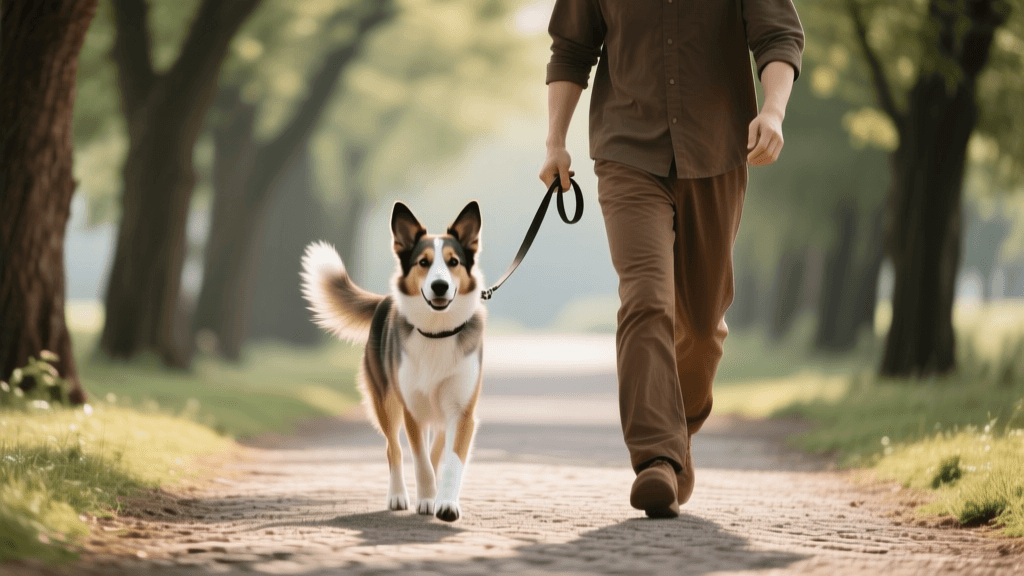
Consider a common scenario in 2026: a German Shepherd mix named Leo who exhibits leash reactivity toward unfamiliar dogs. Leo's owner, Sarah, attempts to counter-condition him in a busy park. As a distant dog appears, Leo stops walking and offers a rapid series of lip licks. He then turns his head slightly, exposing a sliver of whale eye.
The Mistake: In the past, Sarah would have commanded Leo to 'sit' and 'look at me,' forcing him to suppress his natural communication and focus on a task while over threshold. This resulted in Leo eventually exploding into a barking frenzy.
The 2026 Protocol: Recognizing the lip licks and whale eye, Sarah immediately stops advancing. She does not ask for a sit. Instead, she uses an emergency U-turn cue, moving 20 feet in the opposite direction to create space. Once the whale eye disappears and Leo's ears return to a neutral position, Sarah marks the relaxed body language with a soft 'Yes' and tosses a high-value treat into the grass for him to sniff out. Sniffing naturally lowers a dog's heart rate and promotes parasympathetic nervous system engagement. By respecting Leo's calming signals, Sarah builds deep trust, teaching Leo that his communication effectively controls his environment and keeps him safe.
When to Seek Professional Behavioral Support
While understanding calming signals empowers owners to manage mild to moderate reactivity, severe aggression, resource guarding, or deep-seated fear requires professional intervention. If your dog's stress signals rapidly escalate to whale eye, stiffening, or lunging despite your best efforts to manage distance, it is time to build a professional support team.
Always seek out professionals who prioritize force-free, science-based methodologies. You can locate certified, ethical behavior specialists in your area by using the International Association of Animal Behavior Consultants (IAABC) directory. A qualified consultant will help you map your dog's specific threshold triggers, design a customized desensitization hierarchy, and teach you how to read your dog's unique dialect of calming signals. Ultimately, training is not about demanding compliance; it is about fostering a profound, empathetic dialogue between human and canine.
aaron-whyte
All our authors care for dogs every day — read more of their work on the authors page.