Engage-Disengage Leash Reactivity Training Guide for 2026
Master the Engage-Disengage game for leash reactive dogs in 2026. Learn how to use a Biothane long line and threshold training for calmer walks.
Understanding Leash Reactivity in the Modern Era
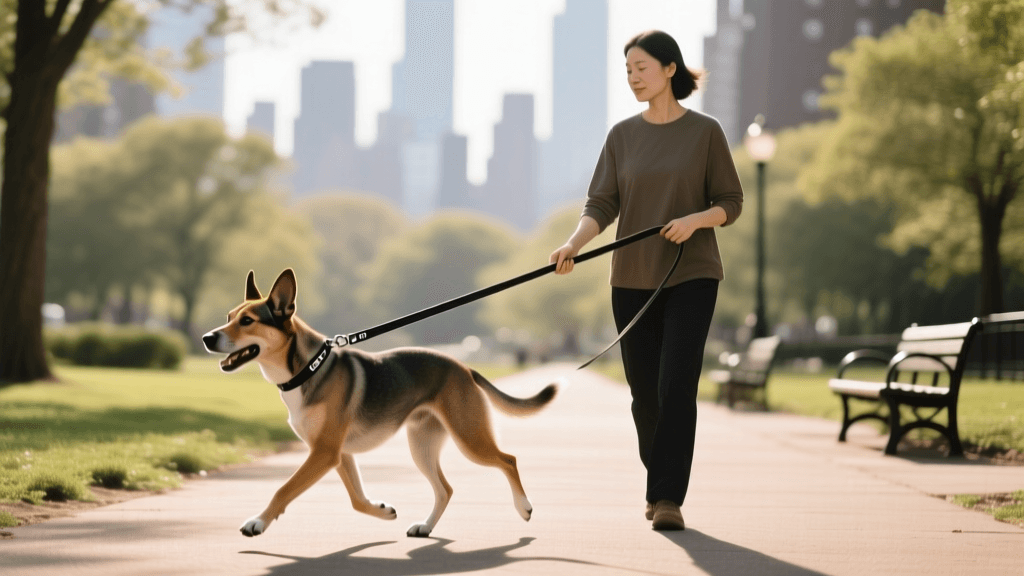
Leash reactivity remains one of the most pervasive and stressful behavioral challenges for dog owners in 2026. Whether your dog lunges, barks, or freezes at the sight of other dogs, pedestrians, or bicycles, the underlying emotional state is often rooted in fear, frustration, or anxiety. According to the ASPCA common dog behavior issues database, reactivity is rarely about true aggression; rather, it is a maladaptive coping mechanism triggered by a dog feeling trapped or overwhelmed by environmental stimuli. When a dog is on a standard six-foot leash, their natural flight response is restricted, leaving them with no choice but to 'fight' or display aggressive posturing to increase distance from the perceived threat.
To effectively address this, modern certified behaviorists rely heavily on the Engage-Disengage game, a protocol originally developed by Leslie McDevitt for her Control Unleashed program. When paired with the right equipment—specifically, a high-quality Biothane long line—this technique has become the absolute gold standard for reactive dog rehabilitation in 2026. This comprehensive guide will walk you through the neurology of reactivity, the essential gear you need, and a step-by-step protocol to transform your walks from a source of dread into a peaceful bonding experience.
The Neurology of the Reactive Dog
Before diving into the training mechanics, it is crucial to understand what happens inside your dog's brain when they encounter a trigger. When a reactive dog spots another dog across the street, their amygdala—the brain's fear center—immediately hijacks their nervous system. This triggers a massive release of cortisol and adrenaline, pushing the dog over their 'reactivity threshold.' Once a dog is over threshold, their prefrontal cortex (the area responsible for learning and decision-making) essentially shuts down.
This neurological reality means that you cannot train a dog that is actively lunging or barking. They are physically incapable of processing new information or enjoying treats. The entire goal of the Engage-Disengage protocol is to keep the dog 'sub-threshold'—meaning they are aware of the trigger but remain calm enough to think, learn, and make voluntary behavioral choices. Managing this threshold distance is where your choice of equipment becomes critical.
Essential 2026 Gear: The Biothane Long Line
In 2026, the use of standard six-foot leashes for reactive dog training is considered outdated and counterproductive. To maintain safety while giving the dog enough space to process triggers sub-threshold, a long line of 15 to 30 feet is mandatory. However, not all long lines are created equal. The industry standard has firmly shifted toward Biothane, a highly durable, waterproof synthetic material that mimics leather but requires zero maintenance.
Below is a comparison of the most common long line materials available on the market today to illustrate why Biothane is the superior choice for reactivity management.
| Material | Weight | Weather Resistance | Grip When Wet | 2026 Avg Cost |
|---|---|---|---|---|
| Biothane (Beta) | Medium | Waterproof, UV & Odor Resistant | Excellent (No Slip) | $45 - $85 |
| Nylon Webbing | Heavy | Absorbs Water, Mud & Odors | Poor (Causes Line Burns) | $20 - $35 |
| Cotton | Medium | Heavy When Wet, Rots Over Time | Moderate | $15 - $25 |
| Leather | Heavy | Requires Oiling, Warps in Rain | Good | $120 - $200 |
A 3/4-inch wide Biothane long line with a lightweight brass or stainless steel snap is ideal for dogs between 25 and 60 pounds. For smaller dogs, a 1/2-inch width prevents the line from feeling too heavy, while larger, powerful breeds may require a 1-inch width for added tensile strength. The smooth texture of Biothane allows the line to slide through your hands without causing friction burns if the dog suddenly decides to move quickly, a vital safety feature for anxious dogs prone to sudden flight responses.
Step-by-Step Training Routine: The Engage-Disengage Protocol
Now that you have the proper equipment, it is time to implement the training protocol. You will need your Biothane long line, a high-value treat pouch filled with soft, pea-sized rewards (like boiled chicken or commercial freeze-dried liver), and a quiet environment with controlled triggers. According to Fear Free Pets resources, utilizing low-stress handling and positive reinforcement in controlled environments significantly accelerates behavioral modification in anxious animals.
Step 1: Establishing the Sub-Threshold Baseline
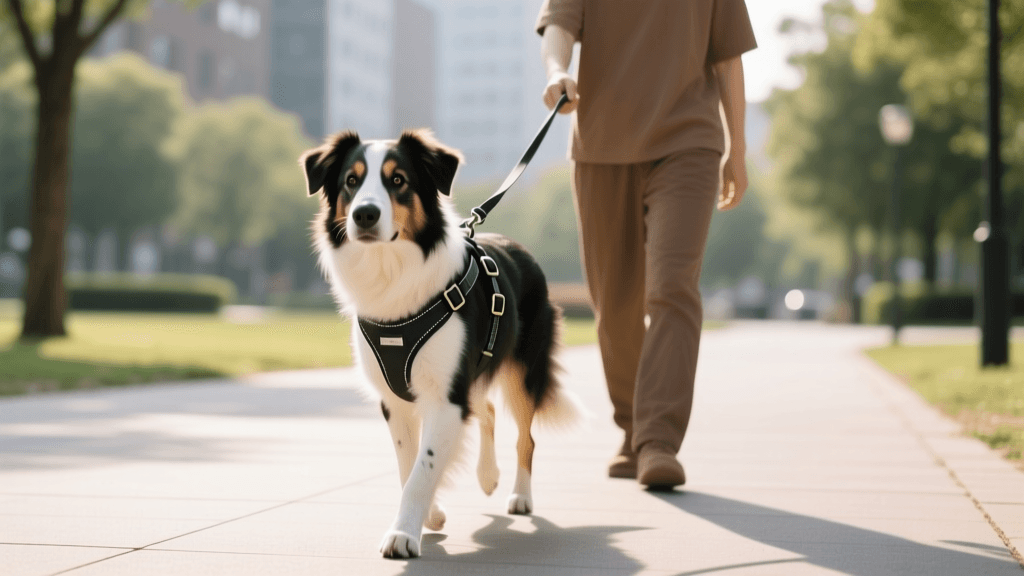
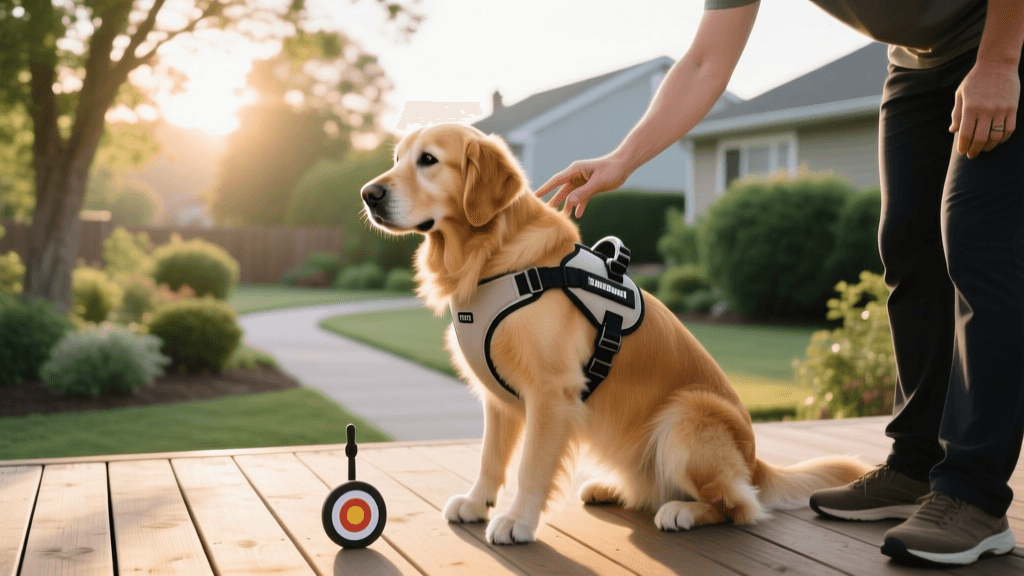
Find a location where your dog can see a trigger (like another dog or a person) but is far enough away that they do not react. This distance might be 50 feet, or it might be a quarter-mile. Attach the Biothane long line to a well-fitted, front-clip harness—never to a collar, to avoid tracheal damage. Allow the dog to sniff and decompress. When the trigger appears at a distance, observe your dog's body language. If their ears flick forward but their body remains loose, and they are still willing to eat treats, you have found your sub-threshold baseline.
Step 2: The 'Engage' Phase (Mark and Reward)
The moment your dog notices the trigger—indicated by a head turn, ear flick, or direct stare—immediately use a marker word like 'Yes!' or click a clicker. This is the 'Engage' mark. The second you mark the behavior, present a high-value treat. In the early stages of this game, the treat is given regardless of whether the dog looks back at you. You are simply pairing the sight of the trigger with a positive outcome, utilizing classical conditioning to change their emotional response. Repeat this 10 to 15 times per session, ensuring the trigger remains at a static distance.
Step 3: The 'Disengage' Phase (Voluntary Look-Away)
Once your dog reliably expects a treat after looking at the trigger, you will notice a shift in their behavior. Instead of staring intensely, they will look at the trigger and then voluntarily turn their head back toward you, anticipating the reward. This is the 'Disengage.' When they offer this voluntary look-away, mark it with an enthusiastic 'Yes!' and deliver a jackpot reward (three to four treats in a row). This operant conditioning phase teaches the dog that disengaging from the trigger is the most rewarding choice they can make. Over weeks of consistent practice, the dog's default reaction to a trigger will shift from lunging to looking at the handler.
Troubleshooting Common Setbacks in 2026
Even with the best equipment and protocols, setbacks happen. Here is how to troubleshoot the most common issues encountered during reactivity training:
- The Dog Will Not Eat Treats: This is a clear indicator that your dog is over threshold. The trigger is too close, or the environment is too loud. Do not force the dog to eat. Simply increase the distance by walking away on your Biothane long line until the dog's appetite returns.
- The Dog Lunges Before You Can Mark: You were too slow with your marker, or the trigger moved too quickly (such as a dog suddenly running toward you). Manage the environment better by training at quieter times of day or using visual barriers like parked cars to control the dog's line of sight.
- Regression After a 'Bad' Walk: Reactivity recovery is not linear. A single stressful encounter can cause a temporary spike in cortisol that takes up to 72 hours to dissipate. If your dog has a reactive outburst, implement a 'cortisol vacation' by skipping walks for two days and engaging in indoor enrichment activities like snuffle mats and scent work to lower their baseline stress.
Conclusion and Long-Term Management
Managing a leash-reactive dog requires patience, consistency, and a deep understanding of canine body language. The Engage-Disengage game, when executed properly at sub-threshold distances, fundamentally rewires how your dog perceives the world around them. By upgrading your gear to a reliable Biothane long line in 2026, you ensure that your dog has the physical space they need to feel safe while giving you the mechanical advantage to keep them secure. Remember that the goal is not necessarily to have a dog that wants to greet every stranger or canine they meet, but rather to cultivate a dog that can navigate the human world with confidence, neutrality, and trust in their handler. Celebrate the small victories, honor your dog's boundaries, and enjoy the journey toward a more peaceful walking experience.
robin-maitland
All our authors care for dogs every day — read more of their work on the authors page.