Emergency Recall Training: Stop Your Dog From Bolting
Learn how to train a reliable emergency recall to stop your dog from bolting into traffic or danger. Step-by-step safety guide with expert tips.
Why an Emergency Recall is a Lifesaving Skill
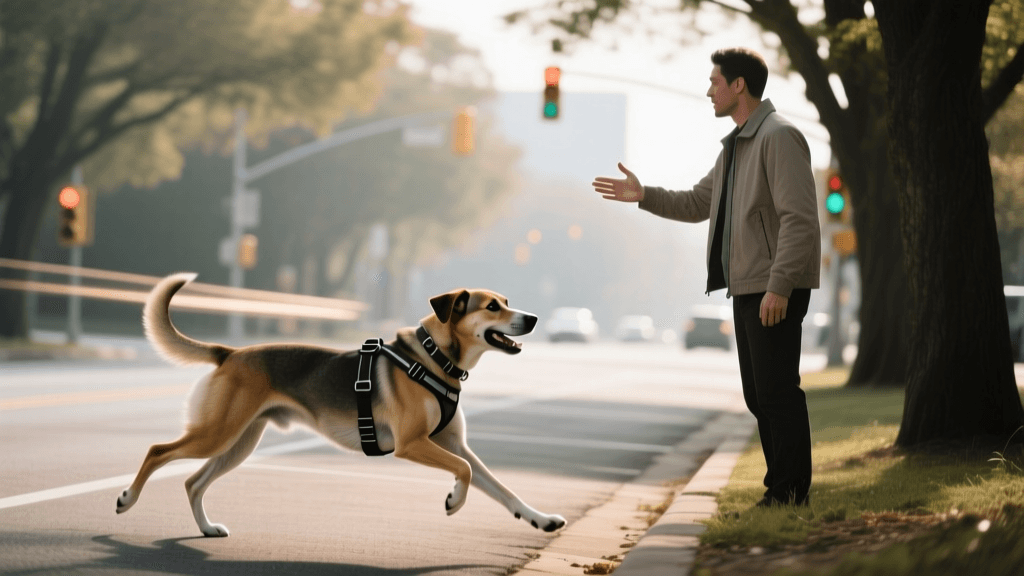
Every dog owner's worst nightmare is watching their beloved pet bolt toward a busy intersection, chase a wild animal into the woods, or sprint toward an aggressive off-leash dog. In these high-stakes moments, a standard 'come' command often fails. When a dog's prey drive or fear response is triggered, adrenaline floods their system, effectively causing tunnel vision and temporary deafness to everyday cues. According to the ASPCA's Lost Pet Prevention guidelines, millions of dogs escape their homes or slip their leashes every year, with traffic and environmental hazards posing the most immediate threats to their survival.
This is where an emergency recall becomes a critical safety net. Unlike a standard recall used for everyday interactions, an emergency recall is a specialized, heavily conditioned behavior designed to break through a dog's high-arousal state. By utilizing classical conditioning, unique auditory cues, and 'jackpot' reward systems, you can build a neurological pathway that compels your dog to turn and sprint back to you, even when faced with extreme distractions.
Standard Recall vs. Emergency Recall
Many owners confuse their everyday recall with an emergency recall. Using the same cue for both dilutes the urgency and predictability of the command. Below is a comparison to help you understand the structural differences between the two.
| Feature | Standard Recall | Emergency Recall |
|---|---|---|
| Verbal Cue | 'Come', 'Here', or a whistle | Unique word (e.g., 'Bingo!', 'Touch!', 'Emergency!') |
| Reward Value | Standard treats, praise, or petting | 'Jackpot' high-value rewards (e.g., real meat, cheese) |
| Frequency of Use | Multiple times daily | Rarely; only in emergencies or dedicated practice |
| Expectation | Dog returns to owner for general obedience | Dog abandons high-prey drive to sprint to owner |
Essential Gear for Safe Recall Training
Before beginning, you must invest in the right equipment to ensure your dog's physical safety during the proofing phases. Training an emergency recall requires giving the dog the illusion of freedom while maintaining physical control.
- Long Line (15 to 30 feet): Avoid retractable leashes, which can snap under sudden pressure and teach dogs to pull. Instead, use a Biothane long line (brands like Mendota Pets or Signature K9). Biothane is waterproof, easy to clean, and won't cause rope burn. Cost: $25 - $45.
- Back-Clip Harness: If your dog hits the end of a 30-foot line at full sprint, a neck collar can cause severe tracheal damage. Use a sturdy back-clip harness like the Ruffwear Front Range to distribute the force across the chest. Cost: $40 - $50.
- Treat Pouch: You need immediate access to rewards. A magnetic-closure pouch like the Ruffwear Treat Trader allows for one-handed, split-second treat delivery. Cost: $30.
- High-Value Jackpot Treats: Kibble will not beat a squirrel. You need high-value, aromatic foods. Freeze-dried beef liver (e.g., Stewart brand), boiled chicken breast, or string cheese. Cost: $10 - $15 per week.
Step-by-Step Emergency Recall Training Guide
The American Kennel Club (AKC) emphasizes that reliability in recall training comes from making the return to the owner the most rewarding experience in the dog's life. Follow this phased approach to build a bulletproof emergency recall.
Phase 1: Building the Positive Association (Weeks 1-2)
Choose your unique emergency cue word. It should be short, sharp, and distinct from everyday conversation (e.g., 'Bingo!' or 'Taco!'). For the first two weeks, you will not use this word in the real world. Instead, you will build a classical conditioning response indoors.
- Stand in a quiet room with your dog.
- Say your emergency cue word clearly and enthusiastically one time.
- Immediately (within 1 second) deliver a 'jackpot' reward: 5 to 10 small pieces of high-value treats, fed one after another, accompanied by enthusiastic praise and play.
- Repeat this 5 to 10 times a day in different rooms of the house.
The Goal: Your dog should hear the word and immediately anticipate a massive payout, creating a Pavlovian response where the cue word equals the best thing in the world.
Phase 2: Adding Distance and Mild Distractions (Weeks 3-4)
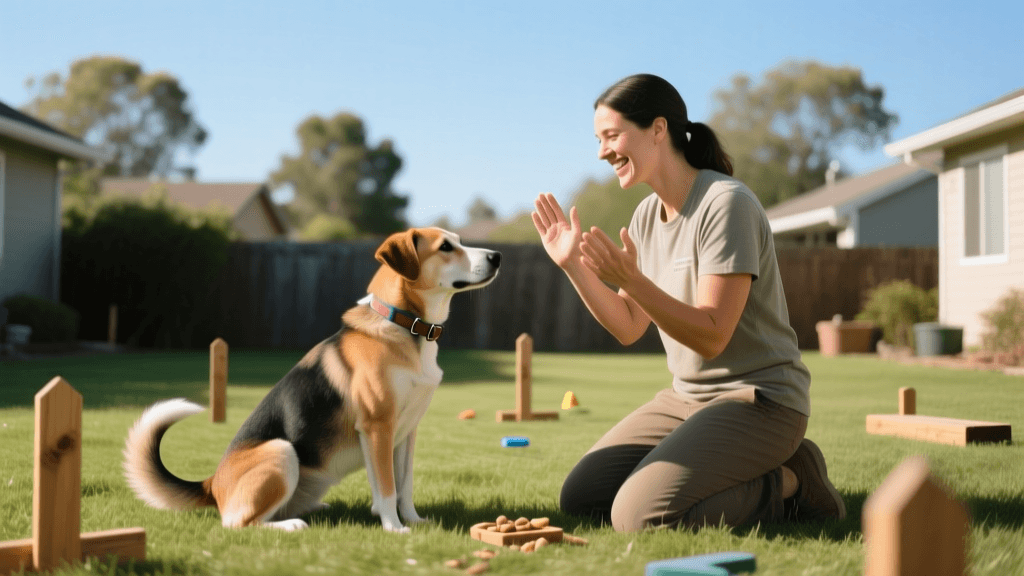
Move to a secure, fenced-in yard or an empty tennis court. Attach your 15-foot Biothane long line to your dog's back-clip harness.
- Let your dog wander and sniff (a mild distraction).
- Call out your emergency cue word.
- As your dog turns and runs toward you, encourage them with an excited voice and open arms.
- When they reach you, deliver the jackpot reward.
Safety Note: If your dog ignores the cue, do not repeat the word. Repeating the cue teaches the dog that the word is optional. Instead, gently use the long line to guide them back to you, then reward them for arriving, but note that the distraction level was too high. Increase the distance gradually over several weeks.
Phase 3: Proofing the Behavior (Weeks 5-6)
Now, take the training to the real world. Visit parks, trails, and neighborhoods. Practice the emergency recall when your dog is engaged in moderate distractions, such as playing with another friendly dog or sniffing a fascinating bush. Always keep the long line attached until your dog has proven 100% reliability in at least 50 successful, consecutive trials.
The '3-Second Rule' and Timing Mechanics
In emergency dog training, timing is everything. The reward must hit your dog's mouth within 3 seconds of them completing the behavior. If you fumble with a zipper or dig through a pocket, the dog's brain will fail to connect the emergency recall cue with the jackpot reward. Pre-load your treat pouch with high-value items before you even step out the door. The moment your dog crosses the threshold to you, the treats should already be in your hand.
Common Mistakes That Ruin the Emergency Recall
Even well-intentioned owners can accidentally 'poison' an emergency recall cue. Avoid these critical errors:
- Using the Cue for Negative Experiences: Never use your emergency recall word to call your dog for a bath, a nail trim, or to leave the dog park. If the dog associates the word with the end of fun or an unpleasant experience, they will stop responding.
- Overusing the Cue: The emergency recall should be used sparingly. If you use it every time you want your dog to come inside from the yard, it loses its novelty and 'jackpot' status.
- Punishing a Slow Return: If your dog takes 30 seconds to finally come back to you after an emergency recall, you must still reward them. Punishing a dog when they finally return teaches them that coming to you results in punishment.
'A reliable recall is not about dominance or control; it is about building a bank account of trust and high-value rewards so that when the dog is faced with a choice, returning to you is always the most profitable decision.' - The Humane Society of the United States
Troubleshooting and Real-World Safety
If your dog fails to respond to the emergency recall in a real-world scenario, immediately assess the environment. Was the trigger (e.g., a deer, a speeding bicycle) too close? In high-prey-drive scenarios, a dog's auditory processing can literally shut down. If this happens, use the long line to physically prevent the bolt, reset the distance, and practice at a lower threshold.
Finally, remember that no training is 100% foolproof. Dogs are living creatures with instincts that can sometimes override years of conditioning. Always respect local leash laws, utilize physical barriers like secure fencing, and never rely solely on verbal commands when your dog is near uncontrolled traffic or severe hazards. The emergency recall is your ultimate safety net, but responsible management is your primary shield.
jonas-cole
All our authors care for dogs every day — read more of their work on the authors page.