Emergency Recall Training: How to Save Your Dog's Life
Learn how to teach a reliable emergency recall to keep your dog safe in dangerous situations. Step-by-step training guide with expert safety tips.
The Stakes: Why an Emergency Recall is Non-Negotiable
Every dog owner hopes they will never face a true emergency, but the reality of dog ownership is that accidents happen. Gates get left open, leashes snap, collars slip, and wildlife darts across busy roads. In these heart-stopping moments, your dog’s standard "come" command might not be enough to break through their prey drive or panic. This is where an emergency recall becomes a literal lifesaver.
According to the ASPCA, teaching a dog to come when called is one of the most vital behaviors for their overall safety. However, an emergency recall differs significantly from an everyday recall. It is a specialized, highly conditioned response reserved exclusively for life-or-death situations. When executed correctly, it overrides distractions, fear, and instinct, prompting your dog to sprint back to your side immediately.
Everyday Recall vs. Emergency Recall
Many owners confuse their everyday recall with an emergency recall, leading to failure when it matters most. Understanding the distinction is the first step in your training journey.
| Feature | Everyday Recall | Emergency Recall |
|---|---|---|
| Cue Word | "Come", "Here", or Dog’s Name | Unique word (e.g., "Bingo", "Touch") or Whistle |
| Frequency of Use | Multiple times daily | Rarely (only in emergencies or monthly practice) |
| Reward Value | Standard treats, praise, or toys | "Jackpot" rewards (real meat, cheese, liver) |
| Expectation | General compliance, allowed to sniff on the way | Immediate, urgent sprint directly to the handler |
| Consequence of Failure | Minor inconvenience | Potential injury, loss, or death |
Essential Safety Gear and Costs
Before beginning your training protocol, you need the right equipment. Do not rely on standard nylon leashes or cheap treats for this level of conditioning.
- Acme 210.5 or 211.5 Dog Whistle ($12 - $18): A whistle is highly recommended for emergency recalls because it carries over long distances, cuts through wind and traffic noise, and does not carry the emotional panic that a human voice does when you are terrified. The Acme 210.5 is ideal for medium to large dogs, while the 211.5 is better for smaller breeds or close-range work.
- 30-Foot Biothane Long Line ($45 - $65): Biothane is a coated webbing that is waterproof, stink-proof, and does not burn your hands if your dog suddenly bolts. Choose a 3/4-inch width for dogs over 30 pounds, and a 1/2-inch width for smaller dogs. Avoid nylon long lines, which fray and cause severe rope burn.
- GPS Tracker Backup ($100 - $150 + $5-$8/month): While not a training tool, a GPS collar like the Fi Series 3 or Whistle Go is a critical safety net. If your dog blows past your emergency recall, you can track their exact location via your smartphone.
The "Jackpot" Reward System
The Humane Society of the United States emphasizes that high-value rewards are essential for reliable recall training. For an emergency recall, you must establish a "Jackpot" reward tier. This is a reward so spectacular that your dog would willingly turn away from a chasing squirrel to get it.
Reward Tier List
- Tier 3 (Everyday): Dry kibble, standard training biscuits, verbal praise.
- Tier 2 (High Value): Hot dog slices, string cheese, peanut butter pouches.
- Tier 1 (Emergency Jackpot): Freeze-dried beef liver, boiled rotisserie chicken, canned tripe, or a dedicated "recall toy" that only comes out for this specific behavior.
Pro Tip: Keep your Jackpot rewards in a dedicated, sealed container in your freezer. The novelty and scent of these items must remain exclusive to the emergency recall.
Step-by-Step Emergency Recall Protocol
Training an emergency recall relies heavily on classical conditioning (Pavlovian response) rather than just operant conditioning. You are wiring your dog’s brain to associate the specific cue with an involuntary rush of dopamine and an immediate sprint toward you.
Phase 1: Classical Conditioning (Weeks 1-2)
Do not use the cue in the real world yet. Start in a quiet room with zero distractions.
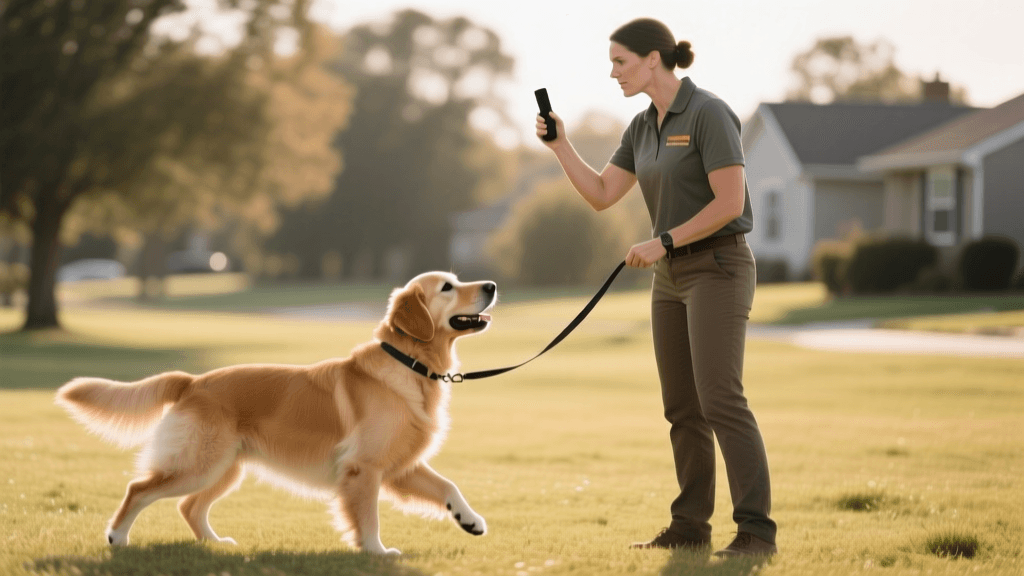
- The Marker: Blow your whistle (two short bursts) or say your unique word (e.g., "Bingo!").
- The Timing: Within exactly 0.5 seconds of the cue, deliver a massive handful of your Tier 1 Jackpot reward directly to your dog’s mouth.
- Repetition: Repeat this 5 to 10 times per session, 3 times a day. You are not asking the dog to do anything; you are simply pairing the sound with the ultimate reward.
Phase 2: Distance and Long-Line Work (Weeks 3-4)
Move to a fenced yard or an open field. Attach your 30-foot Biothane long line to your dog’s harness (never a neck collar, to prevent tracheal damage if they hit the end of the line).
- Let your dog wander and sniff. Wait until they are mildly distracted.
- Give your emergency cue.
- If they turn and run to you, throw a "reward party" (10-15 seconds of continuous feeding and praise).
- If they do not respond, do not repeat the cue. Gently reel them in using the long line, then reward them when they arrive. This prevents them from learning they can ignore the sound.
Phase 3: Proofing and Distraction (Weeks 5+)
Begin introducing controlled distractions. Practice near other dogs (at a distance), near interesting smells, or in new environments. The goal is to make the emergency recall bulletproof. Remember to only use the cue when you are 99% sure the dog will comply, or when you have the long line to guarantee success.
Common Mistakes That Poison the Cue
The fastest way to ruin an emergency recall is to "poison" the cue. A poisoned cue occurs when the dog associates the sound with something unpleasant or mundane.
The Golden Rule of Recall: Never use your emergency recall to call your dog for a bath, a nail trim, leaving the dog park, or to scold them. If your dog associates the whistle with the end of fun or a negative experience, they will hesitate. In an emergency involving traffic or a wild animal, a one-second hesitation can be fatal.
Furthermore, never punish a dog when they finally come to you, even if it took them five minutes and caused you immense frustration. According to expert behavioral guidelines, the act of returning to the handler must always end in a positive outcome, otherwise, the dog will learn that returning equals punishment.
Maintenance: Keeping the Recall Sharp
Once your dog has mastered the emergency recall, you cannot simply put it on a shelf. You must practice it randomly, about once or twice a month, in safe environments. Blow the whistle when your dog is in the yard or wandering the house, deliver the massive Jackpot reward, and then immediately release them back to what they were doing. This teaches the dog that the emergency recall does not always mean the end of their freedom, keeping their response speed lightning-fast.
Final Thoughts on Canine Safety
An emergency recall is the ultimate insurance policy for your dog’s life. By investing in the right gear, utilizing classical conditioning, and protecting the integrity of your cue, you empower your dog to make the right choice when their instincts tell them otherwise. Combine this rigorous training protocol with a reliable GPS tracker, and you will have the peace of mind knowing you have done everything in your power to keep your best friend safe in an unpredictable world.
anouk-beaumont
All our authors care for dogs every day — read more of their work on the authors page.