Herding vs Guardian Breeds: Training Needs & Selection Guide
Discover how herding and guardian dog breeds differ in trainability. Learn selection tips, training costs, and behavioral conditioning strategies for success.
The Critical Intersection of Breed Selection and Training
Selecting a dog is often an emotional decision driven by aesthetics or childhood nostalgia, but evaluating a breed’s inherent training needs is a strict logical necessity. When prospective owners fail to align their lifestyle with a breed's genetic predispositions, the result is often behavioral frustration, relinquishment, or a compromised human-animal bond. In the realm of canine behavioral conditioning, few comparisons are as stark and misunderstood as the difference between Herding breeds and Livestock Guardian Dogs (LGDs). Understanding these distinct psychological profiles is the first step toward successful obedience training, socialization, and long-term behavioral health.
Understanding the Herding Breed Mindset
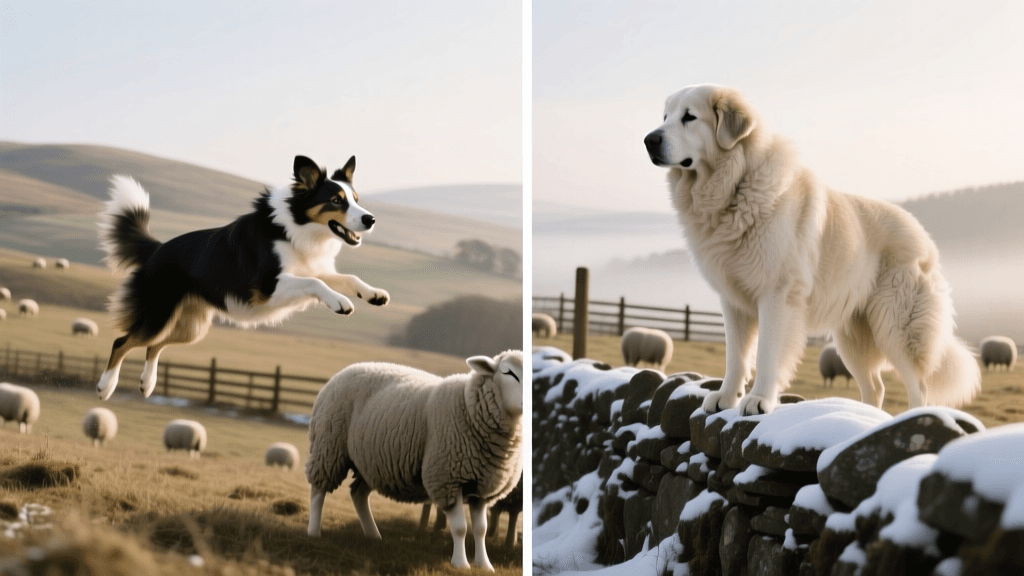
Herding breeds, such as the Border Collie, Australian Shepherd, and Belgian Malinois, were selectively bred for high biddability, intense focus, and an inherent desire to work in tandem with a human handler. According to the American Kennel Club's Herding Group guidelines, these dogs possess an extraordinary capacity for learning complex commands, but this intelligence comes with a heavy caveat: they require immense mental stimulation and structured jobs to prevent neurotic behaviors.
Drive Management and Mental Conditioning
Because these dogs possess immense physical stamina and a modified prey drive that manifests as stalking and chasing, training must focus on impulse control and channeling energy. A simple 30-minute walk is entirely insufficient. Owners must utilize operant conditioning techniques, incorporating high-value rewards like Zuke's Mini Naturals or freeze-dried liver to maintain focus in high-distraction environments. Furthermore, mental conditioning is just as vital as physical exercise. Utilizing interactive puzzle toys, such as the Outward Hound Dog Brick or the Kong Wobbler, forces the dog to problem-solve, effectively tiring their brain and reducing the likelihood of destructive herding behaviors like nipping at children's heels or chasing vehicles.
The Livestock Guardian Dog (LGD) Paradigm
Conversely, Livestock Guardian Dogs like the Great Pyrenees, Anatolian Shepherd, and Maremma were bred to work independently, without human direction, to protect flocks from predators. This genetic history results in a dog that is highly intelligent but exhibits remarkably low biddability. They are not bred to look to a human for instructions; they are bred to make life-or-death decisions autonomously. Consequently, traditional obedience training—such as competitive heelwork or rapid-fire trick sequences—often fails and frustrates both the dog and the handler.
Socialization Over Traditional Obedience
For guardian breeds, early and extensive socialization is far more critical than strict obedience. The ASPCA's guidelines on puppy socialization emphasize that the critical window for exposing puppies to novel stimuli occurs between 3 and 14 weeks of age. For LGDs, this window must be used to teach 'neutrality' rather than 'friendliness.' The goal is not for the dog to greet every stranger, but to observe strangers, sounds, and environments without triggering their deep-seated territorial or protective instincts. Training a guardian breed requires immense patience, relying heavily on classical conditioning to build positive associations with benign environmental triggers.
Breed Comparison Chart: Herding vs. Guardian
To help prospective owners visualize the stark differences in training requirements, review the comparison chart below:
| Trait / Requirement | Herding Breeds (e.g., Border Collie) | Guardian Breeds (e.g., Great Pyrenees) |
|---|---|---|
| Primary Training Goal | Impulse control, complex task execution | Neutrality, boundary respect, recall |
| Biddability | Extremely High (Eager to please) | Low to Moderate (Independent thinkers) |
| Daily Mental Exercise | 1.5 - 2 hours (Puzzles, agility, drills) | 30 - 45 minutes (Scent work, patrolling) |
| Socialization Focus | Focus on handler amidst distractions | Desensitization to strangers and noises |
| Recall Reliability | High (with proper proofing) | Low to Moderate (Prey drive overrides) |
| Ideal Containment | Standard 5-foot fencing + mental work | Minimum 6-foot fencing + coyote rollers |
Actionable Behavioral Conditioning Protocols
Protocol 1: Impulse Control for Herders (The 'Wait' and 'Leave It')
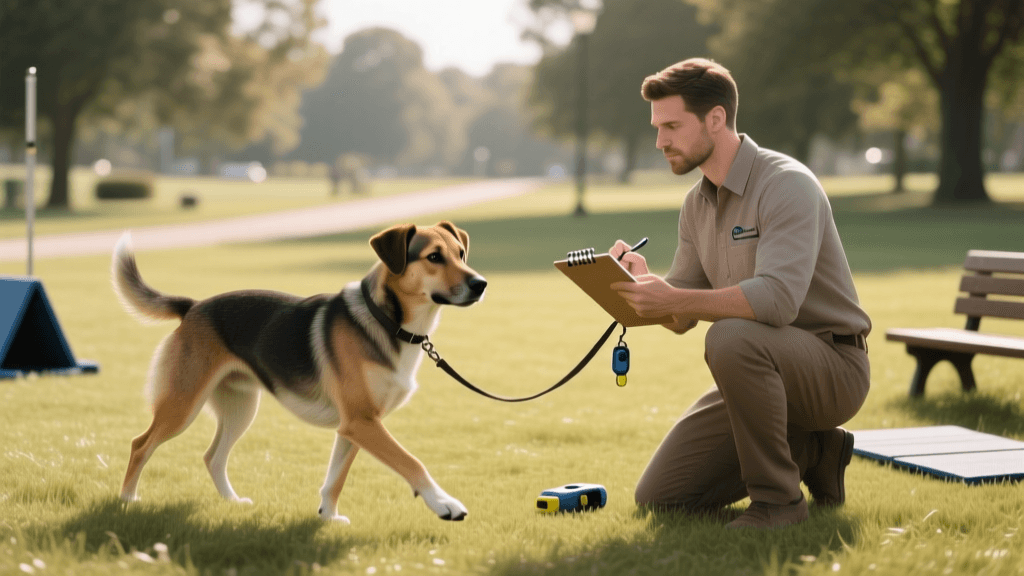
Herding breeds thrive on movement, making impulse control drills essential for their safety and sanity. To teach a robust 'Leave It' command, start indoors with low-value items. Place a piece of kibble on the floor and cover it with your hand. When the dog stops pawing and offers eye contact, mark the behavior with a clicker or a verbal 'Yes!' and reward with a higher-value treat from your other hand. Gradually increase the difficulty by dropping the treat from a height of 12 inches, and eventually moving the drill outdoors using a 30-foot Biothane long line to ensure safety while proofing the behavior around real-world distractions like squirrels or joggers.
Protocol 2: Boundary and Neutralization Training for Guardians
Guardian breeds require strict boundary training to prevent roaming and territorial aggression. Begin by establishing a 'Place' command using a raised cot, such as the Kuranda Chewproof Dog Bed. This elevated surface provides a clear physical boundary. Lure the dog onto the cot, reward heavily for a 'down-stay,' and gradually increase the duration from 5 seconds to 15 minutes. When guests arrive, the dog should be sent to their 'Place' rather than being allowed to rush the door. This protocol satisfies the dog's need to observe their territory while keeping them under the handler's structural control. When teaching recall, especially for independent breeds, the AKC recommends using high-value rewards and practicing exclusively on a long line to prevent the dog from learning that they can simply ignore the command and continue patrolling.
Financial and Time Investments in Training
Prospective owners must budget accurately for the training realities of their chosen breed. For Herding breeds, the financial investment leans heavily toward advanced enrichment and dog sports. Expect to spend $150 to $300 on a 6-week agility or herding instinct course, plus approximately $100 annually on puzzle toys and flirt poles. Time-wise, you must commit to a minimum of 90 minutes of dedicated, structured training and physical exertion daily.
For Guardian breeds, the financial investment shifts toward secure infrastructure and early behavioral intervention. A standard 6-foot wooden privacy fence installation can cost between $2,500 and $5,000, and adding coyote rollers (essential for preventing climbing and jumping) adds another $300 to $600. Because LGDs are prone to developing severe territorial reactivity if mismanaged, budgeting $100 to $150 per hour for a private, force-free behavioral consultant during the puppy's first six months is a highly recommended preventative measure. Group obedience classes (typically $50 to $150 for a multi-week course) are often less effective for guardian breeds due to their natural wariness of unfamiliar dogs in close proximity.
Selection Insight: Never choose a herding breed simply because you want a 'smart' dog, and never choose a guardian breed simply because you want an 'independent' dog. Intelligence without an outlet creates destruction, and independence without boundaries creates liability.
Making Your Selection: The Final Checklist
Before signing a breeder contract or submitting an adoption application, ask yourself the following critical questions:
- Time Availability: Can I dedicate 1.5 to 2 hours every single day to active training and mental enrichment? (If no, avoid Herding breeds).
- Property Constraints: Do I have the budget and space for a 6-foot, dig-proof, climb-proof fence system? (If no, avoid Guardian breeds).
- Household Dynamics: Do I have young children who run and scream? (Herding breeds may try to 'herd' them by nipping; Guardian breeds may misinterpret play as a threat and intervene aggressively).
- Training Philosophy: Am I willing to embrace classical conditioning and patience over rapid-fire trick training? (Essential for LGD success).
Ultimately, successful dog ownership is not about forcing a dog to adapt to your lifestyle; it is about selecting a breed whose genetic blueprint naturally aligns with your daily routines, training capabilities, and long-term goals. By respecting the profound differences between herding and guardian instincts, you set the stage for a harmonious, well-conditioned, and deeply fulfilling relationship with your canine companion.
jonas-cole
All our authors care for dogs every day — read more of their work on the authors page.