First-Time Owner Guide To Puppy Crate And Potty Training
Master puppy crate and potty training with our first-time owner guide. Learn schedules, crate sizing, and actionable tips for a housebroken dog.
The Foundation of Housebreaking for First-Time Owners
Bringing a new puppy home is one of the most exciting milestones for a first-time dog owner, but it quickly becomes apparent that a structured routine is essential. Without proper guidance, your new furry companion may develop unwanted habits that are difficult to break. Two of the most critical skills you must teach your puppy are crate training and potty training. These two concepts are deeply intertwined; a properly crate-trained puppy will naturally learn to hold their bladder, making the housebreaking process significantly smoother. According to the Humane Society of the United States, dogs are den animals by nature, and a crate serves as a safe, secure sanctuary rather than a place of punishment. When introduced correctly, your puppy will view their crate as their personal bedroom, which taps into their natural instinct to avoid soiling their sleeping area.
Selecting the Right Crate: Sizes, Types, and Costs
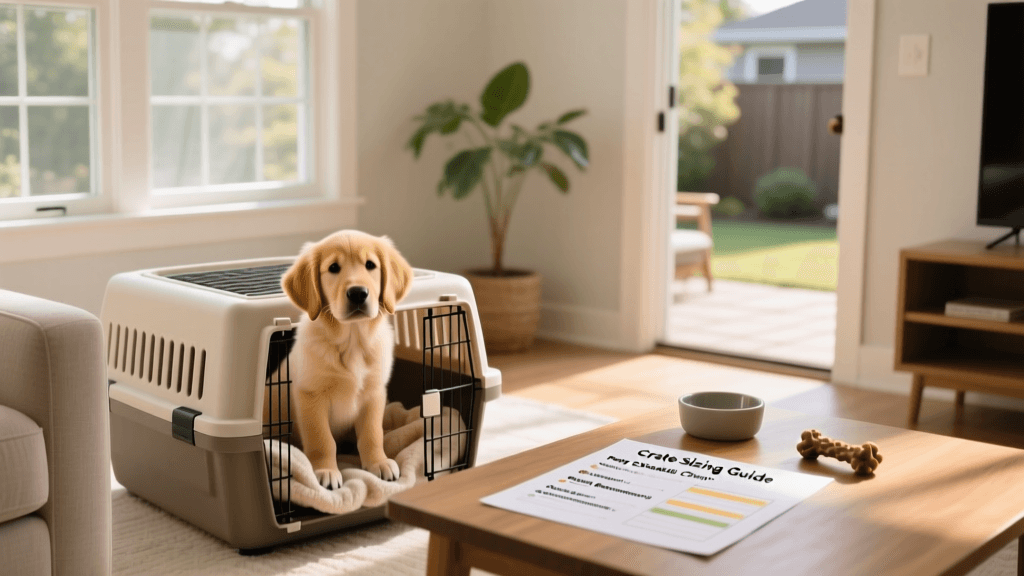
The first step in this journey is purchasing the correct equipment. For first-time owners, we highly recommend a wire crate with a divider panel, such as the MidWest Homes for Pets iCrate. The divider allows you to adjust the interior space as your puppy grows, ensuring the crate is never too large. If a crate is too big, your puppy will designate one corner for sleeping and another for eliminating, entirely defeating the purpose of den training. Alternatively, plastic crates like the Petmate Ultra Vari Kennel offer a more enclosed, den-like feel, which can be beneficial for anxious dogs or travel, but they lack adjustable dividers. Expect to spend between $50 and $80 on a high-quality crate.
How do you know what size to buy? Your dog should be able to stand up without their head touching the top, turn around in a full circle, and lie down stretched out. Below is a sizing chart based on anticipated adult weight:
| Anticipated Adult Weight | Crate Length | Crate Height | Example Breeds |
|---|---|---|---|
| 11-25 lbs | 24 inches | 18 inches | Pug, Dachshund, Miniature Schnauzer |
| 26-40 lbs | 30 inches | 21 inches | Beagle, Cocker Spaniel, French Bulldog |
| 41-70 lbs | 36 inches | 24 inches | Border Collie, Bulldog, Australian Shepherd |
| 71-90 lbs | 42 inches | 28 inches | Labrador Retriever, Golden Retriever, Boxer |
Step-by-Step Crate Conditioning
Building Positive Associations
Never force your puppy into the crate and shut the door; this creates immediate negative associations. Instead, use high-value treats like Zuke's Mini Naturals (approx. $8 per bag) to build positive reinforcement. It is also highly recommended to place the crate in a common area of your home, such as the living room or kitchen, during the day. Dogs are social animals, and isolating them in a quiet back bedroom can induce separation anxiety and feelings of abandonment. At night, placing the crate near your bed allows the puppy to hear your breathing and feel reassured, which significantly reduces nighttime whining. Follow this timeline for the first week:
- Days 1-2 (Exploration): Leave the door open. Toss treats inside and feed your puppy their regular meals near the entrance, gradually moving the bowl to the back of the crate.
- Days 3-4 (Short Confinement): Once the puppy is eating inside, close the door while they eat, then open it immediately after. Introduce a stuffed Kong Classic ($15) to keep them occupied for 5 to 10 minutes with the door closed while you sit nearby.
- Days 5-7 (Distance and Duration): Begin leaving the room for 2-minute intervals, gradually working up to 15 minutes. Always return before the puppy begins to whine.
Pro Tip: If your puppy cries in the crate, wait for a brief moment of silence before opening the door or letting them out. Releasing them while they are barking teaches them that vocalizing is the key to freedom.
The First-Time Owner's Potty Training Schedule
Potty training requires immense consistency. The ASPCA emphasizes that establishing a rigid schedule is the most effective way to prevent indoor accidents. A general rule of thumb for bladder control is the 'Month Plus One' rule: a puppy can hold their bladder for their age in months plus one hour. Therefore, an 8-week-old (2-month) puppy can only hold it for about 3 hours maximum, and much less when active.
Here is a practical daily schedule for an 8-to-12-week-old puppy:
- 7:00 AM: Wake up and immediately carry the puppy outside to the designated potty spot.
- 7:30 AM: Breakfast. Puppies typically need to eliminate 15 to 30 minutes after eating.
- 8:00 AM: Second potty break, followed by 15 minutes of supervised play.
- 9:00 AM: Morning nap in the crate.
- 12:00 PM: Wake from nap, immediate potty break, followed by lunch.
- 12:30 PM: Post-lunch potty break and short training session.
- 1:30 PM: Afternoon nap in the crate.
- 5:00 PM: Dinner and subsequent potty breaks.
- 8:00 PM: Remove water bowl to minimize overnight accidents.
- 10:00 PM: Final potty break and bedtime in the crate.
Managing Nighttime Wake-Ups and Accidents
First-time owners often underestimate the sleep deprivation that comes with a new puppy. For the first few weeks, set an alarm for 2:00 AM or 3:00 AM to take your puppy out. Keep these nighttime trips strictly business: no playing, no talking, and minimal lighting. Carry them outside, use a cue word like 'Go Potty', reward with a small treat, and immediately return them to the crate.
If you have a large house or live in an apartment building, consider keeping the puppy on a short leash even inside the house during the initial weeks of potty training. This tethering method prevents the puppy from wandering off into a hallway or behind furniture to sneak in an accident. If they are tied to you or a heavy piece of furniture near you, you will immediately notice their pre-potty behaviors, such as sniffing the ground, circling, or sudden restlessness.
Why Enzymatic Cleaners Matter
Accidents will happen. When they do, never rub your puppy's nose in it or yell; dogs do not connect past actions with delayed punishment. Instead, interrupt the act with a sharp 'Ah-ah!', scoop them up, and carry them outside to finish. Dogs have an incredibly sensitive sense of smell, up to 100,000 times more acute than humans. Standard household cleaners might mask the scent to your nose, but your puppy will still detect the uric acid. Clean indoor accidents thoroughly using an enzymatic cleaner like Nature's Miracle Advanced Stain and Odor Eliminator ($14). This breaks down the crystals entirely, meaning your puppy will not smell the scent marker and return to the same spot.
Essential Supplies and Budget Breakdown
To set yourself up for success, allocate a specific budget for your training supplies. Here is what a first-time owner should expect to spend on crate and potty training essentials:
- Wire Crate with Divider (36-inch): $60 - $80
- Washable Crate Pad: $20 - $30
- Kong Classic Toy & Peanut Butter: $20
- Zuke's Mini Naturals Training Treats: $8
- Enzymatic Cleaner (32 oz): $14
- Potty Bells for Door Knob: $10
- Long-Line Training Lead (15 ft): $15
Total estimated startup cost ranges from $147 to $177. Investing in these specific tools prevents behavioral headaches and accelerates the housebreaking timeline. The long-line lead, for instance, allows your puppy to explore the yard and find the perfect spot while remaining under your control, preventing them from running off before they have finished their business.
Final Thoughts for New Owners
Patience is your greatest asset. Crate and potty training are not achieved over a single weekend; they are lifestyle adjustments that take weeks or even months to solidify. Celebrate the small victories, stick to your schedule, and remember that every accident is simply data helping you refine your routine. By leveraging the natural den instincts of your dog and maintaining a vigilant potty schedule, you will build a foundation of trust and obedience that will last a lifetime.
anouk-beaumont
All our authors care for dogs every day — read more of their work on the authors page.