How to Train an Emergency Drop It Command for Dogs
Learn how to train a life-saving emergency drop it command. Protect your dog from choking and toxins with this step-by-step safety guide.
Why the Emergency Drop It is a Life-Saving Skill
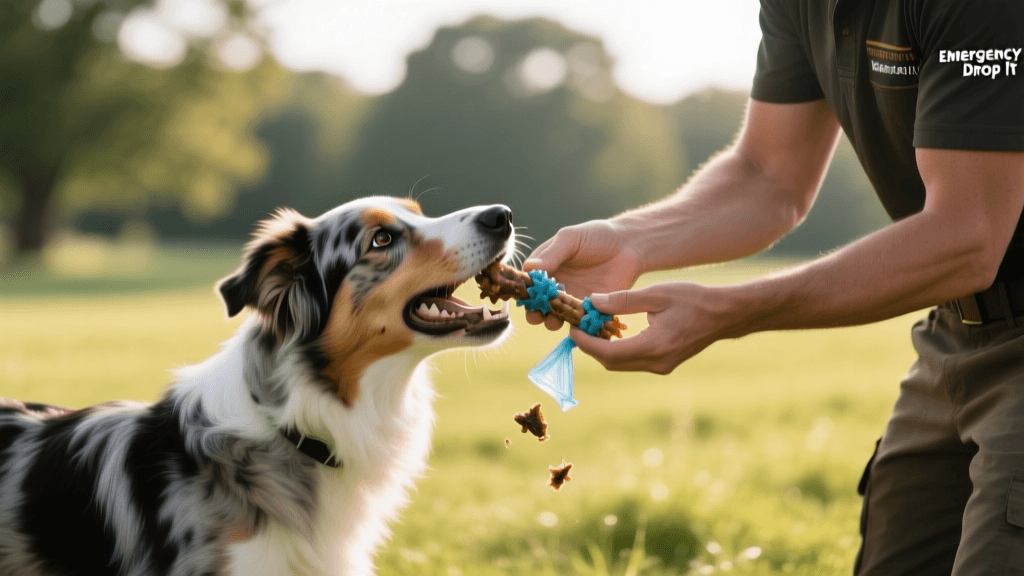
Every dog owner has experienced that heart-stopping moment: your dog picks up something dangerous on a walk, and you have only a split second to react. Whether it is a discarded chicken bone, a dropped pill, or a toxic piece of food, the emergency "drop it" command is arguably the most critical safety skill you can teach your dog. Unlike a standard "leave it" command, which prevents a dog from picking something up in the first place, the "drop it" command requires your dog to immediately release an item already in their mouth.
The Hidden Dangers of Scavenging and Resource Guarding
Dogs are natural scavengers. Their ancestors survived by eating whatever they could find, which means the instinct to grab and swallow is deeply ingrained. When a dog picks up a high-value or novel item, their arousal levels spike, making them less responsive to standard obedience cues. Furthermore, attempting to physically pry an object from a dog's mouth can trigger resource guarding, lead to severe bite wounds, or accidentally push the object further down the esophagus, causing a fatal choking hazard.
The stakes are incredibly high when it comes to accidental ingestions. According to the ASPCA Animal Poison Control, tens of thousands of pets are exposed to toxic substances every single year, with human medications, over-the-counter drugs, and human foods like xylitol and chocolate topping the list. Similarly, the Pet Poison Helpline reports that swift action is the primary determinant of survival in poisoning cases. If your dog has a conditioned, reflexive "drop it" response, you can prevent a toxic item from ever reaching the stomach, saving thousands of dollars in emergency veterinary bills and potentially your dog's life.
The Psychology of the Release: Why Force Fails
The American Veterinary Society of Animal Behavior (AVSAB) strongly advocates for positive reinforcement and force-free training methods, especially for high-stress emergency scenarios. When you chase your dog or yell "give me that!" while reaching for their collar, you inadvertently turn the situation into a game of keep-away or trigger a fight-or-flight response. The dog learns that having an item in their mouth results in the loss of the item and a scary confrontation. By using a "trade-up" methodology, we rewire the dog's brain to associate dropping an item with receiving something of even greater value.
Essential Training Gear and High-Value Rewards
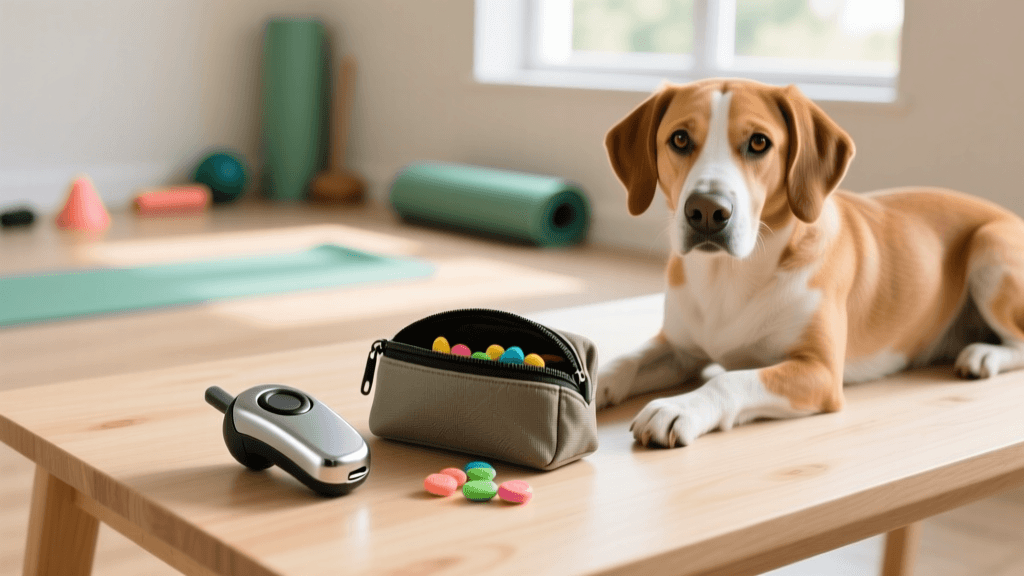
To train an emergency drop, you need the right tools. Standard kibble will not work when your dog has a rotting fish head in their mouth. You need high-value, aromatic treats that override the dog's scavenging drive.
- Freeze-Dried Beef Liver (e.g., Stella & Chewy's): Costs approximately $15 for a 3oz bag. The intense smell is highly motivating. Break into pea-sized pieces (approx. 0.5 grams each) to prevent satiation.
- Training Pouch (e.g., Ruffwear Treat Trader): Costs around $35. A magnetic-closure pouch allows you to access treats in a fraction of a second, which is vital for marking the exact moment the dog drops the item.
- Long Line (15 to 30 feet): A biothane long line ($25-$40) ensures you can maintain safety and control during outdoor proofing sessions without relying on a retractable leash, which can cause friction burns and lacks precision.
- Decoy "Hazard" Items: Empty pill bottles, sealed Tupperware containers with kibble inside, or rubber "chicken bones" designed for training.
Step-by-Step Emergency Drop It Protocol
Phase 1: The Trade-Up Game (Low-Stakes Environment)
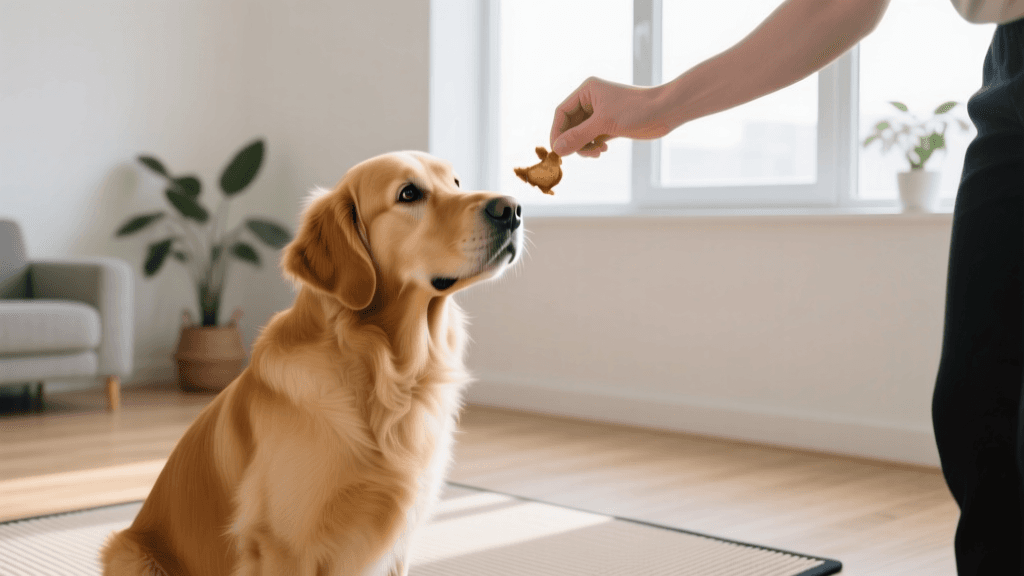
Begin indoors with zero distractions. Give your dog a low-value toy, such as a basic rope knot. Let them chew it for exactly three seconds. Then, present a piece of freeze-dried liver directly in front of their nose. The moment they open their mouth to eat the treat, say your marker word (e.g., "Yes!" or use a clicker) and give the treat. Pick up the toy, wait two seconds, and give it back. This teaches the dog that dropping the toy does not mean losing it forever; it means getting a treat and getting the toy back.
Phase 2: Adding the Verbal Cue
Once your dog is reliably spitting out the toy for the liver (usually after 3 to 5 sessions of 10 repetitions), introduce the verbal cue. Say "Drop It" in a calm, firm tone one half-second before you present the treat. The sequence is: Verbal Cue -> Pause -> Present Treat -> Dog Drops -> Mark ("Yes!") -> Reward -> Return Toy. Do not repeat the command. If you say "Drop it, drop it, drop it," the dog learns that the phrase is just background noise.
Phase 3: Proofing with Decoy Hazards
Move the training to the backyard or a quiet park using your 15-foot long line. Place a sealed Tupperware container filled with smelly treats on the ground. Allow your dog to investigate and pick it up. Because they cannot get the treats out, they will eventually pause. The moment they show a moment of disengagement, say "Drop It," present your liver, and reward heavily (give 3 to 4 pieces in a row, known as a "jackpot" reward). Gradually increase the difficulty by using items that mimic real hazards, like an empty, cleaned medication bottle.
Phase 4: The Emergency Simulation
In a real emergency, you might not have time to fetch a treat pouch. You must condition the dog to drop the item purely on the verbal cue, with the reward coming after the fact. Say "Drop It." When the dog drops the item, immediately praise, run to your treat stash, and initiate a "scatter feed" (throwing a handful of treats into the grass). This scatter feed keeps the dog's nose down and occupied, allowing you to safely retrieve the hazardous item without triggering resource guarding.
Troubleshooting Common Training Roadblocks
| Problem | Underlying Cause | Actionable Solution |
|---|---|---|
| Dog swallows the item before dropping | Treat presentation is too slow; dog feels rushed. | Hide the treat in your hand. Present an empty open palm, then produce the treat from your pouch the millisecond they drop. |
| Dog drops but immediately grabs it again | Lack of an incompatible behavior follow-up. | Immediately cue a "Sit" or "Touch" (hand target) after the drop to move the dog's mouth away from the object. |
| Dog ignores cue outdoors | Environmental distractions outweigh treat value. | Upgrade to boiled chicken breast or roasted pork. Increase the distance from distractions using your long line. |
| Dog growls when approached with an item | Resource guarding; dog feels threatened. | Stop reaching for the dog. Toss high-value treats from a distance of 6 feet to build positive association with your approach. |
Maintenance and Real-World Readiness
An emergency command is like a fire extinguisher: you hope you never need it, but it must work flawlessly when you do. To maintain the emergency "drop it," incorporate it into your daily routine at least twice a week. During play sessions with high-value fetch toys, randomly cue a "drop it," reward with a premium treat, and immediately throw the toy again. This keeps the behavior sharp and the dog's response time under one second.
Furthermore, consider enrolling in a specialized canine first-aid course. Organizations like the Red Cross offer pet first-aid certifications that cover choking rescue techniques, such as the canine Heimlich maneuver, which is critical knowledge if the drop it command fails and an airway becomes obstructed. Investing two hours and roughly $50 in a weekend certification course provides invaluable peace of mind.
Remember, if your dog ever ingests a truly toxic substance (like a grape, a rodenticide block, or a dropped NSAID pill) and fails to drop it, do not induce vomiting with hydrogen peroxide unless explicitly instructed by a licensed veterinarian. Improper dosing can cause severe hemorrhagic gastroenteritis or aspiration pneumonia. Keep the numbers for your local emergency vet and the ASPCA Poison Control hotline saved in your phone. By combining proactive emergency safety training with a solid veterinary action plan, you ensure your dog remains safe, happy, and protected from the unpredictable hazards of the world.
hannah-wickes
All our authors care for dogs every day — read more of their work on the authors page.