Best Dual-Clip No Pull Dog Harnesses For City Walks 2026
Discover the best dual-clip no pull dog harnesses for urban walks in 2026. Compare top picks, fitting tips, and training methods for city dogs.
The Urban Walking Challenge in 2026
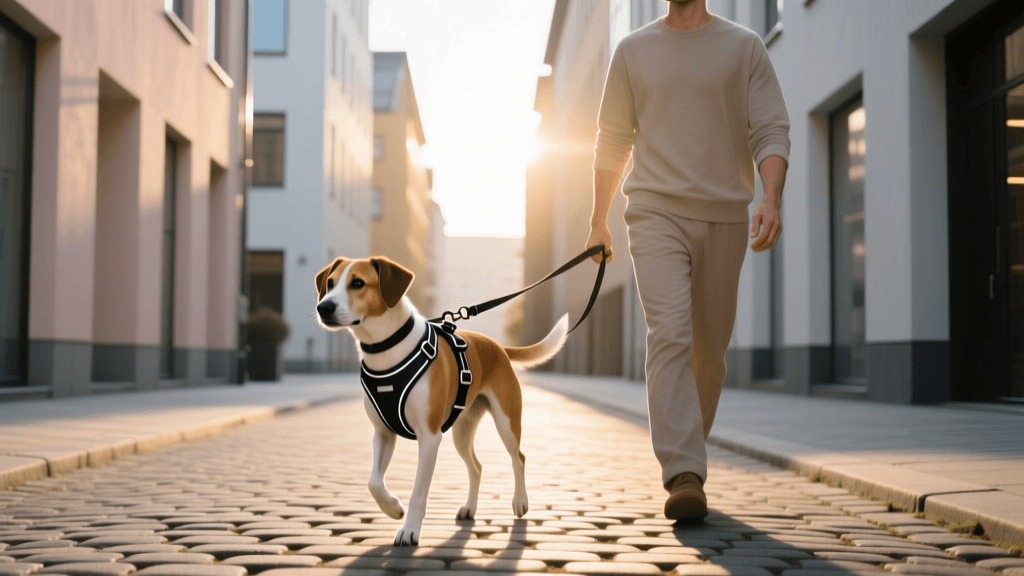
Navigating the urban jungle in 2026 requires more than just a good pair of walking shoes and a standard nylon leash. With the exponential rise of silent e-scooters, denser city living, and highly stimulating street environments, walking a strong, easily distracted dog has never been more challenging. For owners of powerful breeds or enthusiastic pullers, a standard back-clip harness often exacerbates the problem, turning a simple stroll into a grueling game of tug-of-war. This is where the dual-clip no pull dog harness becomes an essential piece of daily gear.
A dual-clip harness offers both a front chest attachment and a traditional back attachment. The front clip is a game-changer for loose-leash training, gently redirecting your dog's momentum back toward you when they pull, rather than allowing them to lean into their chest like a sled dog. In this comprehensive guide, we break down the science of pulling, review the top-rated dual-clip harnesses for city dogs this year, and provide a step-by-step training protocol to achieve peaceful urban walks.
The Biomechanics of Pulling: Why Back-Clip Harnesses Fail
To understand why a no pull dog harness is necessary, we must look at canine biomechanics. Dogs possess a natural physiological response known as the 'opposition reflex.' When pressure is applied to their chest or back, their instinct is to push forward against it. This is the exact trait that makes huskies excellent sled pullers. When you attach a leash to the back of a standard harness, you are distributing the pulling force across your dog's strongest muscle groups—the chest and shoulders. Essentially, a back-clip harness gives your dog the mechanical advantage to pull you down the street.
According to training guidelines published by the American Kennel Club, utilizing a front-clip harness disrupts this forward momentum. When the dog pulls and hits the end of the leash, the front attachment point pivots their chest and shoulders toward the handler. This physically prevents them from driving forward with their full body weight and encourages them to check in with you, making it the most humane and effective tool for curbing pulling behavior without relying on aversive choke or prong collars.
Top 3 Dual-Clip No-Pull Harnesses for 2026
Not all harnesses are created equal. After testing dozens of models on busy city streets, we have identified the top three dual-clip no pull dog harnesses that combine durability, comfort, and effective anti-pull mechanics for 2026.
1. Ruffwear Front Range Harness (2026 Eco-Update)
The Ruffwear Front Range has long been the gold standard for everyday walking, and its latest 2026 iteration continues to dominate the market. Ruffwear has updated the padding with a new breathable, recycled algae-based foam that reduces heat retention during humid summer walks. It features an anodized aluminum V-ring on the chest for front-clip steering and a reinforced webbing loop on the back for relaxed sniffaris. The four points of adjustment allow for a highly customized fit, ensuring the chest plate sits perfectly on the sternum without restricting shoulder movement.
- Best For: Active urban dogs and weekend hikers.
- Pros: Premium eco-friendly materials, reflective trim for night visibility, ID pocket.
- Cons: Premium price point; the front ring is aluminum (not steel), which may warp under extreme, untrained pulling from giant breeds.
2. Kurgo Tru-Fit Smart Harness
If your city dog doubles as your travel companion, the Kurgo Tru-Fit Smart Harness is the ultimate hybrid. Originally designed with automotive safety in mind, its steel nest-buckle system and broad chest plate distribute crash forces evenly. For daily walks, the heavy-duty steel front D-ring provides an incredibly secure anchor point that will not bend, even if you have a 90-pound Mastiff mix that lunges at passing e-bikes. The 2026 model features upgraded rust-proof hardware and a more streamlined neoprene chest guard.
- Best For: Strong pullers, escape artists, and dogs that ride in the car.
- Pros: Lifetime warranty, crash-tested, steel front ring.
- Cons: Heavier than competitors; the nest-buckles can be stiff to operate in freezing weather.
3. 2 Hounds Design Freedom No-Pull Harness
For sensitive-skinned dogs or breeds with unique proportions like Greyhounds and French Bulldogs, the 2 Hounds Design Freedom harness is unparalleled. It utilizes a patented Swiss velvet lining on the chest and belly straps to completely eliminate chafing. The front connection features a unique martingale-style loop that gently tightens across the shoulders when the dog pulls, providing a tactile cue without choking. It also comes with a dual-attachment training leash, allowing you to clip to both the front and back simultaneously for maximum steering control.
- Best For: Sensitive dogs, barrel-chested breeds, and owners wanting dual-leash control.
- Pros: Anti-chafe velvet lining, martingale front loop, included dual-clip leash.
- Cons: The velvet lining requires more frequent washing to remove city grime and mud.
2026 Harness Comparison Chart
| Feature | Ruffwear Front Range | Kurgo Tru-Fit Smart | 2 Hounds Freedom |
|---|---|---|---|
| Front Ring Material | Anodized Aluminum | Welded Steel | Stainless Steel (Martingale) |
| Adjustment Points | 4 | 5 | 4 |
| Estimated 2026 Price | $49.95 | $39.99 | $43.95 |
| Weight | Lightweight | Heavy-Duty | Mid-Weight |
| Car Safety Tested? | No | Yes | No |
How to Fit a No-Pull Harness Perfectly
Even the most expensive no pull dog harness will fail if fitted incorrectly. A poorly fitted front-clip harness can cause chafing, restrict gait, or allow the dog to back out and escape into traffic. Follow the ASPCA's recommended guidelines for proper harness fitting:
- The Neck Opening: Slip the harness over the head. You should be able to slide exactly two fingers between the neck strap and your dog's skin. Any looser, and they can pull a paw out; any tighter, and it will restrict breathing.
- The Girth Strap: This strap goes behind the front legs. Ensure it sits high up in the 'armpit' area, but not so high that it rubs against the elbow joint during movement. The chest plate should rest flat against the sternum.
- Check the Shoulders: Have your dog take a few steps. Watch their front shoulder blades. The harness webbing should not cross over or impede the natural extension of the shoulder joint.
Training Your Dog with a Front-Clip Harness
A no pull dog harness is a training tool, not a magic cure. To achieve permanent loose-leash walking in busy 2026 city environments, you must pair the harness with positive reinforcement. Here are two highly effective methods to implement on your next walk.
The 'Be a Tree' Method
When your dog spots a distraction (like a delivery robot or another dog) and hits the end of the leash, simply stop walking. Stand completely still like a tree. Do not yank the leash or yell. The front clip will gently turn your dog's body back toward you. Wait for them to look back at you or for the leash to slacken. The exact second the leash forms a 'J' shape, mark the behavior with a 'Yes!' and resume walking. This teaches the dog that tension on the leash acts as a brake, while a loose leash acts as the gas pedal.
The 'Magnet Hand' Technique
In high-distraction urban areas, proactive management is key. Hold a high-value treat (like freeze-dried liver or chicken) in your hand right at your dog's nose level, on the side of your body where you want them to walk. Walk forward, keeping their nose 'magnetized' to your hand. Gradually increase the time between treats. Over a few weeks, transition from holding a treat in your hand to simply having a treat in your pocket, rewarding them every time they voluntarily check in with you while navigating crowded sidewalks.
Transitioning to the Back Clip
The ultimate goal of using a front-clip no pull dog harness is to eventually transition to the back clip for relaxed, recreational sniffing. Once your dog has mastered loose-leash walking and consistently maintains a slack leash in your neighborhood, begin alternating. Start your walk with the leash clipped to the front ring to establish boundaries and focus. Halfway through the walk, when your dog is mentally fatigued and calm, switch the leash to the back D-ring. If pulling resumes, calmly switch back to the front clip. With consistency, patience, and the right gear, your daily urban walks will transform from a stressful chore into the best part of your day.
tom-renshaw
All our authors care for dogs every day — read more of their work on the authors page.