Essential Dog Training Tips for Rescue Dogs: A Step-by-Step Guide
Discover expert dog training tips for rescue dogs. Learn how to build trust, overcome trauma, and teach basic commands to your newly adopted companion.

Adopting a rescue dog is one of the most rewarding experiences a pet parent can have. You are not just gaining a loyal companion; you are giving a deserving animal a second chance at a happy life. However, bringing a shelter dog into your home comes with a unique set of challenges. Unlike puppies raised from birth in a controlled environment, rescue dogs often carry the weight of unknown histories, past traumas, or a lack of early socialization. This makes dog training tips for rescue dogs fundamentally different from standard obedience guides.
Training a rescue dog requires a delicate balance of patience, empathy, and structured consistency. The goal is not just to teach them to sit or stay, but to help them feel safe, secure, and confident in their new world. In this comprehensive guide, we will walk you through the psychology of rescue dogs, step-by-step training methods, and actionable advice to help your new best friend thrive.
Understanding the Rescue Dog Mindset & The 3-3-3 Rule
Before you pick up a clicker or a bag of treats, it is vital to understand the psychological state of your newly adopted dog. Many rescue dogs have experienced neglect, abuse, or the highly stressful environment of a shelter. Their primary focus upon entering your home is survival and assessing their new environment for threats.
Animal behaviorists often refer to the 3-3-3 Rule to help adopters set realistic expectations for their dog's decompression period:
- 3 Days to Decompress: Your dog may feel overwhelmed, scared, or unsure. They might hide, refuse to eat, or test boundaries. During this phase, formal training should be paused. Focus entirely on providing a quiet, safe space.
- 3 Weeks to Learn the Routine: Your dog starts to figure out your schedule. They begin to show their true personality and may start testing limits. This is the time to introduce gentle boundaries and basic house rules.
- 3 Months to Feel at Home: By this point, a strong bond of trust is usually formed. Your dog feels secure, and this is when structured obedience training and behavioral modification will yield the best results.
Understanding this timeline prevents frustration. If your dog is not responding to commands in the first week, it is not because they are stubborn; it is because their nervous system is still in fight-or-flight mode.
The Crucial First Step: Building Trust Before Training
You cannot train a dog that does not trust you. For a rescue dog, trust is the currency that buys their attention and willingness to learn. Here is a step-by-step approach to building a foundational bond.
Step 1: Create a Safe Haven
Set up a designated quiet zone with a comfortable bed, water, and a few chew toys. If you are using a crate, ensure it is introduced positively. Our crate training guide offers excellent techniques for making the crate a sanctuary rather than a punishment zone. Allow your dog to retreat to this space whenever they feel overwhelmed, and never force them out.
Step 2: Implement Hand-Feeding
Instead of putting a full bowl of food down, feed your rescue dog their daily kibble by hand. This teaches them that you are the source of all good things. It builds a positive association with your hands, which is especially important for dogs that may have experienced physical punishment in the past.
Step 3: Respect Canine Body Language
Learn to read calming signals. If your dog is lip-licking, yawning, showing the whites of their eyes (whale eye), or turning their head away, they are stressed. Respect these signals by giving them space. Forcing interaction on a stressed dog will only erode trust.
Step-by-Step Essential Training for Rescue Dogs
Once your dog has decompressed and you have established a baseline of trust, you can begin formal training. Keep sessions short—around 5 to 10 minutes—to prevent mental fatigue and frustration.
1. Name Recognition
Many rescue dogs are given new names upon adoption. To teach them their new name:
- Say their name in a cheerful, upbeat tone.
- The exact second they look at you, mark the behavior with a clicker or a verbal marker like 'Yes!'
- Immediately reward them with a high-value treat.
- Repeat this in various rooms and with varying levels of distraction.
2. Potty Training & Routine
Even if a rescue dog was previously house-trained, the stress of moving can cause accidents. Treat your rescue dog as if they are a brand-new puppy. Take them out immediately after waking up, eating, playing, and before bed. Praise heavily and reward with treats when they eliminate outside. Never punish them for indoor accidents, as this will only teach them to hide from you when they need to go.
3. Basic Obedience Commands
Teaching basic commands provides mental stimulation and establishes clear communication. For a complete breakdown of foundational commands, check out our guide on basic obedience commands.
- Sit: Hold a treat near their nose and slowly move it up and back over their head. As their head follows the treat, their bottom will naturally lower. Mark and reward.
- Down: From a sitting position, lower a treat to the floor and slowly drag it away from them. Mark and reward when their elbows touch the ground.
- Recall (Come): Start in a low-distraction environment on a long leash. Say their name followed by 'Come!' in an excited voice. Reward lavishly when they reach you. Never call your dog to you to punish them or do something they dislike (like bathing or nail trimming).
4. Leash Walking
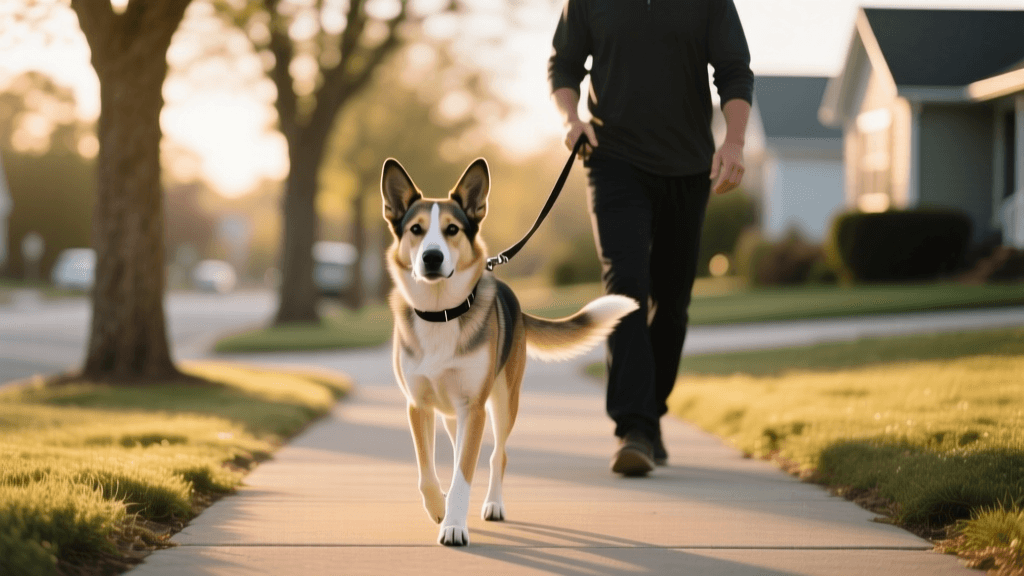
Shelter dogs are often highly reactive or pull heavily on the leash due to a lack of prior walking manners. Start leash training indoors or in a fenced yard. Reward your dog for staying by your side. If they pull, stop walking immediately. Only move forward when the leash is slack. For more detailed techniques, read our leash training basics article.
Navigating Common Behavioral Challenges
Rescue dogs often come with behavioral baggage. Addressing these issues requires targeted desensitization and counter-conditioning.
Separation Anxiety
Many rescue dogs develop a deep fear of abandonment, leading to destructive behavior or vocalization when left alone. To combat this, practice 'micro-departures.' Pick up your keys, then sit back down. Put on your shoes, then take them off. Desensitize your dog to your departure cues. Gradually increase the time you spend out of the room, starting with just five seconds. For severe cases, consult our comprehensive separation anxiety solutions guide.
Resource Guarding
Dogs that have had to compete for food or toys in a shelter environment may guard their resources aggressively. Never punish a dog for growling over a bone; this suppresses the warning sign and can lead to a sudden bite. Instead, play the 'Trade-Up' game. Offer them a piece of high-value chicken in exchange for their lower-value kibble or toy. This teaches them that giving something up results in something even better. Learn more about safely managing this behavior in our resource guarding article.
Breed-Specific Considerations
While every dog is an individual, certain breeds commonly found in rescues have specific genetic predispositions that influence their training needs. For example, if you have adopted a German Shepherd, they will require extensive mental stimulation and structured job-oriented training to prevent boredom-induced destructiveness. On the other hand, an American Pit Bull Terrier may exhibit high dog-selectivity or same-sex aggression, requiring careful, controlled socialization and strong impulse control training rather than forced dog park visits.
Pro Tips & Common Mistakes to Avoid
Even the most well-intentioned adopters can stumble during the training process. Here are some expert tips and common pitfalls to keep in mind.
Pro Tips for Success
- Use High-Value Rewards: Dry kibble rarely motivates a stressed or distracted rescue dog. Use boiled chicken, freeze-dried liver, or string cheese for training sessions.
- End on a Positive Note: Always finish a training session with a command your dog knows well and can easily succeed at. This builds their confidence and leaves them feeling good about the interaction.
- Utilize Capturing: You do not always need to lure a behavior. If your dog naturally sits or lies down calmly, mark the behavior and toss them a treat. This reinforces calm, default behaviors.
- Manage the Environment: Set your dog up for success. If they counter-surf, manage the environment by keeping food out of reach rather than waiting for them to make a mistake so you can correct them.
Common Mistakes to Avoid
- Using Aversive Punishment: Yelling, hitting, or using shock collars will destroy the trust you have built and can trigger fear-based aggression. Positive reinforcement is scientifically proven to be more effective and safer for rescue dogs.
- Rushing the Process: Do not force your dog into overwhelming situations (like crowded pet stores or busy dog parks) before they are ready. Flooding a dog with fears will only worsen their reactivity.
- Inconsistent Rules: If your dog is not allowed on the furniture, everyone in the household must enforce this rule. Inconsistency creates confusion and anxiety in dogs trying to learn the rules of their new home.
- Assuming the Dog 'Knows Better': Your rescue dog does not know your specific house rules. What they learned in their past home or the shelter may be entirely different from what you expect. Teach them patiently.
Frequently Asked Questions
How long does it take to train a rescue dog?
There is no set timeline, as it heavily depends on the dog's history, temperament, and the consistency of the owner. Basic obedience can be learned in a few weeks, but overcoming deep-seated behavioral issues like fear or reactivity can take months or even years of consistent, positive reinforcement. Remember the 3-3-3 rule and celebrate small victories along the way.
Should I use a crate for my rescue dog?
Yes, when introduced correctly, a crate is an invaluable tool for rescue dogs. It provides a den-like sanctuary where they can retreat when the household gets overwhelming, and it aids significantly in potty training and preventing destructive behavior when unsupervised. However, the crate must never be used as a place of punishment. Take your time introducing it using treats and positive associations.
What if my rescue dog is aggressive toward other dogs?
Leash reactivity and dog-directed aggression are common in rescue dogs due to poor socialization or past negative encounters. Avoid dog parks, which are unpredictable and can reinforce bad experiences. Instead, engage in parallel walking with a known, calm dog at a distance, and practice the 'Look at That' (LAT) game to change their emotional response to other dogs. If the aggression is severe, consult a certified professional dog trainer or veterinary behaviorist immediately.
Can older rescue dogs learn new tricks?
Absolutely. The old adage that 'you can't teach an old dog new tricks' is entirely false. Senior rescue dogs often have longer attention spans and less physical energy than puppies, making them excellent candidates for training. You may need to accommodate physical limitations, such as arthritis, by teaching hand signals instead of verbal cues, or modifying commands like 'down' to a comfortable 'settle' on a soft mat.
When should I hire a professional dog trainer?
You should seek professional help if your dog exhibits severe separation anxiety, resource guarding that involves biting, extreme fear-based shutdown, or aggression toward humans or other animals. A certified behaviorist can provide a tailored modification plan and ensure you are handling the dog safely. Do not wait for a behavioral issue to escalate before seeking expert guidance.
Conclusion
Training a rescue dog is a profound journey of mutual healing and discovery. By prioritizing trust, utilizing positive reinforcement, and maintaining a patient, empathetic mindset, you can help your adopted dog overcome their past and blossom into a confident, well-mannered companion. Remember that every setback is just a stepping stone, and every small success is a testament to the bond you are building. Embrace the process, lean on the resources available to you, and enjoy the incredible privilege of watching your rescue dog finally feel at home.
Paws&Tales
All our authors care for dogs every day — read more of their work on the authors page.