Step-by-Step Cooperative Care Training for Stress-Free Vet Visits
Learn step-by-step cooperative care training to reduce your dog's vet anxiety. Master handling, nail trims, and medical exams for better wellbeing.
The Paradigm Shift in Canine Veterinary Care
For decades, the standard approach to canine veterinary care and routine grooming involved physical restraint. While well-intentioned, holding a dog down for a blood draw, nail trim, or ear exam often triggers a massive spike in cortisol and adrenaline. This not only makes the immediate experience traumatic for the dog and stressful for the owner, but it also creates long-term behavioral fallout, making future medical care increasingly difficult. Enter cooperative care: a revolutionary, science-backed training methodology that empowers dogs to actively participate in their own healthcare routines.
Cooperative care training shifts the paradigm from forced compliance to willing participation. By teaching your dog specific behaviors that grant them a sense of control, you drastically reduce veterinary anxiety. According to the Fear Free Pets organization, reducing fear, anxiety, and stress in veterinary environments leads to more accurate medical readings, safer handling, and a significantly higher quality of life for the animal. This step-by-step guide will walk you through the foundational exercises needed to transform your dog's health and wellbeing journey from a battleground into a collaborative partnership.
What is Cooperative Care in Dog Wellness?
At its core, cooperative care is a form of operant conditioning where the dog learns to offer a specific, stationary behavior—often called a 'consent signal'—in exchange for a high-value reward. If the dog breaks the behavior, the handling immediately stops. This gives the dog a 'voice' and an 'opt-out' mechanism, which paradoxically makes them much more likely to opt-in. When a dog knows they can stop the procedure by simply lifting their head or moving away, their panic response is bypassed, allowing their parasympathetic nervous system to remain engaged.
Integrating cooperative care into your dog's routine is one of the most profound preventive health measures you can take. Dogs that are comfortable with handling are more likely to receive timely vaccinations, thorough physical exams, and necessary dental care without the need for sedation or heavy restraint.
Essential Tools for Cooperative Care Training
Before beginning your training journey, it is crucial to gather the right equipment. The goal is to set up an environment where your dog can succeed without feeling trapped. Below is a breakdown of the essential tools required for a successful cooperative care protocol.
| Training Tool | Primary Purpose | Estimated Cost |
|---|---|---|
| Silicone Lick Mat | Provides soothing distraction via repetitive licking. | $10 - $15 |
| Zuke's Mini Naturals | High-value, low-calorie rewards for rapid reinforcement. | $8 - $12 |
| Dremel 7300-PT | Painless, gradual nail grinding to avoid the quick. | $30 - $40 |
| Baskerville Ultra Muzzle | Breathable, safe muzzle for desensitization training. | $15 - $25 |
| Target Stick | Guides the dog into specific positions without physical force. | $10 - $20 |
Always ensure that your training treats are soft, pea-sized, and easily consumable. Hard biscuits take too long to chew and break the dog's focus. Products like Zuke's Mini Naturals or plain boiled chicken breast are ideal for maintaining a high rate of reinforcement.
Step 1: Establishing a Consent Signal (The Chin Rest)
The chin rest is the foundational behavior of cooperative care. It teaches the dog to rest their chin on a designated surface (like your palm, a yoga block, or a specialized chin rest target) and remain still while being touched. This behavior is highly versatile and can be used for eye exams, ear cleaning, and blood draws.
The Training Protocol:
- Capture the Rest: Hold a small handful of treats in one hand and present your open palm or a target object just below your dog's nose. The moment their chin drops to investigate or rest on the surface, mark the behavior with a clicker or a verbal 'Yes!' and feed a treat.
- Build Duration: Gradually increase the time your dog must keep their chin on the target before receiving the reward. Start with one second, then build to three, five, and eventually ten seconds.
- Introduce Touch: Once your dog can hold a solid chin rest for five seconds, gently touch their shoulder for one second, mark, and reward. Slowly move the touch to more sensitive areas like the back of the neck, the ears, and the muzzle.
- The Opt-Out Rule: If your dog lifts their head, immediately stop touching them and remove your hands. Do not correct them. Simply wait for them to offer the chin rest again. This reinforces that they have control over the interaction.
Keep these sessions incredibly short—no more than three to five minutes at a time. Mental fatigue is real, and pushing a dog past their threshold will undo your progress.
Step 2: Desensitizing to Handling and Touch
Routine handling is a critical component of preventive care. The American Veterinary Medical Association (AVMA) emphasizes that regular at-home physical checks allow owners to detect lumps, skin infections, and parasites early. However, many dogs are highly sensitive to having their paws, ears, and tails handled.
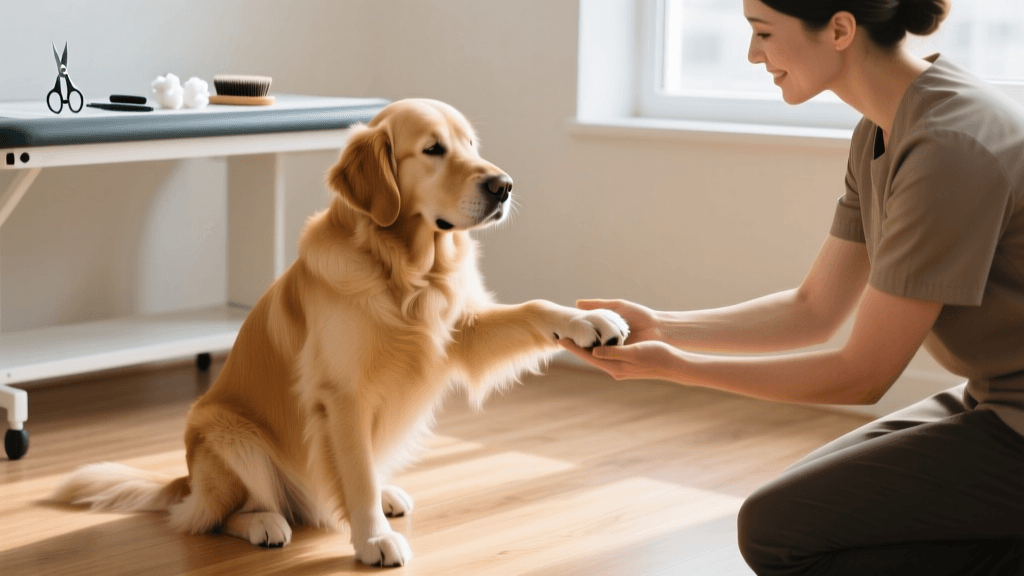
Desensitization involves exposing the dog to a mild version of the trigger at a level that does not provoke fear, paired with high-value rewards. Start by simply looking at your dog's paw. Mark and reward. Next, point at the paw. Mark and reward. Then, lightly brush your fingers against their leg. Mark and reward. If at any point your dog pulls away, you have moved too fast. Return to the previous successful step and proceed more gradually.
Key Areas to Desensitize:
- The Ears: Gently flip the ear flap and look inside. Reward heavily. This prepares them for otoscope exams and ear flushes.
- The Paws: Touch each individual toe pad. Squeeze gently. This is vital for tick removal and nail maintenance.
- The Collar and Harness: Practice grabbing their collar or harness gently and feeding a treat, so being grabbed never predicts something negative.
Step 3: Nail Trimming Without the Struggle
Overgrown nails can severely impact a dog's orthopedic health, altering their gait and leading to premature joint arthritis. Yet, nail trims are notoriously stressful. Cooperative care offers a solution through 'scratch boards' or voluntary paw extensions.
If using a Dremel tool (like the Dremel 7300-PT), the first step is classical conditioning to the sound and vibration. Turn the Dremel on at a distance, feed a treat. Turn it off, stop feeding. Repeat until the dog shows excitement upon hearing the motor. Next, touch the side of the Dremel (while off) to the nail, mark, and reward. Then, turn it on, let the vibration touch the nail for a microsecond, mark, and reward. By breaking the nail trim into dozens of tiny, heavily rewarded approximations, the dog learns that the tool predicts delicious food, not pain.
Step 4: Simulating the Veterinary Exam
Once your dog has mastered the chin rest and basic handling, it is time to simulate the clinical environment. You can use household items to mimic veterinary tools. A wooden spoon can simulate a syringe; a cold metal spoon can simulate a stethoscope; a soft measuring tape can simulate a blood pressure cuff.
Introduce muzzle training during this phase, even if your dog has never shown aggression. The American Kennel Club (AKC) health resources note that a well-fitted basket muzzle is a vital safety tool that prevents bite injuries when a dog is in severe pain or panic. Using a Baskerville Ultra Muzzle, smear peanut butter or cream cheese on the inside and let the dog push their face in voluntarily. Never force the muzzle onto the dog's snout. Gradually fasten the straps for one second, then two, rewarding continuously.
Recognizing and Respecting Canine Stress Signals
A successful cooperative care protocol relies entirely on the handler's ability to read canine body language. If you miss the subtle signs of stress, your dog will be forced to escalate to growling or biting to communicate their discomfort. You must become an expert in reading the 'whispered' warnings before they become shouts.
Early Warning Signs of Stress:
- Whale Eye: Showing the whites of the eyes while the head is turned away.
- Lip Licking: Quick, repetitive flicks of the tongue over the nose when not eating.
- Yawning: Out-of-context yawning when the dog is not tired.
- Shaking Off: Shaking the body as if wet, used to discharge stress hormones after an interaction.
- Freezing: Complete stillness and muscle tension; this is a critical warning sign that a bite may follow if the pressure is not removed.
If you observe any of these signals during a training session or a real veterinary visit, immediately stop the procedure, give the dog space, and re-evaluate your training plan. Pushing through stress destroys the trust you have worked so hard to build.
Conclusion: A Lifetime of Better Health
Cooperative care training is not a quick fix; it is a lifelong commitment to your dog's emotional and physical wellbeing. By investing ten minutes a day into these step-by-step exercises, you are giving your dog the gift of autonomy. You are teaching them that their body belongs to them, and that you are a partner in their health, not an adversary. The next time you visit the veterinary clinic, you will no longer dread the exam table. Instead, you will watch with pride as your dog confidently rests their chin on the veterinarian's hand, ready to participate in their own care. Embrace the journey of cooperative care, and transform your dog's health and wellbeing for the better.
hannah-wickes
All our authors care for dogs every day — read more of their work on the authors page.