Dog Sleep Myths Debunked: Crate Training and Rest Facts
Discover the truth about dog sleep and crate training. We debunk common myths about canine rest, dreaming, and daily crate routines for a happier pup.
The Truth About Canine Sleep and Crate Training
As dedicated dog owners, we spend a significant portion of our lives observing our furry companions. Whether they are enthusiastically chasing a tennis ball at the local park or curled up in a cozy ball on the living room rug, their daily routines fascinate us. However, when it comes to canine sleep patterns and the practice of crate training, misinformation runs rampant across the internet. Well-meaning friends, outdated training manuals, and social media influencers often perpetuate myths that can lead to unnecessary stress for both you and your dog. In this comprehensive guide, we are separating fact from fiction. We will debunk the most common myths surrounding dog sleep and crate training, providing you with actionable, science-backed advice to establish a healthy, comforting daily routine for your pet.
Myth 1: Dogs Should Sleep Through the Night Without Waking
One of the most pervasive myths in the pet care community is that a healthy, well-adjusted dog should sleep solidly for eight to ten hours straight, much like a human adult. The reality of canine sleep architecture is vastly different. According to the Sleep Foundation, dogs are polyphasic sleepers. This means they sleep in multiple short bursts throughout a twenty-four-hour period rather than in one long, uninterrupted block. While humans spend roughly twenty-five percent of their sleep time in the Rapid Eye Movement (REM) stage, dogs only spend about ten percent of their sleep cycle in REM. Because they experience less restorative deep sleep during each individual nap, dogs must compensate by sleeping more frequently. It is entirely normal for your dog to wake up, stretch, drink water, or reposition themselves during the night. Expecting them to remain completely motionless from bedtime until morning is not only unrealistic, but it can also cause owners to mistakenly believe their dog is suffering from insomnia or behavioral issues when they are simply exhibiting natural canine sleep patterns.
Myth 2: Crate Training is Cruel and Causes Anxiety
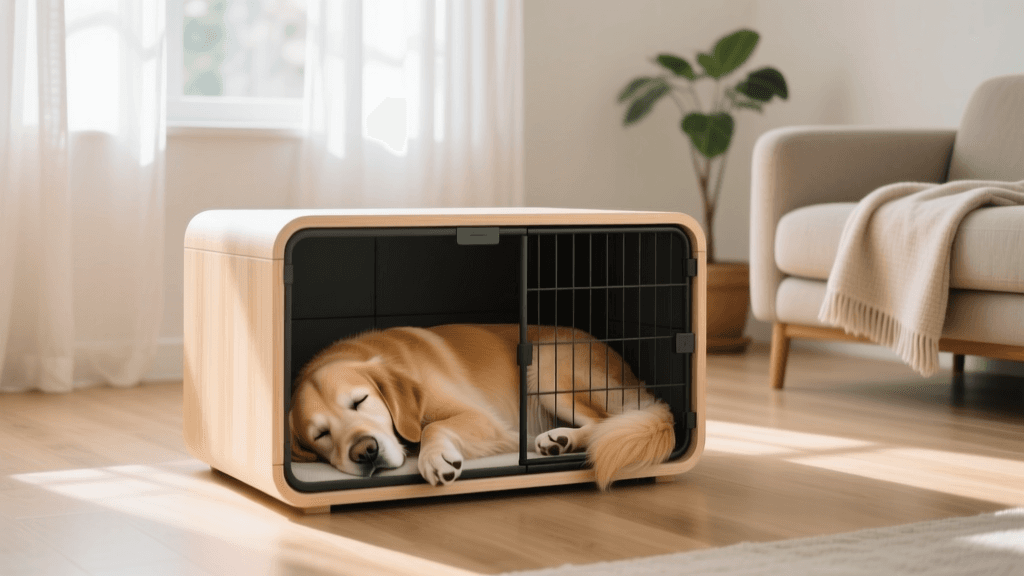
Perhaps no other training tool is as misunderstood as the dog crate. Many new owners equate crate training with imprisonment, assuming that confining a dog to a small space is inherently cruel and a primary cause of separation anxiety. The fact is that when introduced correctly, a crate taps into a dog's natural denning instinct. In the wild, canines seek out small, enclosed spaces to sleep, hide from predators, and raise their young. A properly sized crate becomes a sanctuary, a safe haven where your dog can retreat when the household becomes overwhelming. The American Kennel Club (AKC) emphasizes that crate training is one of the most effective methods for housebreaking, preventing destructive behavior, and ensuring your dog's safety when unsupervised. The key to preventing anxiety lies in proper sizing and positive association. A crate should be large enough for your dog to stand up, turn around, and lie down comfortably, but no larger. If the crate is too massive, a puppy may use one corner as a bathroom and sleep in the other, defeating the purpose of den training. For growing puppies, invest in a wire crate with an adjustable divider panel. Measure your dog from the tip of their nose to the base of their tail, and add two to four inches to determine the ideal length. Always associate the crate with high-value rewards, such as a frozen treat stuffed inside a rubber chew toy, rather than using it as a punishment zone.
Myth 3: You Must Wake a Dog if They Are Running in Their Sleep
If you have ever shared your home with a dog, you have likely witnessed the startling phenomenon of your pet twitching, paddling their paws, or even softly barking while fast asleep. The old wives' tale suggests that you must wake them up immediately to stop them from having a nightmare or to prevent them from hurting themselves. Science tells us to do the exact opposite. Research into canine brain waves indicates that dogs experience dream cycles very similar to humans. The AKC notes that dogs dream about their daily activities, such as chasing squirrels, playing fetch, or interacting with their owners. Waking a dog abruptly from a deep REM sleep cycle can trigger a severe startle reflex. Even the most gentle and well-trained dog can instinctively snap or bite if they are jolted awake from a vivid dream, as their brain has not yet processed their physical surroundings. Instead of shaking them or shouting their name, let sleeping dogs lie. If you feel you must intervene because they seem overly distressed, gently call their name from a distance or make a soft noise to allow them to wake up naturally and gradually.
Myth 4: Puppies Need Less Sleep Than Adult Dogs
Because puppies are bundles of boundless, chaotic energy when they are awake, many first-time owners mistakenly assume they require less sleep than their mature counterparts. The truth is the exact opposite. Puppies are growing rapidly, both physically and neurologically. Their bodies are building bone, muscle, and immune defenses, while their brains are processing an overwhelming amount of new sensory information and training cues. Consequently, puppies require significantly more sleep to facilitate this intense developmental phase.
Canine Sleep Requirements by Life Stage
| Life Stage | Average Daily Sleep | Sleep Characteristics |
|---|---|---|
| Puppies (0-6 Months) | 18 to 20 Hours | Frequent naps, high REM need for brain development, easily overtired. |
| Adolescents (6-18 Months) | 14 to 18 Hours | Energy spikes followed by deep crashes, adjusting to adult routines. |
| Adults (1-7 Years) | 12 to 14 Hours | Consistent polyphasic sleep, adapts to owner's schedule. |
| Seniors (7+ Years) | 16 to 18 Hours | Lighter sleep, more frequent waking due to joint discomfort or cognitive changes. |
Actionable Guide: The Ideal Daily Sleep and Crate Routine
Establishing a predictable routine is the cornerstone of successful crate training and healthy sleep habits. Dogs thrive on predictability. Below is a structured daily schedule designed for a working professional with an adult dog, incorporating crate time, physical exercise, and mental enrichment.
Sample Daily Crate and Sleep Schedule
| Time | Activity | Crate Status |
|---|---|---|
| 6:30 AM | Wake up, immediate potty break, and breakfast. | Unlocked / Door Open |
| 7:15 AM | Morning walk (30-45 mins) for physical exertion. | N/A |
| 8:30 AM | Owner leaves for work; dog enters crate with a safe chew toy. | Locked (MidWest iCrate, approx. $60) |
| 12:30 PM | Dog walker arrives for a 30-minute potty and play break. | Unlocked temporarily |
| 1:00 PM | Dog returns to crate for afternoon nap with water bowl attached. | Locked |
| 5:30 PM | Owner returns, immediate potty break, and evening meal. | Unlocked / Door Open |
| 7:00 PM | Evening training session (15 mins) and mental enrichment games. | N/A |
| 10:00 PM | Final potty break, settle into crate with a comfort item. | Locked for the night |
Recommended Products for Better Crate Routines
To make the crate an inviting space rather than a place of isolation, strategic use of products can drastically reduce whining and anxiety. First, consider the SmartPetLove Snuggle Puppy (approx. $39.95). This plush toy features a battery-operated heartbeat simulator and a heat pack, which mimics the physical sensations of sleeping next to littermates. It is exceptionally effective for puppies transitioning to a new home. Second, for dogs who destroy standard bedding, the K9 Ballistics Chew Proof Elevated Dog Bed (approx. $160.00) provides a comfortable, aluminum-framed resting surface that fits perfectly inside standard wire crates and prevents the ingestion of dangerous fabric stuffing. Finally, to keep your dog occupied while you leave the house, the KONG Classic Dog Toy (approx. $15.00 to $20.00) stuffed with peanut butter and frozen overnight provides up to an hour of mentally stimulating lick work, which releases endorphins and naturally induces sleepiness.
A crate should never be used as a time-out for bad behavior. It must remain a positive, stress-free sanctuary where your dog voluntarily chooses to rest and recharge.
Conclusion
Understanding the biological realities of canine sleep and the psychological benefits of proper crate training transforms how we care for our pets. By discarding outdated myths and embracing science-backed routines, you provide your dog with the security and rest they need to thrive. Remember, a well-rested dog is a happier, healthier, and more obedient companion. Evaluate your current routine, measure your crate, and start implementing these factual strategies today for a more peaceful household.
marcus-aldridge
All our authors care for dogs every day — read more of their work on the authors page.