How to Cure Dog Car Sickness: Diagnosis and Solutions
Discover how to diagnose and treat dog car sickness. Explore practical solutions, medication options, and training tips for stress-free road trips.
Understanding the Root Cause: Motion Sickness vs. Anxiety
Traveling with your dog should be a joy, but for many pet parents, it quickly turns into a stressful ordeal of whining, excessive drooling, and messy car sickness. According to the American Kennel Club (AKC), motion sickness is a highly common issue, particularly in puppies, but it can persist well into adulthood if left unaddressed. To effectively solve this problem, we must first diagnose whether your dog is experiencing physical vestibular distress or psychological travel anxiety. Treating the wrong root cause will only lead to frustration and failed road trips.
Signs of Vestibular Motion Sickness
True motion sickness occurs when the sensory inputs from the eyes, the inner ear (vestibular system), and the body's proprioceptors do not match. For example, if your dog is sitting in the back seat and cannot see out the window, their inner ear feels the motion of the car, but their eyes see a stationary seatback. This sensory conflict triggers nausea. Common symptoms include:
- Excessive yawning and lip smacking
- Heavy, thick drooling
- Lethargy or unusual stillness
- Whining or vocalizing in a low pitch
- Eventual regurgitation or vomiting
Signs of Psychological Travel Anxiety
Many dogs who appear to be motion sick are actually suffering from travel anxiety. If your dog only rides in the car to visit the veterinarian or the groomer, they have likely formed a strong negative association with the vehicle. Symptoms of anxiety overlap with motion sickness but often include more active distress signals:
- Panting heavily despite a cool car temperature
- Pacing, trembling, or attempting to hide under seats
- Dilated pupils and pinned ears
- Refusal to enter the vehicle
- Diarrhea or stress-induced urination
Pro Tip: Keep a dedicated travel journal for the first two weeks. Note the time of day, the temperature, the duration of the drive, and your dog's specific symptoms. This data is invaluable when consulting with your veterinarian.
Environmental Solutions: Optimizing the Car Cabin
Before turning to medications or intensive training, you must ensure your dog's physical environment in the car is optimized for comfort and sensory alignment. A chaotic or visually confusing car cabin will exacerbate both nausea and anxiety.
1. Secure Restraints and Visual Alignment
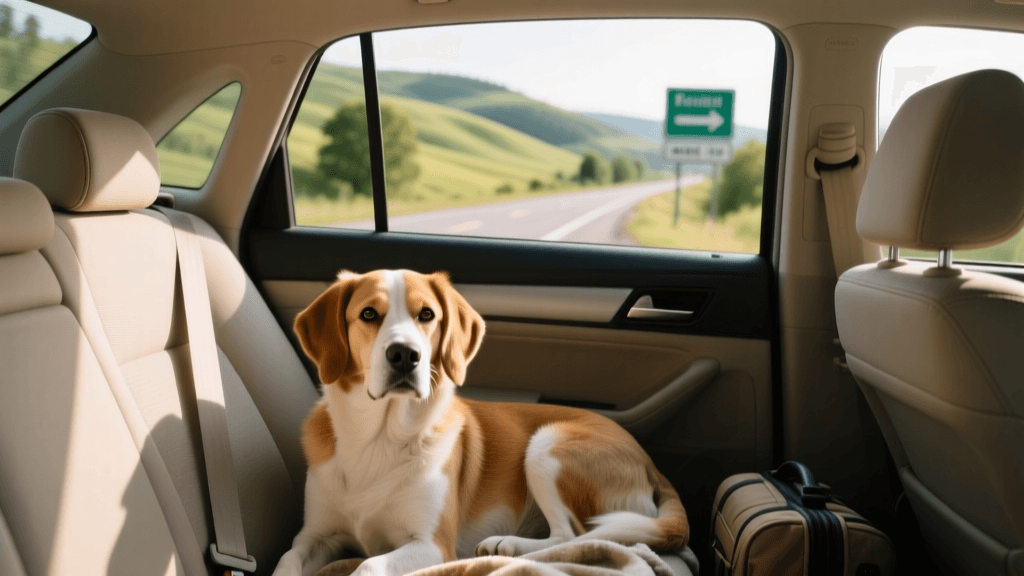
Allowing a dog to roam freely in a moving vehicle is incredibly dangerous and worsens motion sickness. Invest in a crash-tested harness, such as the Kurgo Enhanced Strength Tru-Fit Smart Harness (approx. $35), which attaches directly to the vehicle's seatbelt system. Alternatively, use a crash-tested crate like the Gunner G1 Kennel (approx. $500+). Crucially, elevate smaller dogs using a secured booster seat so they can see out the front window. Aligning their visual field with the horizon helps the brain reconcile the movement felt by the inner ear.
2. Temperature and Airflow Control
Heat and stale air are primary triggers for canine nausea. Keep the car cabin temperature strictly between 68°F and 72°F (20°C - 22°C). Crack the windows slightly to provide fresh air and equalize ear pressure, but avoid letting your dog hang their head out the window, as debris can cause severe ocular injuries.
3. Visual Barriers for Overstimulation
For dogs who become anxious or visually overstimulated by passing cars and pedestrians, use window shades. The Outward Hound Window Shades (approx. $15) attach via suction cups and block peripheral movement, creating a den-like, calming environment in the back seat.
Behavioral Solutions: The 4-Week Desensitization Protocol
If your dog suffers from travel anxiety, you must systematically dismantle their negative associations. This requires patience and a structured desensitization and counter-conditioning protocol. Do not rush these steps; if your dog shows signs of stress, revert to the previous successful step.
Week 1: The Parked Car
With the engine off, sit in the back seat with your dog. Feed them high-value treats, such as Zuke's Mini Naturals or boiled chicken, simply for entering the car. Play with their favorite toy. Keep sessions short (5-10 minutes) and end on a positive note before they show any anxiety.
Week 2: Engine On, No Movement
Repeat the Week 1 exercises, but start the car's engine. The vibration and noise of the motor are common anxiety triggers. Feed treats continuously while the engine idles. If your dog refuses treats, they are over their stress threshold; turn the engine off and try again the next day.
Week 3: Short Driveway Trips
Drive slowly up and down your driveway or around the block. The goal is to introduce mild vestibular stimulation while maintaining a positive emotional state. Have a passenger feed treats continuously during the short drive.
Week 4: Neighborhood Loops and Destination Rewards
Extend the drive to 5-10 minutes around the neighborhood. Crucially, end the drive at a highly rewarding location, such as a local park or a pet-friendly store, rather than the vet's office. This rewires the brain to anticipate fun outcomes from car travel.
Medical and Holistic Interventions
When environmental and behavioral modifications are not enough, or when you have an imminent road trip, medical and holistic interventions can provide necessary relief. Always consult your veterinarian before administering any new medication or supplement.
Prescription Medications
The gold standard for canine motion sickness is Cerenia (maropitant citrate). As noted by VCA Animal Hospitals, Cerenia is an NK1 receptor antagonist that works directly on the vomiting center in the brain. It is highly effective, non-drowsy, and safe for most dogs. It typically costs between $3 and $5 per pill and must be administered at least two hours before travel. A major advantage of Cerenia is that it does not sedate the dog, allowing them to remain alert and participate in behavioral training during the ride.
Over-the-Counter Options
Dramamine (Dimenhydrinate) is an antihistamine commonly used for human motion sickness that can be used off-label for dogs. It is much more affordable than Cerenia but causes significant drowsiness. The general veterinary guideline is 2 to 4 mg per pound of body weight, given 30 to 45 minutes before travel. Bonine (Meclizine) is another OTC alternative that causes less sedation than Dramamine but should still be dosed strictly under veterinary guidance.
Holistic and Natural Remedies
For mild cases or owners preferring natural routes, Ginger is a proven antiemetic. You can use ginger capsules formulated for dogs or offer a small piece of candied ginger (check for xylitol toxicity). Additionally, compression wraps like the Thundershirt (approx. $40) apply gentle, constant pressure to the dog's torso, which can significantly reduce travel-induced anxiety by releasing calming endorphins.
Comparison Chart: Dog Car Sickness Remedies
The following table compares the most common interventions for canine car sickness, helping you choose the right solution based on your budget, timeline, and your dog's specific symptoms.
| Remedy Type | Product / Method | Est. Cost | Onset Time | Best For |
|---|---|---|---|---|
| Prescription | Cerenia (Maropitant) | $3 - $5 / pill | 2 Hours | Severe vomiting, non-sedating relief |
| OTC Medication | Dramamine (Dimenhydrinate) | $0.15 / pill | 30 - 45 Mins | Mild nausea, dogs that need sedation |
| Physical Gear | Thundershirt / Anxiety Wrap | $40 - $50 | Immediate | Psychological travel anxiety |
| Environmental | Window Shades & Booster Seat | $15 - $40 | Immediate | Sensory conflict, visual overstimulation |
| Holistic | Ginger Root Extract | $10 - $20 | 45 - 60 Mins | Mild stomach upset, natural preference |
| Behavioral | Desensitization Protocol | Cost of Treats | 4+ Weeks | Long-term cure for negative associations |
Pre-Trip Checklist for Success
To maximize the effectiveness of your chosen remedies, follow this strict pre-trip routine:
- Fasting: Withhold food for 2 to 3 hours before the trip. A full stomach increases the likelihood of vomiting. However, ensure your dog has access to water until it is time to leave.
- Exercise: Take your dog for a brisk 20-minute walk before loading them into the car. Burning off excess physical energy reduces baseline anxiety levels.
- Potty Break: Ensure your dog has fully emptied their bladder and bowels immediately before getting into the vehicle.
- Calm Demeanor: Dogs are highly empathetic to human emotions. If you are stressed about them getting sick, they will sense it. Play classical music or reggae (which studies show lowers canine heart rates) and speak in a calm, soothing tone.
Conclusion: Patience and Consistency
Curing dog car sickness is rarely an overnight fix. It requires a multi-modal approach that combines environmental management, behavioral rewiring, and, when necessary, targeted medical support. By accurately diagnosing whether your dog is fighting their inner ear or their fears, you can tailor a strategy that works. As highlighted by the ASPCA, safe and comfortable travel is a fundamental aspect of responsible pet ownership. With consistency, high-value rewards, and the right tools, your dog can learn to view the car not as a chamber of nausea, but as the gateway to their next great adventure.
anouk-beaumont
All our authors care for dogs every day — read more of their work on the authors page.