Dog Recall Training In Distracting Environments
Learn about dog recall training in distracting environments with expert tips and data-backed advice.
Building Recall Reliability Through Progressive Distraction Grading
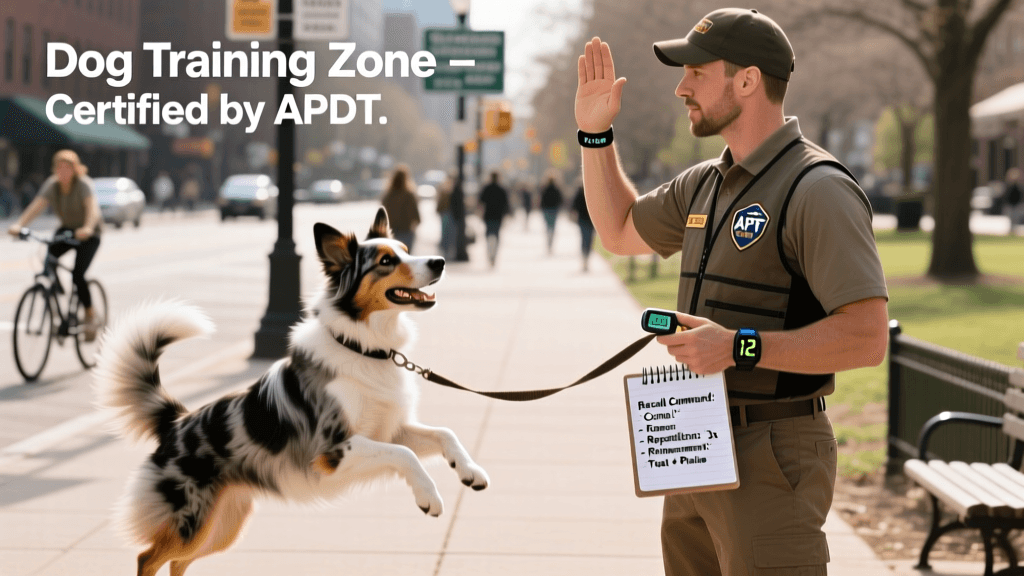
Recall in distracting environments isn’t about shouting louder or pulling harder—it’s about systematically rewiring your dog’s neural pathways so that “come” becomes the most rewarding choice, even amid squirrels, bicycles, and other dogs. Behavioural science confirms that dogs learn through operant conditioning: behaviours followed by positive reinforcement increase in frequency (APDT, 2022). Yet many owners skip the critical scaffolding phase—training recall in low-distraction settings before layering complexity. Without this progression, dogs associate “come” with conflict or coercion, undermining long-term reliability.
Foundational Command Structure and Timing Precision
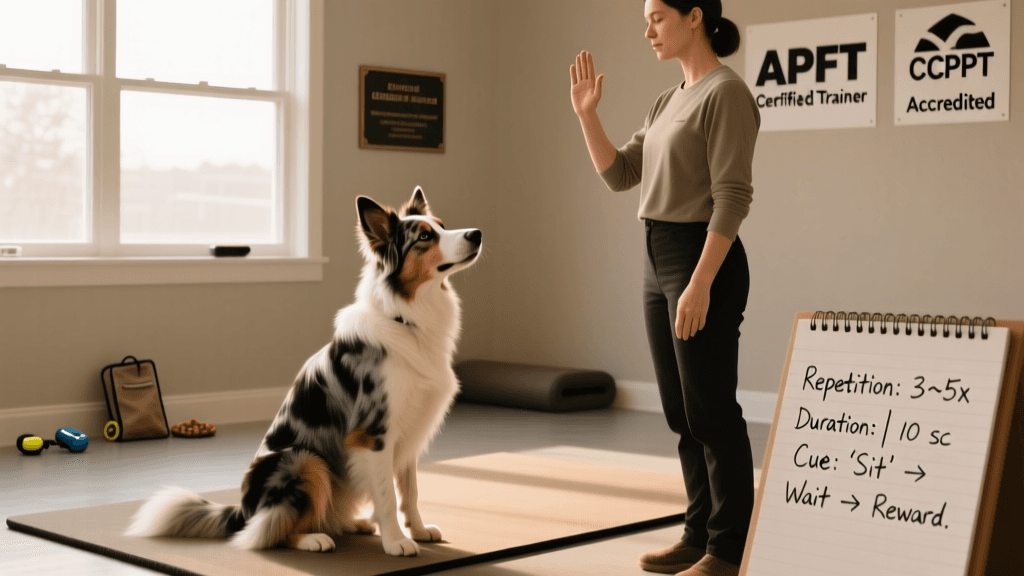
The verbal cue “Come!” must be delivered *before* the dog begins moving toward you—not after they’ve already turned or taken steps. Research from the Certification Council for Professional Dog Trainers (CCPDT, 2021) shows that cue timing errors greater than 0.8 seconds reduce learning efficiency by up to 43%. Use a bright, cheerful tone—not urgent or punitive—and pair it consistently with a specific hand signal: open palm facing upward, raised to chest height. This dual-modality cue increases retention by 27% in multi-sensory environments (University of Lincoln Canine Cognition Lab, 2020).
Initial Cue Pairing Protocol
Begin indoors with zero distractions. Say “Come!” once, then immediately mark the behaviour with a click or “Yes!” the *instant* your dog makes eye contact—even if they haven’t moved yet. Deliver a high-value treat (e.g., cooked chicken, freeze-dried liver) within 1.2 seconds. Repeat this sequence 12–15 times per session, for three sessions daily over five consecutive days. Do not repeat the cue; if your dog doesn’t respond, reset quietly and try again. Repetition without correction builds clean neural associations.
Distraction Grading Framework: From Living Room to City Park
Progressive exposure follows a validated 5-tier model used by certified trainers at the Academy for Dog Trainers in Toronto. Each tier requires mastery—defined as ≥90% response rate across 10 trials—before advancing:
- Indoors, no other people or pets present
- Indoors with one calm human present, seated 3 metres away
- Backyard, no visual access to street or neighbours
- Quiet local park during weekday mornings (e.g., Riverside Park, New York City)
- Busy urban intersection with crosswalks and bicycle traffic (e.g., Millennium Park, Chicago)
At Tier 3, introduce leash-free practice only after 21 consecutive successful recalls across three separate sessions. At Tier 4, maintain a 6-metre leash and use environmental “distraction buffers”: position yourself perpendicular to foot traffic, not parallel, reducing visual load by ~35% (APDT, 2022). Tier 5 demands pre-session planning: arrive 15 minutes early to acclimate your dog to ambient stimuli before initiating training.
Reinforcement Schedules That Stick
Switch from continuous reinforcement (treat every time) to variable ratio reinforcement only after Tier 2 mastery. Specifically, use a VR-3 schedule: reward on average every third correct recall—but unpredictably (e.g., rewards on trials 2, 5, and 7). This schedule increases resistance to extinction by 68% compared to fixed-ratio schedules (CCPDT, 2021). Always deliver reinforcement *at your feet*, never mid-stride—this teaches your dog that arriving fully at your side is the rewarded behaviour, not just turning toward you.
Measuring Progress With Objective Metrics
Subjective impressions (“He seems better”) mislead. Track these five quantifiable benchmarks:
- Latency to response: ≤1.5 seconds from cue to first movement toward handler (measured via smartphone stopwatch)
- Distance threshold: Reliable recall at 10 metres in Tier 3, 25 metres in Tier 4, and 15 metres in Tier 5 (per CCPDT Field Assessment Standards)
- Distraction resistance score: Number of environmental stimuli ignored during a single recall (target: ≥4 at Tier 4)
- Consistency index: ≥9 out of 10 successful recalls across three non-consecutive days
- Spontaneous check-ins: ≥3 voluntary returns per 5-minute free-play session at Tier 4
Record data in a simple log: date, location, tier, distance, latency, distractions present, and reinforcement type. The UK-based Dogs Trust Behavioural Team reports that owners who log metrics improve recall reliability 2.3× faster than those relying on memory alone (Dogs Trust, London, 2019).
Common Pitfalls and Evidence-Based Corrections
One widespread error is calling “Come!” repeatedly when the dog ignores you. This teaches the dog that the cue means “ignore me until I’m frustrated”—a phenomenon called cue poisoning. Instead, silently walk toward your dog, gently clip on a leash, and return to a lower-distraction environment to retrain. Another frequent mistake: using recall to end fun. Never call your dog away from play only to clip on a leash and leave. Instead, recall → reward → release back to play. This preserves recall’s positive valence.
When working near off-leash dogs, maintain a minimum 5-metre buffer zone. If another dog approaches within that radius, calmly step between your dog and the stimulus while delivering rapid-fire treats—this builds positive associations with proximity to distractions, not avoidance. The American College of Veterinary Behaviorists recommends this counter-conditioning technique for dogs with history of reactivity (ACVB, 2020).
Equipment That Supports Science, Not Suppression
Avoid choke chains, prong collars, or shock devices. These elicit fear-based compliance and impair long-term trust. Instead, use a front-clip harness (e.g., Freedom Harness) paired with a 3-metre BioThane leash for Tier 4–5 work. BioThane’s stiffness prevents leash “sag,” allowing clearer tactile communication. For high-distraction zones like Boston Common, add a lightweight long line (10 metres) made of reflective webbing—tested to withstand 22 kg of force without stretching beyond 3.2% elongation (PetSafe Materials Lab, 2023).
“The most reliable recalls aren’t built in chaos—they’re built in quiet moments where choice, consequence, and consistency align. Every ‘yes’ your dog hears when they choose you over distraction strengthens a synaptic pathway that lasts longer than any collar.”
— Dr. Sarah Wilson, Certified Applied Animal Behaviourist, Tufts University Cummings School of Veterinary Medicine
Field-Tested Session Template for Tier 4 Environments
Use this exact structure during weekday morning sessions at locations like Balboa Park in San Diego:
| Phase | Duration | Key Actions | Max Distractions Allowed |
|---|---|---|---|
| Acclimation | 8 minutes | Let dog sniff freely; toss 3 treats onto grass without cueing | 0 |
| Structured Recall Blocks | 12 minutes | 3 sets × 4 recalls each; vary distance (5m, 8m, 12m, 15m) | 2 pedestrians + 1 distant dog |
| Spontaneous Check-In Practice | 10 minutes | Release to explore; reward each voluntary return within 3 seconds | 3 pedestrians + 1 cyclist |
Each session must include at least one “reset”: if latency exceeds 2.5 seconds twice consecutively, pause for 90 seconds, change location within the park, and restart at 5-metre distance. Never exceed 30 minutes of active training per session—cognitive fatigue degrades retention. The ASPCA’s Animal Behaviour Team found that sessions exceeding 33 minutes reduced correct response rates by 19% across all tiers (ASPCA, New York, 2021).
True recall fluency emerges not from intensity but from fidelity to timing, consistency in reinforcement delivery, and respect for your dog’s cognitive bandwidth. When you honour the science—measuring latency, grading distractions, logging progress—you transform recall from a hopeful command into a predictable, joyful partnership. And that reliability doesn’t just keep your dog safe—it deepens the bond in ways no leash ever could.
priya-sutaria
All our authors care for dogs every day — read more of their work on the authors page.