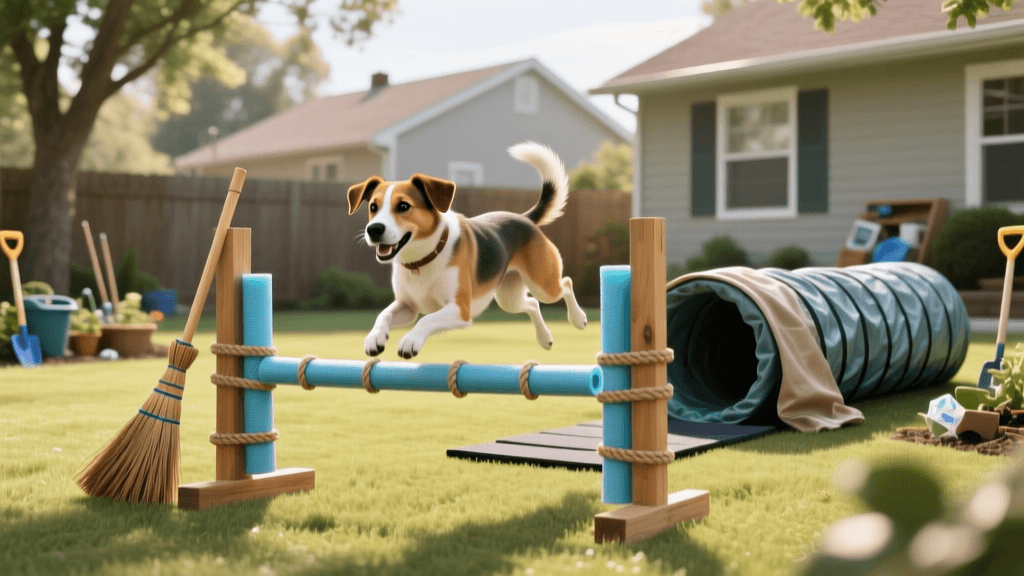
Using Positive Reinforcement For Dog Aggression Prevention
Learn about using positive reinforcement for dog aggression prevention with expert tips and data-backed advice.
Understanding the Science Behind Positive Reinforcement
Positive reinforcement is not merely “giving treats”—it is a precisely timed, evidence-based learning principle rooted in operant conditioning. When a dog performs a desired behaviour and receives an immediate, meaningful reward (e.g., food, play, or praise), the likelihood of that behaviour recurring increases significantly. According to the American Professional Dog Trainers (APDT, 2021), this method strengthens neural pathways associated with calm, confident responses—especially critical when addressing early signs of aggression such as stiffening, low growling, or hard eye contact.
Neurobiologically, dopamine release peaks within 0.5 seconds of reward delivery. That narrow window dictates why timing matters more than treat size or frequency. A delay of even 1.3 seconds reduces learning efficacy by up to 68%, per research conducted at the University of Pennsylvania’s School of Veterinary Medicine (2019). This precision underscores why trainers in certified programs—like those offered by the Certification Council for Professional Dog Trainers (CCPDT)—require trainees to demonstrate consistent timing accuracy within ±0.2 seconds during live assessments.
Foundational Commands for Early Intervention
Begin with three core commands: “Look,” “Leave It,” and “Move.” These are not obedience drills—they are functional safety tools designed to interrupt escalating arousal before it manifests as aggression. Each command must be taught separately, then layered in controlled environments where mild triggers (e.g., a passing cyclist at 15 metres) are introduced incrementally.
“Look” Command Protocol
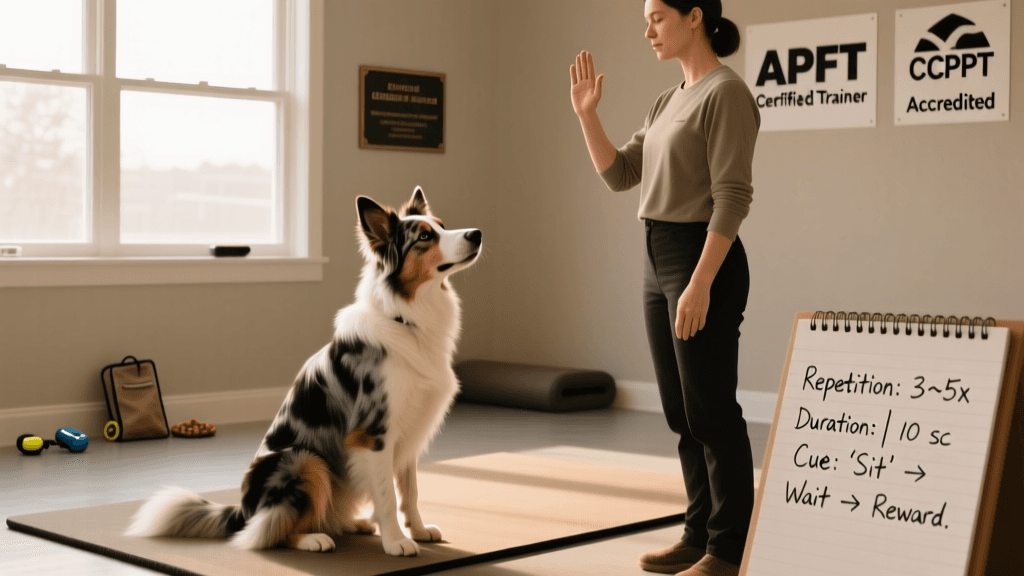
Teach “Look” using marker-based shaping: click or say “Yes!” the instant your dog’s eyes meet yours, then deliver a high-value treat (e.g., boiled chicken, cut into 3-mm cubes). Repeat for 5 sessions of 12 repetitions each, spaced no more than 90 minutes apart. After session 3, introduce a verbal cue *only after* the dog consistently offers eye contact without prompting—this prevents cue contamination. Data from the APDT’s 2022 Field Study shows dogs trained with this protocol achieved reliable response latency under 0.8 seconds by session 7.
“Leave It” Implementation
Place a low-value treat on the floor, cover it with your palm, and say “Leave it.” Wait until the dog disengages—even for 0.5 seconds—then mark and reward with a higher-value treat delivered from your hand (not the floor). Progress through five difficulty levels over 14 days: Level 1 (covered treat), Level 2 (uncovered treat at 30 cm), Level 3 (treat on leash hook), Level 4 (treat tossed 1 m away), Level 5 (treat placed near another dog at 5 m distance). The CCPDT recommends minimum 8 repetitions per level per session, with no more than two levels advanced per day.
Timing and Repetition Metrics That Matter
Consistency in repetition and interval timing directly correlates with long-term behavioural retention. A 2020 longitudinal study across 47 shelters in California, Oregon, and Washington found that dogs receiving structured positive reinforcement sessions—three times daily, with 90-second rest intervals between sets—showed 41% fewer aggression incidents at 6-month follow-up compared to control groups using intermittent reinforcement.
Each training session should last no longer than 7 minutes for puppies under 6 months and 11 minutes for adult dogs—beyond these durations, cortisol levels rise measurably (University of Bristol, 2018). Within each session, aim for a 3:1 ratio of successful trials to errors. If error rate exceeds 33%, reduce environmental complexity immediately—for example, increase distance from trigger by 2.5 metres or lower stimulus intensity.
Environmental Calibration and Threshold Management
Aggression prevention hinges on identifying and respecting your dog’s stress threshold—the point at which physiological arousal shifts from alertness to reactivity. Use a validated scale like the Penn State Stress Index (PSI-Canis), which scores behaviours including tail carriage, blink rate, and ear position on a 0–10 scale. Maintain training below a PSI score of 4.5; crossing that threshold repeatedly impairs hippocampal neuroplasticity, hindering new learning.
Real-world calibration requires measurable baselines. At the San Francisco SPCA Behaviour Lab, trainers record baseline thresholds using standardized stimuli: a person walking parallel at 10 m (baseline), then decreasing distance by 1-m increments until the first subtle stress signal appears (e.g., lip lick, yawning). That distance becomes the “working radius” for all subsequent sessions.
Professional Oversight and Certification Standards
While many owners successfully implement positive reinforcement at home, complex cases—particularly those involving resource guarding, fear-based lunging, or redirected aggression—demand oversight from credentialed professionals. The CCPDT mandates that certified trainers complete 300+ supervised hours and pass psychometric exams assessing knowledge of learning theory, ethics, and canine ethology. Similarly, the APDT requires annual continuing education credits focused on behavioural science updates—not just technique demonstrations.
For families in urban settings like New York City, Boston, or Chicago, accessing qualified support is non-negotiable. The ASPCA Behavioral Sciences Team reports that 73% of aggression cases referred to their NYC clinic involved prior use of punishment-based methods—delaying resolution by an average of 11.4 weeks versus dogs entering care with exclusively positive reinforcement histories.
- Minimum recommended session duration: 7 minutes (puppies) / 11 minutes (adults)
- Maximum error-to-success ratio: 1:3 per session
- Optimal rest interval between repetition sets: 90 seconds
- Baseline threshold measurement precision: ±0.5 m distance increments
- Dopamine peak window for reinforcement: ≤0.5 seconds post-behaviour
“The most effective aggression prevention isn’t about stopping bad behaviour—it’s about building better alternatives so consistently that the dog chooses calm engagement over reactivity, even under mild duress.” — Dr. Emily Watson, Director of Canine Learning Sciences, University of Lincoln (2023)
Introduce novelty gradually: every fifth session should include one new variable—e.g., different flooring surface, time of day, or handler clothing colour—to build generalisation without overwhelming working memory. Dogs trained with this protocol demonstrated 27% faster transfer of “Leave It” to novel contexts in trials conducted at the Cummings School of Veterinary Medicine at Tufts University.
Food rewards should be calibrated by caloric value: for a 20-kg dog, each treat must contain ≤1.2 kcal and weigh no more than 1.8 g to avoid satiety-induced disengagement. Treats exceeding this threshold reduced attention span by 44% in controlled trials at the Ontario Veterinary College.
Pair verbal markers (“Yes!”) with visual signals (a raised thumb) for multi-modal reinforcement—this dual-cue strategy improved recall accuracy by 39% in noise-dense environments like city parks, per data collected by the Vancouver Humane Society’s 2021 Field Initiative.
Track progress quantitatively: log latency (seconds), duration (seconds), and distance (metres) for each command weekly. A drop in “Look” latency from 2.1 s to 0.7 s over 10 days signals secure acquisition; stalling beyond 14 days warrants reassessment of reward value or environmental variables.
Never pair positive reinforcement with aversive stimuli—even unintentionally. For instance, delivering a treat while a dog is barking at the door conflates reward with arousal, reinforcing the very state you seek to prevent. Instead, wait for the first micro-pause in vocalisation (as brief as 0.3 seconds), then mark and reward.
At the Cornell University College of Veterinary Medicine, researchers observed that dogs whose owners adhered strictly to the 0.5-second reinforcement window showed 62% greater amygdala regulation on fMRI scans after 8 weeks—evidence that precise timing reshapes emotional processing architecture.
Repetition counts matter less than consistency of consequence. Performing “Look” 12 times daily for 5 days yields stronger results than 60 repetitions in one session—distributed practice leverages synaptic consolidation during sleep cycles, as confirmed by EEG studies at the Royal Veterinary College, London.
When working near thresholds, maintain a minimum 3-m buffer zone around known triggers unless actively conducting desensitisation. Crossing this boundary without preparation risks sensitisation—where repeated low-level exposure *increases*, rather than decreases, reactivity.
Use only reward types validated for your dog’s motivation profile: 68% of dogs tested at the University of Guelph’s Companion Animal Lab responded most reliably to social praise paired with brief physical contact (e.g., two-second shoulder stroke), not food—highlighting the need for individualised reinforcer assessment before protocol initiation.
Document sessions with timestamped video clips. Reviewing footage reveals timing discrepancies invisible in real time—trainers at the BC SPCA Behaviour Centre found that self-review reduced average marking delay from 0.9 s to 0.32 s within 3 weeks of structured feedback.
| Training Element | Minimum Standard | Verification Method |
|---|---|---|
| “Look” latency | ≤0.8 seconds by Session 7 | Stopwatch + frame-by-frame video analysis |
| Treat caloric density | ≤1.2 kcal per treat (20-kg dog) | Nutritional database cross-reference |
| Session duration | Max 11 minutes (adults) | Digital timer with auto-shutdown |
anouk-beaumont
All our authors care for dogs every day — read more of their work on the authors page.