Dog Play vs Aggression: A Side-by-Side Body Language Guide
Learn to tell the difference between dog play and aggression. Compare canine body language signals side-by-side to keep your pup safe and happy.
Introduction: The Fine Line Between Play and Conflict
Dog parks, daycare facilities, and neighborhood playdates are fantastic environments for canine socialization. However, for many dog owners, watching a group of dogs wrestle, chase, and vocalize can induce a mild state of panic. Is that a playful wrestle, or is it the prelude to a fight? Understanding the subtle differences between dog play and genuine aggression is one of the most critical skills a dog owner can develop. According to the ASPCA's guide to common dog behavior issues, misinterpreting canine body language is a leading cause of unnecessary interventions or, conversely, a failure to intervene before a dog bite occurs.
Canine communication is incredibly nuanced. Dogs use a combination of posture, facial expressions, vocalizations, and movement to convey their intentions. When dogs are playing, they often engage in 'meta-signals'—behaviors that tell the other dog, 'Everything I am doing right now is just a game.' When these meta-signals are absent or ignored, play can quickly escalate into aggression. In this comprehensive guide, we will break down the side-by-side differences between healthy play and impending aggression, explore how breed instincts influence play styles, and provide actionable advice on how to safely manage your dog's social interactions.
The Tail Tale: Decoding the Wag
One of the most pervasive myths in dog ownership is that a wagging tail always equals a happy dog. In reality, a tail wag simply indicates arousal or emotional stimulation, which can be positive or negative. To understand what your dog is feeling, you must look at the tail's position, speed, and the tension in the rest of the body.
Healthy Play: The Helicopter and the Full-Body Wag
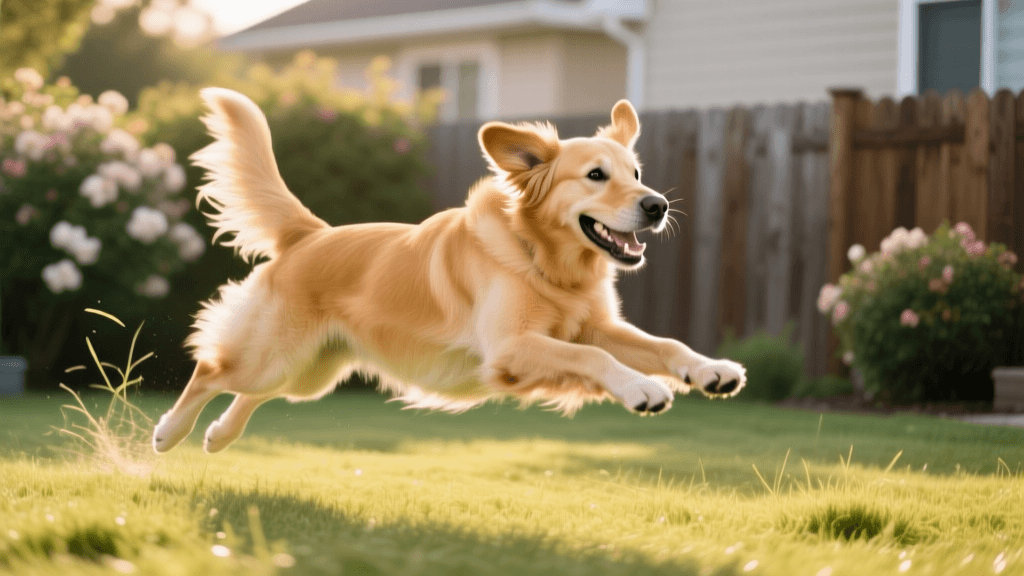
During healthy play, a dog's tail is usually held in a neutral or slightly elevated position, wagging in broad, sweeping motions. Many dogs will even exhibit a 'helicopter tail,' where the tail spins in full circles. This is almost always accompanied by a loose, wiggly body posture. The muscles are relaxed, and the dog's overall demeanor is bouncy and fluid.
Impending Aggression: The Stiff, High Flag
Conversely, a tail held rigid and high over the back, vibrating or wagging in short, rapid, stiff movements, is a major red flag. This is often called 'flagging.' It indicates high arousal, dominance assertion, or a predatory state. If you see a dog with a stiff body, hard stare, and a vibrating high tail, the play session is likely over, and a conflict may be imminent. The RSPCA's resources on dog behaviour emphasize that tail position must always be evaluated in the context of the dog's overall body tension and ear placement.
Vocalizations: Play Growls vs. Warning Snarls
Hearing your dog growl during a play session can be alarming, but vocalization alone is not a definitive indicator of aggression. Dogs are highly vocal creatures, and they use different pitches and rhythms to communicate different emotional states.
The Play Growl
Play growls are typically higher in pitch, shorter in duration, and interspersed with other playful sounds like 'huffing' or playful barks. You will often hear a play growl during a game of tug-of-war or when two dogs are wrestling on the ground. The key indicator that the growl is playful is the accompanying body language: the dog will likely have a relaxed face, soft eyes, and a loose, bouncy posture.
The Warning Snarl
An aggressive growl is distinctly different. It is low, guttural, sustained, and often originates deep in the chest. It may be accompanied by a snarl, where the lips are pulled back vertically to expose the front canine teeth and incisors. An aggressive dog will often freeze entirely before or during a low growl, locking eyes with their target. If you hear a low, continuous rumble paired with a stiff, frozen body, it is time to calmly and immediately separate the dogs.
Mouth and Bite: Inhibition vs. Intent to Harm
Dogs explore the world and interact with each other using their mouths. 'Mouthing' is a normal part of canine play, but understanding the difference between a soft play bite and a hard, aggressive bite is essential for safety.
Bite Inhibition and the 'Soft Mouth'
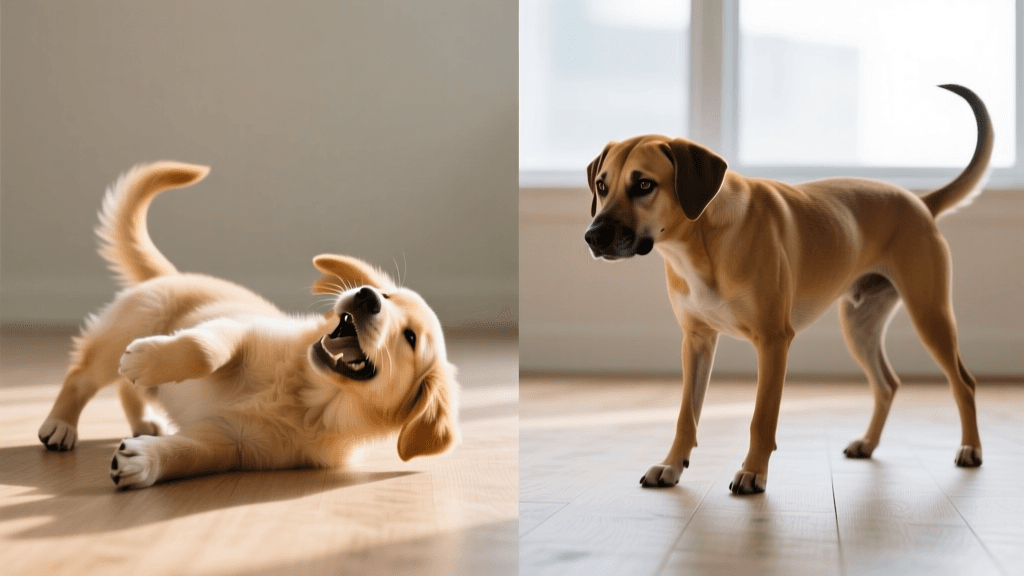
Healthy dog play features 'bite inhibition.' Even when dogs are play-biting each other's necks, legs, or ears, their jaw pressure is carefully controlled. They have a 'soft mouth.' You might see them gently holding each other's fur or skin without applying crushing pressure. Furthermore, playful dogs frequently engage in role reversal, where the dog on the bottom willingly exposes their belly, and the dog on top will pause or gently lick the other dog's face before resuming play.
Targeting and Hard Bites
Aggressive biting lacks inhibition. An aggressive dog will bite hard, shake their head violently (a predatory kill-shake motion), and target vulnerable areas like the stomach, groin, or throat. There is no role reversal; one dog is relentlessly pursuing or pinning the other, and the pursued dog may be yelping in genuine distress, trying to escape with tucked tail and pinned ears.
Breed-Specific Play Styles: Context Matters
When comparing play versus aggression, it is vital to factor in breed-specific instincts. What looks like aggression in one breed might be standard play for another. The American Kennel Club's expert training advice frequently highlights how genetic predispositions shape canine interactions.
- Herding Breeds (e.g., Border Collies, Australian Shepherds): These dogs often play by stalking, staring, and nipping at the heels or hocks of other dogs. To an untrained eye, the intense stare and heel-nipping look highly aggressive. However, for a herding dog, this is an expression of their genetic drive. It only becomes a problem if the other dog does not understand the game and becomes frightened.
- Terriers (e.g., Jack Russell Terriers, Bull Terriers): Terriers are bred to hunt and grapple with prey. Their play style is notoriously physical, loud, and vertical. They often wrestle on their hind legs, growl loudly, and bite at the neck and shoulders. While this looks like a fight to a novice owner, it is standard terrier play, provided both dogs are willing participants and taking breaks.
- Sighthounds (e.g., Greyhounds, Whippets): Sighthounds play primarily through high-speed chasing. They rarely engage in physical wrestling. If a sighthound is cornered or forced into a wrestling match by a terrier, they may quickly become defensive and snap out of fear.
Side-by-Side Comparison Chart: Play vs. Aggression
Use this quick-reference table to evaluate your dog's interactions in real-time.
| Body Signal | Healthy, Consensual Play | Impending Aggression / Conflict |
|---|---|---|
| Tail Position | Neutral, sweeping, helicopter wag, loose base. | Stiff, held high (flagging), rapid vibrating tip, or tucked tightly. |
| Body Posture | Loose, wiggly, bouncy, frequent 'play bows' (front elbows down, rear up). | Rigid, stiff, leaning forward with weight on front paws, frozen. |
| Eyes and Gaze | Soft eyes, blinking, looking away frequently to offer 'calming signals'. | Hard stare, unblinking, 'whale eye' (showing the whites of the eyes). |
| Mouth and Lips | Relaxed, slightly open, panting, 'play face' that looks like a goofy smile. | Lips pulled back vertically (snarl), tight commissures, wrinkled muzzle. |
| Vocalization | Higher-pitched growls, huffing, playful barks, frequent pauses. | Low, guttural, sustained growling, snapping sounds, high-pitched distress yelps. |
| Role Reversal | Dogs frequently switch who is chasing and who is being chased. | One dog relentlessly pursues or pins; the other only tries to flee. |
| Self-Handicapping | Larger/stronger dogs will roll on their backs to let smaller dogs 'win'. | Larger dogs use full weight to pin smaller dogs without release. |
Actionable Advice: How to Safely Intervene
If you observe the signs of impending aggression, or if a fight actually breaks out, your immediate reaction is critical. Never reach into a dog fight with your bare hands or attempt to grab a dog by the collar; this is how severe redirect bites occur. Instead, rely on environmental tools and distraction techniques.
Recommended Intervention Tools
- The Storm Whistle ($12 - $15): This specialized whistle produces up to 120 decibels of sound. A sharp, incredibly loud blast can startle dogs out of their aggressive arousal state, giving you a 3-second window to call your dog away or step between them.
- Pet Corrector by The Company of Animals ($15 - $20): This device emits a sharp hiss of compressed air that mimics the warning hiss of a snake or a cat. It is highly effective at interrupting intense staring or low growling before a physical altercation begins.
- Heavy Moving Blanket ($20 - $30): If a physical fight breaks out, throwing a heavy, opaque blanket over the dogs' heads instantly removes their visual stimuli. Deprived of sight, the dogs will often stop biting and try to untangle themselves, allowing you to safely separate them.
The 'Play Pause' Test
If you are unsure whether a wrestling match is getting too intense, perform a 'play pause' test. Calmly step in, call your dog away, or gently leash them for ten seconds. If both dogs immediately try to initiate play again with loose, wiggly body language, they were just having fun. If your dog looks relieved, hides behind you, or the other dog immediately stiffens and stares, the play session has crossed the line and it is time to leave the park.
Conclusion: Trust Your Gut and Seek Professional Help
Understanding the side-by-side differences between dog play and aggression requires practice, observation, and a deep understanding of canine psychology. By paying attention to the tail, the tension in the body, the pitch of the vocalizations, and the presence of role reversal, you can ensure your dog's social life is both safe and enriching. If your dog consistently struggles with appropriate play, displays resource guarding, or frequently escalates play into fights, do not hesitate to consult a Certified Applied Animal Behaviorist (CAAB) or a Certified Professional Dog Trainer (CPDT-KA). Investing in professional behavioral guidance is the ultimate act of love and responsibility for your canine companion.
aaron-whyte
All our authors care for dogs every day — read more of their work on the authors page.