Preparing Your Dog for a New Baby in 2026: A Guide
Learn how to prepare your dog for a new baby in 2026 with nursery boundary training, the place command, and audio desensitization techniques.
Welcoming a New Baby: A Major Life Transition
Bringing a newborn home is one of the most profound life transitions a family can experience, and for your dog, it represents a massive shift in their daily routine, environment, and pack dynamics. The sudden introduction of strange smells, high-pitched noises, and restricted access to favorite rooms can trigger anxiety or confusion in even the most well-behaved dogs. According to The Humane Society of the United States, proactive behavioral conditioning is the most effective way to ensure a safe and harmonious transition for both your infant and your pet.
In 2026, modern dog training relies heavily on positive reinforcement, environmental management, and the integration of smart home technology to maintain consistency. Rather than waiting until the baby arrives to enforce new rules, expert veterinary behaviorists recommend beginning a structured training protocol during the first trimester. This guide will walk you through the essential training techniques—specifically the 'Place' command, nursery boundary conditioning, and audio desensitization—to prepare your dog for life with a newborn.
The Foundation: Mastering the 'Place' Command
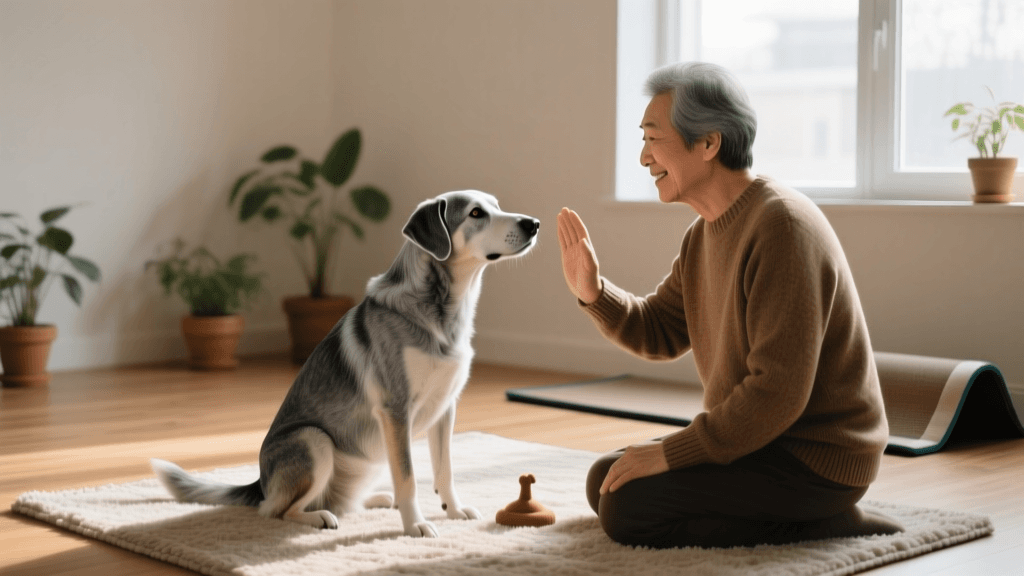
The 'Place' command is arguably the most critical skill your dog can learn before the baby arrives. It instructs your dog to go to a specific mat or bed and remain there until released. This provides your dog with a safe, predictable sanctuary when the house becomes chaotic, and it gives you a reliable way to manage your dog while you are feeding, changing, or holding the baby.
Step-by-Step 'Place' Training
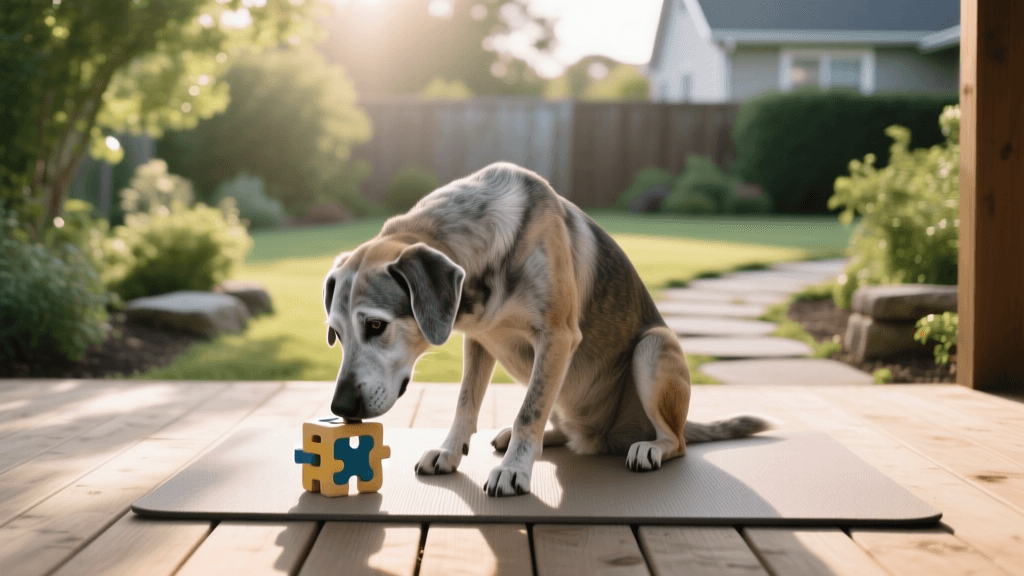
- Step 1: Choose the Right Equipment. Select a raised cot or a distinct, textured mat. Raised cots are often easier for dogs to identify as a specific 'zone' compared to flat beds that blend into the carpet.
- Step 2: Lure and Reward. With a handful of high-value treats, lure your dog onto the mat. The moment all four paws are on the mat, mark the behavior with a clicker or a verbal 'Yes!' and deliver the treat.
- Step 3: Add the Cue. Once your dog is reliably stepping onto the mat for the lure, introduce the verbal cue 'Place' just before they step on.
- Step 4: Build Duration and Distance. Gradually increase the time your dog must stay on the mat before receiving a reward. Begin taking steps away, returning to reward them for staying put.
2026 Tech Integration: To build extreme reliability, utilize a smart treat-dispensing camera like the Furbo 360 or the Petcube Bites 2 Lite. Once you are holding your baby (or a weighted doll to simulate the baby), you can use your smartphone to toss a treat to your dog while they are on their 'Place'. This reinforces the behavior remotely and teaches the dog that staying on their mat yields rewards, even when your hands are full.
Establishing Nursery Boundaries
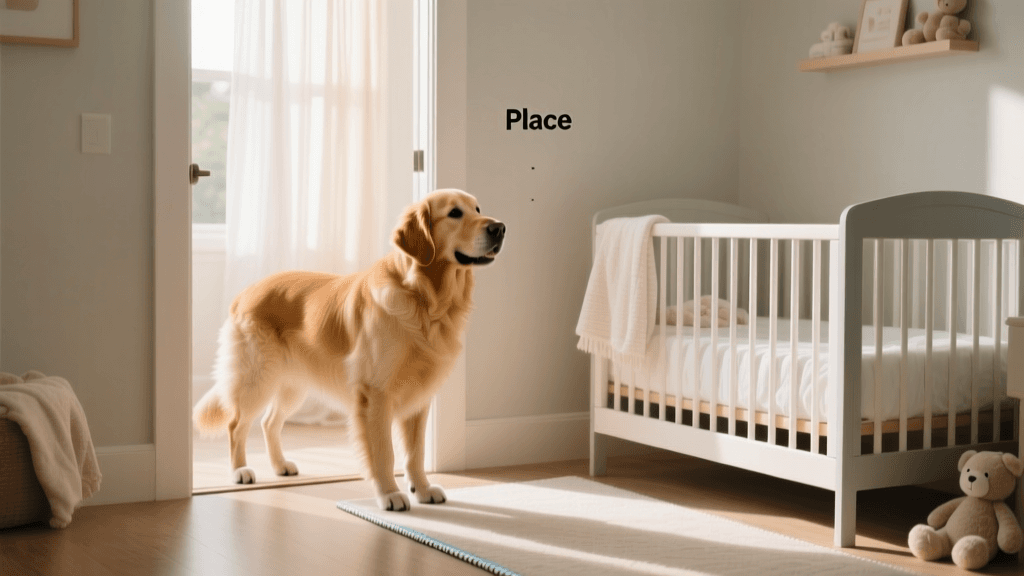
The nursery is a highly stimulating environment filled with enticing, chewable items like diaper cream, wipes, and small toys. Teaching your dog to respect the nursery threshold is vital for safety. The goal is to create an 'invisible barrier' that your dog will not cross without an explicit invitation.
Threshold Training Protocol
Start by installing a tall, pressure-mounted baby gate at the nursery door. Allow your dog to sniff the gate from the outside, rewarding them for calm behavior and for sitting politely. Next, practice the 'Leave It' command near the doorway. Drop a low-value treat on the floor near the gate, cover it with your hand, and say 'Leave It.' When your dog pulls away and makes eye contact, reward them with a high-value treat from your other hand.
Once your dog masters 'Leave It' at the gate, begin opening the door while keeping them on a leash. If they attempt to cross the threshold, use your body to block them and guide them back, rewarding them for retreating. Over several weeks, you will build a psychological boundary. According to the American Kennel Club, consistency in boundary enforcement is key; never allow the dog to enter the nursery to play, as this blurs the lines of the restricted zone.
Audio Desensitization to Baby Sounds
A baby's cry is biologically designed to elicit a stress response, and for a dog, this sudden, high-pitched noise can trigger pacing, whining, or reactive barking. Audio desensitization uses classical conditioning to change your dog's emotional response to these sounds.
Using your smart home speaker system, find a playlist of baby sounds, including crying, cooing, and the mechanical whirring of a baby swing. Start by playing the audio at a volume so low that your dog notices it but does not react. The moment the sound plays, begin feeding your dog high-value treats like boiled chicken or freeze-dried liver. When the audio stops, the treats stop. This conditions the dog to associate the sound of a crying baby with the arrival of wonderful things.
Over the course of several weeks, gradually increase the volume. If your dog shows signs of stress (panting, pacing, lip licking), you have increased the volume too quickly. Lower it back down to a tolerable level and proceed more slowly.
Scent Swapping and Hospital Prep
Dogs experience the world primarily through their olfactory system. Before you bring the baby home, introduce the baby's scent to your dog. Have your partner or a family member bring home a blanket or a onesie that the baby has worn in the hospital. Allow your dog to sniff the item briefly, rewarding them for calm, gentle investigation. Do not let them grab or shake the item; it should be treated with the same respect as a fragile toy.
Additionally, prepare your dog for the physical changes in your routine. If you usually take your dog for a two-hour walk every morning, begin transitioning to shorter, more frequent walks or hiring a dog walker well before the due date. This prevents the dog from associating the sudden drop in exercise time directly with the baby's arrival.
The 2026 Baby Prep Training Timeline
Structuring your training over the course of your pregnancy ensures that your dog has ample time to adapt without feeling overwhelmed. Below is a recommended timeline for implementing these life transition protocols.
| Timeline Phase | Primary Training Focus | Actionable Steps |
|---|---|---|
| First Trimester | Routine Adjustment & Basic Obedience | Adjust walking schedules; solidify 'Sit', 'Down', and 'Leave It' commands; introduce the 'Place' mat. |
| Second Trimester | Boundary Setting & Equipment Familiarization | Install nursery gates; begin threshold training; set up smart cameras and treat dispensers. |
| Third Trimester | Sensory Desensitization | Play baby soundtracks; introduce baby lotions and powders; practice walking with a stroller. |
| Hospital Stay | Scent Introduction | Bring a worn baby blanket home for the dog to sniff; maintain the dog's normal feeding and walking routine. |
| Postpartum (Day 1) | The First Introduction | Leashed, calm greeting; reward for sniffing the baby's feet; direct the dog to their 'Place' for downtime. |
Managing Visitor Excitement
When the baby comes home, your house will likely be flooded with well-meaning friends and family. The doorbell ringing, excited greetings, and high energy can easily overstimulate your dog, leading to jumping or nipping. Before the baby arrives, train a specific protocol for the doorbell. When the bell rings, your dog should automatically go to their 'Place' mat. You can use a smart doorbell camera to trigger the chime from your phone while you are inside, rewarding your dog heavily for running to their mat instead of rushing the door. This ensures that when visitors arrive to meet the newborn, your dog is safely tucked away on their cot, earning treats for their calm demeanor.
The First Introduction
When you finally walk through the door with your newborn, keep the environment as calm as possible. Have your partner hold the baby outside or in another room while you greet your dog first, allowing them to burn off their initial excitement of seeing you. Once your dog is calm, put them on a leash and bring the baby into the room.
Allow your dog to approach and sniff the baby's feet or blanket, keeping the leash loose but ready to guide them away if they become too enthusiastic. Praise softly and reward with treats for any calm, gentle behavior. Never force the interaction, and never leave the dog and baby unattended, regardless of how trustworthy your dog has been in the past. By relying on the 'Place' command, boundary training, and desensitization, you set the stage for a beautiful, lifelong bond between your dog and your new child.
anouk-beaumont
All our authors care for dogs every day — read more of their work on the authors page.