Senior Dog Training: Low-Impact Tricks and Cognitive Enrichment
Discover effective senior dog training techniques. Learn low-impact tricks, cognitive enrichment games, and joint-friendly obedience tips for aging pets.
The old adage that "you can't teach an old dog new tricks" is not only entirely false, but it is also detrimental to the health and well-being of your aging companion. As dogs enter their senior years—typically around age seven to ten, depending on the breed and size—their physical capabilities may naturally decline, but their need for mental stimulation remains just as critical. Training a senior dog is less about rigorous obedience drills and more about cognitive preservation, deepening your bond, and adapting to their changing bodies. In this comprehensive life stage care guide, we explore low-impact training techniques, cognitive enrichment strategies, and environmental adjustments to keep your senior dog's mind sharp and spirit high.
The Science of the Aging Canine Brain
Just like humans, dogs experience changes in their brain chemistry and structure as they age. One of the most significant concerns for senior pet owners is Canine Cognitive Dysfunction (CCD), a condition similar to Alzheimer's disease in humans. According to the American Kennel Club (AKC), CCD affects a significant portion of dogs over the age of 11, presenting symptoms such as disorientation, altered sleep-wake cycles, house soiling, and decreased interaction with family members.
Engaging your senior dog in targeted, low-impact training helps build "cognitive reserve." By challenging their brain with new scent trails, puzzle-solving, and gentle trick training, you stimulate neuroplasticity, which can help delay the onset or slow the progression of cognitive decline. Mental exercise is just as tiring as physical exercise, making it an invaluable tool for senior dogs who can no longer endure long walks or vigorous play.
Pre-Training Health and Environmental Prep
Before initiating any new training regimen with an older dog, a senior wellness exam with your veterinarian is non-negotiable. Conditions such as osteoarthritis, dental disease, hypothyroidism, and sensory loss are common and will dictate how you train.
Once cleared by your vet, evaluate your training environment. Slippery hardwood or tile floors are a major hazard for dogs with weakened hindquarters or joint pain. To ensure your dog feels secure enough to focus on learning, invest in non-slip runners or rug pads (such as Gorilla Grip Non-Slip Area Rug Pads, costing around $20-$30) to provide essential traction. Furthermore, if you are teaching a "place" or "settle" command, use a high-quality orthopedic bed like the Big Barker 7" Orthopedic Dog Bed (approx. $250) to ensure their joints are fully supported while they work.
Adapting Obedience: High-Impact vs. Low-Impact Commands
Standard obedience commands that you have relied on for years might now cause your senior dog unnecessary pain. Forcing an arthritic dog to perform repetitive sits or downs can lead to resentment and a reluctance to train. Instead, we must adapt our expectations and teach low-impact alternatives.
| Traditional Command | Senior-Friendly Alternative | Why the Change? |
|---|---|---|
| Sit | Stand / Touch | Sitting and standing repeatedly strains dysplastic hips and arthritic knees. |
| Down | Settle on Mat / Chin Rest | Lying down and getting back up requires significant joint mobility and core strength. |
| Fetch / Jump | Scent Work / Find It | High-impact running and jumping risks ligament tears and exacerbates joint pain. |
| Stay (Long Duration) | Wait (Short Duration) | Prolonged holding of a single static position causes muscle stiffness and discomfort. |
Step-by-Step: Teaching the "Touch" Command
One of the most useful, low-impact tricks you can teach a senior dog is "Touch" (hand targeting). This command is incredibly versatile; it can be used to guide a dog with failing vision or hearing, help them navigate stairs, or simply redirect their attention without physical manipulation.
- Present your hand: Hold your open palm about two inches from your dog's nose.
- Mark and reward: The moment your dog sniffs or bumps your hand, use a marker word like "Yes!" and give a soft treat.
- Add the cue: Once they reliably bump your hand, add the verbal cue "Touch" right before presenting your palm.
- Increase distance: Gradually move your hand further away, requiring your dog to take a step or two to reach it.
Cognitive Enrichment: Scent Work and Puzzle Toys
Olfactory stimulation is a powerhouse for senior dogs. A dog's sense of smell is up to 100,000 times more acute than a human's, and the olfactory lobe takes up a massive portion of their brain. Scent work allows a dog to engage in natural, tiring behaviors without putting weight on their joints.
"Scent work is the ultimate low-impact exercise. It allows a dog with severe arthritis or mobility issues to engage in natural, exhausting behaviors without putting any physical strain on their aging joints."
Actionable Scent Games:
- Find It: Toss a few smelly, soft treats onto a snuffle mat or into a pile of towels and let your dog forage.
- Hide and Seek: Have your dog wait in one room while you hide in another, then call them to find you. Reward heavily with praise and soft treats.
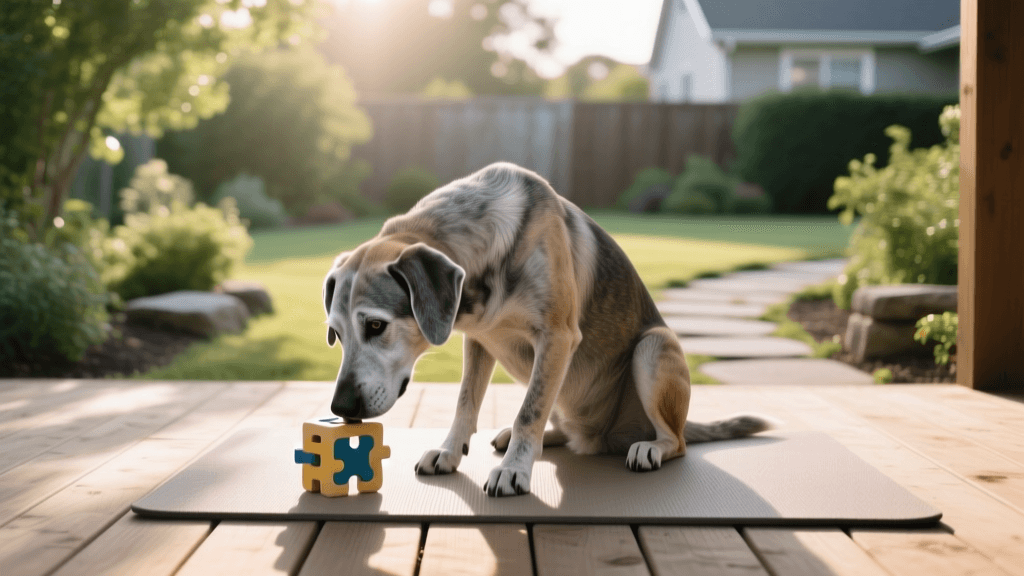
- Puzzle Toys: Invest in interactive feeders like the Outward Hound Dog Brick Interactive Puzzle ($15-$20) or the KONG Senior ($15-$25). Fill them with canned pumpkin, plain yogurt, or soaked kibble, and freeze them to extend the enrichment time.
Training Adjustments for Sensory Decline
Many senior dogs experience a decline in vision and hearing. Training must adapt to these sensory deficits to prevent frustration.
- For Deaf Dogs: Transition entirely to hand signals. Use a gentle vibration collar (never a shock collar) to get their attention before offering a visual cue. A small LED flashlight can also be used as a visual "marker" in place of a clicker.
- For Blind Dogs: Rely on scent markers and tactile cues. Place different textured mats at the top and bottom of stairs to signal elevation changes. Use consistent verbal markers like "Step up" or "Wait" to guide them safely through the environment.
Adjusting Rewards for the Aging Canine
A senior dog's motivation and physical ability to eat treats may change. Dental disease is prevalent in older dogs, meaning hard biscuits or dental chews might cause oral pain, leading to a refusal to work for rewards. Switch to high-value, soft, and easily chewable treats. Excellent options include Zuke's Mini Naturals (approx. $8 for a 6oz bag) or Blue Buffalo Blue Bits. These are soft, highly palatable, and small enough to prevent overfeeding.
Because senior dogs have slower metabolisms and are generally less active, weight management is crucial. Obesity exacerbates arthritis and heart conditions. Always deduct the calories used during training sessions from your dog's daily meal allowance, or simply use their measured daily kibble as training rewards if they are highly food-motivated.
Managing Sessions and Cognitive Fatigue
While mental stimulation is vital, senior dogs fatigue much faster than their younger counterparts. Cognitive overload can lead to stress and shutdown. The ASPCA's Senior Dog Care guidelines emphasize the importance of adjusting daily routines and activities to match the pet's evolving energy levels and physical limitations.
Best Practices for Senior Training Sessions:
- Keep it brief: Limit training sessions to 5 to 10 minutes, maximum.
- Frequency over duration: Instead of one long 30-minute session, do three 5-minute sessions spread throughout the day.
- Watch for stress signals: Panting, lip licking, yawning, or turning away are signs your dog is mentally tired or physically uncomfortable. End the session immediately on a positive note.
- End on a win: Always finish with a command or trick your dog knows perfectly and loves doing, ensuring they feel successful and confident.
Conclusion
Training a senior dog is a beautiful way to honor the bond you have built over their lifetime. By shifting your focus from physical exertion to cognitive enrichment, and by adapting your methods to accommodate their aging bodies, you provide them with a sense of purpose and joy. Remember that patience, empathy, and a willingness to adapt are your best tools. Through low-impact tricks, scent work, and thoughtful environmental adjustments, you can ensure your senior dog's golden years are truly golden, filled with mental vitality and a deep, enduring connection with you.
priya-sutaria
All our authors care for dogs every day — read more of their work on the authors page.