Understanding Dog Panic: An Emergency Safety Guide
Learn how to understand and manage your dog's fight-or-flight response during emergencies. Actionable safety tips, evacuation gear, and calming strategies.
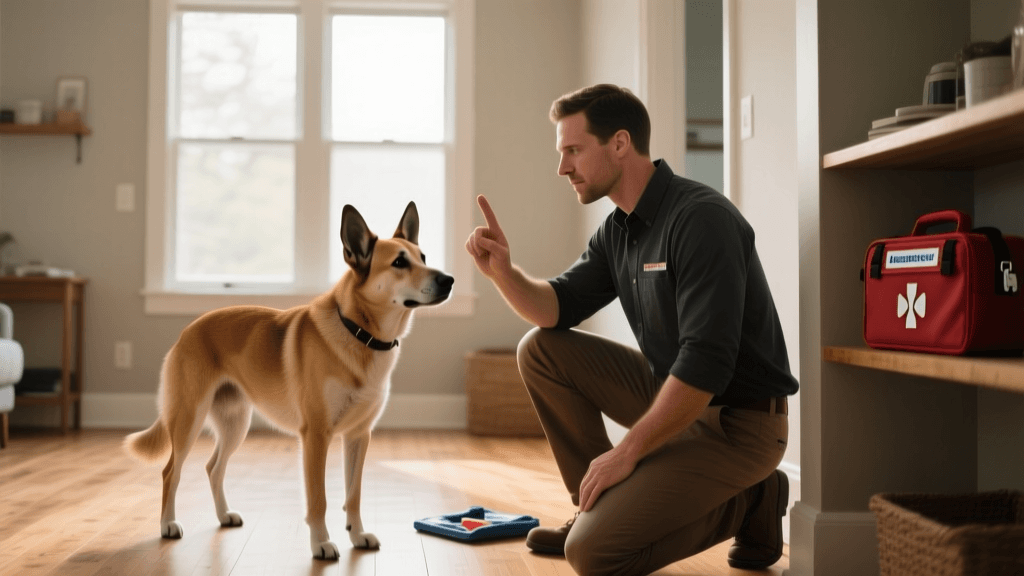
The Neurology of the Canine Fight-or-Flight Response
When an emergency strikes—whether it is a sudden house fire, a rapidly approaching wildfire, or a catastrophic hurricane—your dog does not process the event logically. Instead, their brain relies on millions of years of evolutionary survival programming. Understanding the psychology and neurology behind canine panic is the first step in keeping your pet safe during a crisis. When a dog perceives a severe threat, the amygdala (the brain's fear center) hijacks the nervous system, triggering a massive release of adrenaline and cortisol. This is the classic fight-or-flight response.
During this chemical flood, a dog's heart rate spikes, blood flow is redirected to major muscle groups, and their pain tolerance increases dramatically. From a behavioral standpoint, this means a normally docile, obedient dog may become entirely unresponsive to verbal commands, attempt to bolt through plate-glass windows, or even bite their beloved owners if cornered or restrained improperly. Recognizing that your dog is not being "disobedient" but is instead experiencing a profound neurological override is crucial for maintaining your own calm and executing a safe evacuation.
Decoding Stress Signals Before the Bolt
Most pet owners only recognize panic when it reaches the explosive stage of bolting or aggression. However, the American Kennel Club (AKC) emphasizes that dogs exhibit a ladder of subtle stress signals long before they reach the threshold of outright panic. By understanding these early warning signs, you can intervene before your dog's sympathetic nervous system fully takes over.
| Stage of Stress | Behavioral & Physical Signs | Immediate Action Required |
|---|---|---|
| Mild (Yellow Zone) | Lip licking, yawning, panting without heat, whale eye (showing whites of eyes), shaking off. | Move to a quieter space, offer high-value treats, initiate familiar training cues to re-engage the thinking brain. |
| Moderate (Orange Zone) | Pacing, whining, trembling, pinned ears, tucked tail, refusal to eat, clinging to owner. | Apply deep pressure therapy (anxiety wrap), secure on a leash, prepare emergency go-bag immediately. |
| Severe (Red Zone) | Frantic escape attempts, destructive chewing, unresponsiveness to name, defensive snapping, freezing. | Do not punish. Use a secure harness and muzzle if necessary for safe transport. Evacuate immediately. |
Essential Emergency Gear for Anxious Dogs
To safely manage a panicked dog, standard flat collars and retractable leashes are virtually useless and highly dangerous. A panicked dog can easily slip a flat collar or snap a lightweight leash. The ASPCA Disaster Preparedness guidelines strongly recommend having specialized, escape-proof gear ready in your emergency kit. Here are the specific, actionable investments you need:
- Escape-Proof Harness: The Ruffwear Web Master Harness (Cost: $70-$90) features a second belly strap that prevents dogs from backing out of the gear when they panic. Measurement Tip: Measure the widest part of your dog's ribcage, not just behind the front legs, to ensure a secure fit.
- GPS Tracking Collar: If your dog slips the leash during an evacuation, a GPS tracker is a lifeline. The Fi Series 3 Smart Dog Collar (Cost: $129 + $8/month subscription) offers LTE tracking and an "Escape Alert" that notifies your phone the second your dog leaves your designated safe zone.
- Deep Pressure Anxiety Wrap: The ThunderShirt Classic (Cost: $40-$50) applies gentle, constant pressure to the torso, which stimulates the parasympathetic nervous system and helps lower heart rates during loud emergencies like explosions or severe storms.
- Basket Muzzle for Safety: A panicked dog in pain or trapped in debris may bite rescuers or owners. The Baskerville Ultra Muzzle (Cost: $20-$30) allows the dog to pant and drink water while completely preventing bites. Condition your dog to wear this during non-emergency times so it does not add to their stress.
The 15-Minute Evacuation Protocol
When local authorities issue an evacuation order, time is your most limited resource. FEMA's Ready.gov pet guidelines stress the importance of having a pre-planned route and a packed go-bag. However, managing the dog's psychology during those frantic 15 minutes is just as important as grabbing your keys.
- Minutes 1-3 (Secure the Perimeter): Close all interior doors to limit the dog's escape routes within the house. Do not open the front door until the dog is fully secured on a 6-foot fixed-length biothane leash (which won't slip or burn your hands like nylon).
- Minutes 4-8 (Gear Up): Put on the escape-proof harness and the GPS collar. If your dog is in the "Orange" or "Red" stress zone, apply the ThunderShirt. Speak in a low, calm, and monotone voice. High-pitched, frantic voices from the owner will only validate the dog's belief that there is a lethal threat nearby.
- Minutes 9-12 (Load the Vehicle): Use a crash-tested crate (such as the Gunner Kennel G1, Cost: $700+) or a secured vehicle harness. Never allow a panicked dog to roam freely in a car during an emergency; they can interfere with the pedals or bolt the moment a door is opened.
- Minutes 13-15 (Final Sweep & Departure): Grab the canine go-bag (containing 3 days of food, water, a familiar blanket with your scent, and medical records). Depart smoothly, avoiding sudden braking which can exacerbate the dog's motion sickness and anxiety.
The 72-Hour Cortisol Hangover: Post-Emergency Decompression
Understanding your dog's emergency response does not end once you reach a safe shelter or hotel. Canine behaviorists refer to the period following a highly stressful event as the "cortisol hangover." It can take anywhere from 48 to 72 hours for stress hormones to fully metabolize and leave a dog's bloodstream. During this window, your dog's trigger threshold is remarkably low. A dog that is normally friendly with strangers may react aggressively to a shelter volunteer, or a dog that is fully house-trained may have accidents indoors.
To facilitate psychological decompression, enforce a strict "decompression protocol" for the first three days. Keep your dog on a leash even in secure, fenced areas to prevent them from rehearsing frantic pacing behaviors. Engage them in "sniffaris"—allowing them to sniff the ground on a long line for 20 minutes at a time. Sniffing is a naturally calming behavior that lowers a dog's pulse rate and helps process residual adrenaline. Provide a dark, quiet space with white noise to help them achieve the deep REM sleep necessary to reset their nervous system. By respecting the biological timeline of their recovery, you prevent long-term behavioral trauma and ensure your dog remains a resilient, trusting companion for whatever challenges lie ahead.
anouk-beaumont
All our authors care for dogs every day — read more of their work on the authors page.