Viral Dog Trends: Decoding Canine Stress Signals Online
Are viral dog trends harmless fun or causing anxiety? Learn to decode your dog's stress signals and understand the psychology behind internet fads.
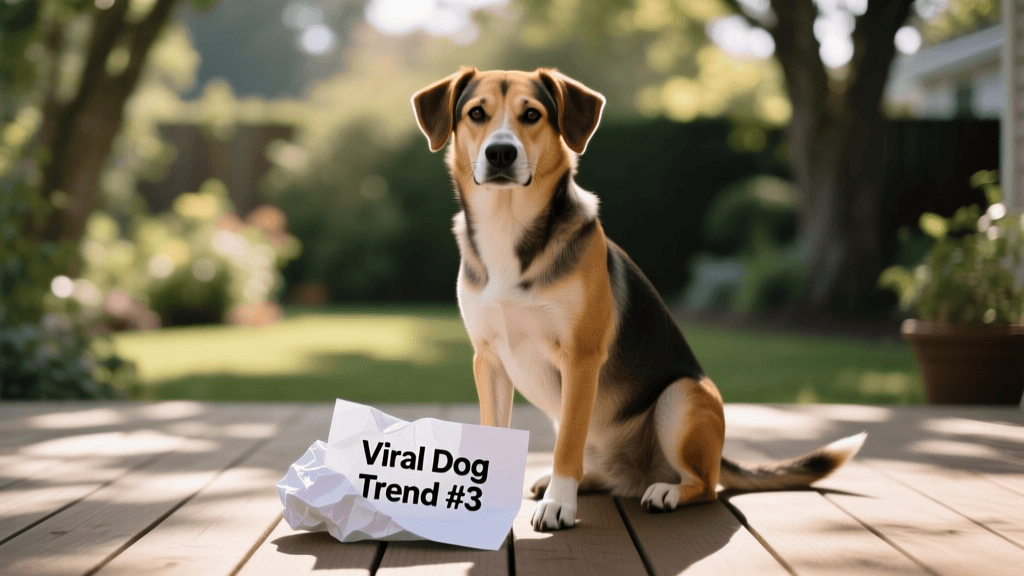
The Rise of Viral Dog Challenges on Social Media
Social media platforms like TikTok, Instagram Reels, and YouTube Shorts have completely revolutionized how we share our lives with our pets. Scrolling through your daily feed, you have likely encountered dozens of viral dog trends. From the famous 'Egg Challenge' to the 'Invisible Wall' prank, these videos routinely garner millions of views, likes, and shares. For the human viewer, these trends are often perceived as hilarious, endearing, or a testament to a dog's incredible intelligence and obedience.
However, as a senior canine behaviorist and SEO writer for Paws-Tales, I must ask the critical question: Are these viral dog trends harmless fun, or are they secretly causing profound anxiety and stress for our canine companions? To truly understand your dog, you must learn to look past the comedic timing and trending audio to decode the subtle body language and psychological impact these internet fads have on your pet.
The Psychology Behind the 'Egg Challenge'
The 'Egg Challenge' involves an owner placing a raw, uncracked egg into a dog's mouth and asking them to hold it gently. The internet rejoices when the dog successfully holds the fragile object without breaking it, praising the dog's incredible bite inhibition. While it is true that dogs possess remarkable bite inhibition—the ability to control the force of their jaw—this trend fundamentally misunderstands canine psychology.
Dogs explore the world with their mouths. Holding a strange, smooth, fragile object that smells like raw protein triggers a massive internal conflict. The dog is caught between their natural prey drive, their desire to obey their owner, and the confusing sensory input of the egg. While the dog may not crack the egg, the intense hyper-focus required to maintain a soft jaw is deeply taxing. Many dogs in these videos exhibit severe tension, holding their breath and freezing their bodies, which is a classic sign of acute stress rather than relaxed obedience.
The 'Invisible Wall' and Cling Wrap Trends
Another highly viral trend involves owners taping transparent cling wrap across a doorway or hallway and calling their dog from the other side. When the dog runs toward the owner, they collide with the unseen barrier. Humans laugh at the dog's bewildered reaction, but from a behavioral standpoint, this is incredibly problematic.
Dogs rely heavily on their spatial awareness and vision to navigate their environment safely. Striking an invisible barrier triggers a sudden startle response, which spikes cortisol and adrenaline levels. Furthermore, if a dog is running at full speed, hitting a taut piece of plastic can cause severe physical injury, including neck trauma, tracheal damage, or eye scratches. Beyond the physical danger, it damages the dog's trust in their environment and their owner, creating a state of hypervigilance where the dog becomes afraid to walk through doorways.
'Pretending to Leave': Trust and Separation Anxiety
In this trending prank, owners pretend to walk out the front door, only to hide silently just out of sight while filming their dog's reaction. The goal is often to capture a 'heartwarming' video of the dog crying or searching for their owner. In reality, this trend actively weaponizes a dog's deepest fears.
Dogs are pack animals that form profound attachment bonds with their human families. For dogs that already suffer from mild or severe separation anxiety, this prank is psychological torture. It reinforces the fear of abandonment and can escalate minor anxiety into full-blown panic disorders. Even for confident dogs, the sudden disappearance of their primary caregiver induces unnecessary confusion and distress. Trust is the foundation of the human-animal bond, and intentionally triggering abandonment fears for social media clout undermines that foundation.
Decoding Canine Stress Signals: What the Camera Doesn't Show
Because dogs cannot speak, they communicate their emotional states through nuanced body language. Unfortunately, many of these subtle stress signals are entirely missed by untrained eyes, especially when masked by trending music and quick camera cuts. According to the ASPCA's guide on canine body language, dogs use a hierarchy of signals to express discomfort, starting with subtle appeasement behaviors and escalating to defensive actions if ignored.
The American Kennel Club (AKC) also emphasizes that stress signals are often misinterpreted as 'guilt' or 'funny quirks.' For instance, a dog yawning when they are not tired is rarely bored; it is a physiological attempt to self-soothe and lower their heart rate in a stressful situation.
Viral Trend vs. Canine Body Language Chart
| Viral Trend | Dog's Internal State | Subtle Stress Signals to Watch For |
|---|---|---|
| The Egg Challenge | Confusion, hyper-focus, internal tension | Excessive lip licking, pinned ears, freezing, breath-holding |
| Invisible Wall (Cling Wrap) | Startle response, frustration, fear | Whale eye (showing whites of eyes), sudden panting, retreating |
| Pretending to Leave | Abandonment fear, acute anxiety | Pacing, whining, destructive scratching, drooling |
| Staring Contest / 'Guilty' Look | Appeasement, discomfort with direct eye contact | Looking away, yawning, lowering head, blinking rapidly |
If you notice any of these signals while interacting with your dog, it is crucial to stop the activity immediately and give your dog space to decompress.
Science-Backed Alternatives to Viral Trends
If your goal is to engage with your dog, showcase their intelligence, and create entertaining content, there are countless science-backed enrichment activities that promote mental well-being rather than stress. Veterinary behaviorists frequently note that 15 to 20 minutes of intense mental enrichment and sniffing can tire a dog out as much as a 45-minute physical walk. Here are specific, actionable alternatives you can implement today:
1. Interactive Puzzle Toys
Instead of testing your dog's bite inhibition with a raw egg, test their problem-solving skills with a puzzle toy. The Outward Hound Nina Ottosson Dog Brick Puzzle (Cost: ~$15-$20, Dimensions: 12.5 x 9 inches) is an excellent intermediate-level puzzle. It requires your dog to lift flaps and slide blocks to reveal hidden treats. This taps into their natural foraging instincts and provides a healthy dopamine release when they succeed.
2. Lick Mats for Soothing Enrichment
Licking is a naturally soothing behavior for dogs that releases endorphins. The Hyper Pet IQ Treat Lick Mat (Cost: ~$10-$15, Dimensions: 8.5 x 8.5 inches) can be smeared with dog-safe peanut butter, plain pumpkin puree, or Greek yogurt and frozen for 2 hours. This provides a long-lasting, calming activity that is perfect for keeping your dog occupied and relaxed while you work or cook.
3. The Classic KONG Stuffing Routine
The KONG Classic Rubber Toy (Cost: ~$12-$18, Size: Medium for 15-35 lb dogs) remains a gold standard for canine enrichment. Stuff it with a mixture of kibble, wet dog food, and low-sodium chicken broth, then freeze it overnight. This creates a challenging, safe, and highly rewarding activity that builds confidence rather than anxiety.
4. DIY Snuffle Mats and Scatter Feeding
You do not need to buy expensive gear to provide enrichment. Simply take your dog's daily kibble allowance and scatter it across a grassy yard or hide it inside a crumpled towel indoors. Allowing your dog to use their nose to 'hunt' for their meal engages the olfactory lobe of their brain, providing immense mental satisfaction. For more ideas, the AKC enrichment guide offers fantastic DIY recipes for mental stimulation.
Conclusion: Prioritizing Your Dog's Well-Being Over Views
Understanding your dog means advocating for them, even when it means opting out of a viral internet trend. While social media can be a wonderful place to connect with fellow dog lovers, we must remember that our dogs are not props for entertainment; they are sentient beings who rely on us for their physical and emotional safety. By learning to read their subtle stress signals and replacing anxiety-inducing pranks with enriching, science-backed activities, you will build a deeper, more trusting bond with your canine companion. The most heartwarming videos are not the ones where a dog is confused or scared, but the ones where a dog is thriving, confident, and genuinely happy.
aaron-whyte
All our authors care for dogs every day — read more of their work on the authors page.