Heatstroke in Dogs: Emergency First Aid & Cooling Guide
Learn how to recognize and treat heatstroke in dogs. Discover emergency cooling techniques, critical temperature thresholds, and when to rush to the vet.
Understanding Canine Heatstroke: A Silent and Rapid Killer
Unlike humans, dogs do not possess a widespread network of eccrine sweat glands to regulate their core body temperature. Instead, they rely primarily on panting and vasodilation (the expansion of blood vessels near the skin's surface) to dissipate heat. When environmental temperatures and humidity levels exceed a dog's capacity to cool itself, their core temperature rapidly spikes, leading to hyperthermia and, eventually, heatstroke. Heatstroke in dogs is a life-threatening medical emergency that can trigger systemic inflammatory response syndrome (SIRS), disseminated intravascular coagulation (DIC), and multi-organ failure in a matter of hours. According to VCA Animal Hospitals, a dog's normal resting body temperature ranges from 101°F to 102.5°F (38.3°C to 39.2°C). Once the core temperature surpasses 104°F (40°C), cellular damage begins, and immediate emergency intervention is required to save the animal's life.
Recognizing the Signs: Normal vs. Heat Exhaustion vs. Heatstroke
Early recognition is the most critical factor in survival. Pet owners must be able to differentiate between normal post-exercise panting, heat exhaustion, and full-blown heatstroke. The following table outlines the progression of heat-related illness in canines.
| Stage | Core Temperature | Clinical Symptoms | Immediate Action Required |
|---|---|---|---|
| Normal / Active | 101°F - 102.5°F | Steady panting, alert, responsive, pink gums. | Provide shade and fresh water. |
| Heat Stress | 102.5°F - 103°F | Heavy panting, seeking cool surfaces, mild restlessness. | Move to AC, offer water, monitor closely. |
| Heat Exhaustion | 103°F - 104°F | Excessive drooling, bright red gums, rapid heart rate, lethargy. | Begin active cooling, contact vet. |
| Heatstroke | 104°F - 106°F | Vomiting, diarrhea, stumbling, confusion, glazed eyes. | Emergency cooling and immediate vet transport. |
| Severe / Critical | Above 106°F | Seizures, coma, pale/blue gums, bleeding disorders (DIC). | Rush to ER vet; high mortality risk. |
The 5-Step Emergency Cooling Action Plan
If you suspect your dog is suffering from heatstroke, time is tissue. The American Kennel Club (AKC) emphasizes that initiating first aid while en route to the veterinarian drastically improves survival rates. Follow this precise emergency protocol:
Step 1: Relocate to a Climate-Controlled Environment
Immediately move the dog out of direct sunlight and into an air-conditioned building or a shaded, well-ventilated area. If you are in a vehicle, turn the air conditioning on full blast and direct the vents toward the dog's core and face.
Step 2: Apply Cool (Not Cold) Water
Use cool tap water (approximately 70°F to 80°F / 21°C to 26°C) to wet the dog's coat, focusing on the paw pads, groin, armpits, and the back of the neck. These areas have high concentrations of superficial blood vessels, which will help cool the blood as it circulates back to the heart. You can use a spray bottle, a damp sponge, or a gentle hose.
Step 3: Maximize Airflow for Evaporative Cooling
Water alone is not enough; evaporation is what pulls heat from the body. Position a fan to blow directly over the wet dog. If you are in a car, ensure the AC is blowing across the dog's wetted fur. Do not cover the dog with wet towels, as this traps the heat against the skin and creates a sauna effect, accelerating the temperature spike.
Step 4: Monitor Rectal Temperature and Stop at 103°F
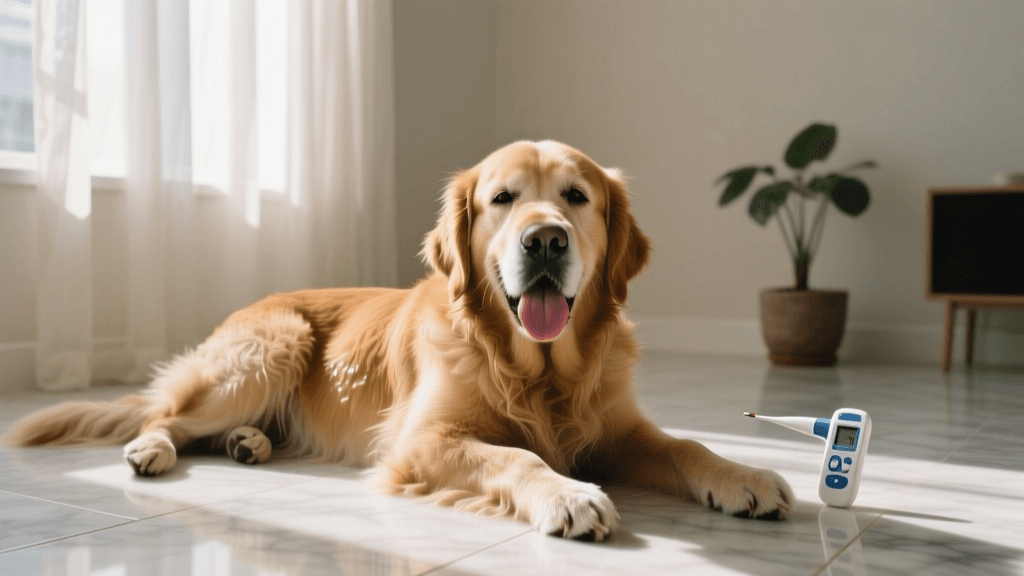
If you have a digital rectal thermometer and lubricant, check the dog's temperature every 3 to 5 minutes. Crucial Rule: You must stop all active cooling measures once the dog's core temperature reaches 103°F (39.4°C). The body's temperature will continue to drop even after you stop cooling. Over-cooling a dog to a normal 101°F on the driveway can induce severe rebound hypothermia, which is equally fatal and complicates veterinary treatment.
Step 5: Transport to the Nearest Emergency Veterinarian
Even if the dog appears to recover and their temperature normalizes, internal organ damage may have already occurred. Transport the dog to an emergency veterinary clinic immediately for intravenous fluid therapy and bloodwork.
Critical Mistakes to Avoid During a Heat Emergency
In a state of panic, well-meaning owners often make errors that worsen the dog's condition. Avoid these common and dangerous mistakes:
- Never use ice or ice water: Applying ice causes rapid peripheral vasoconstriction (the shrinking of blood vessels near the skin). This traps the dangerous heat inside the dog's core organs and halts the cooling process entirely.
- Never force water down an unconscious or severely lethargic dog's throat: A compromised dog loses its gag reflex. Syringing water into their mouth can lead to aspiration pneumonia, where fluid enters the lungs, creating a secondary fatal emergency.
- Never leave a heatstroke dog unattended: Dogs with heatstroke can rapidly transition from panting to seizing or going into cardiac arrest within minutes.
Veterinary Intervention and Estimated Costs
Upon arrival at the clinic, the veterinary team will take over with aggressive interventions. The American Veterinary Medical Association (AVMA) notes that heatstroke requires intensive care to manage secondary complications like acute kidney injury, brain swelling, and blood clotting disorders. Expect the following treatments and associated emergency costs:
- Emergency Exam & Triage: $150 - $250
- Intravenous (IV) Fluid Therapy: $200 - $500 (to restore blood volume and flush kidneys)
- Oxygen Therapy: $100 - $300 (to support compromised respiratory function)
- Bloodwork & Coagulation Panels (DIC check): $250 - $450
- Fresh Frozen Plasma Transfusion: $400 - $800 (if blood clotting factors are depleted)
- 24-48 Hour ICU Hospitalization: $800 - $2,000+ per day
Total emergency veterinary bills for a severe heatstroke case routinely range from $1,500 to over $5,000, making prevention and early recognition not just a matter of life and death, but of significant financial impact.
High-Risk Breeds and Proactive Prevention
While any dog can suffer from heatstroke, brachycephalic (flat-faced) breeds such as English Bulldogs, Pugs, French Bulldogs, and Shih Tzus are at an exponentially higher risk. Their anatomically narrowed airways (Brachycephalic Obstructive Airway Syndrome) make panting highly inefficient. Additionally, senior dogs, overweight dogs, and dogs with underlying heart or respiratory conditions lack the cardiovascular reserve to cope with thermal stress.
Prevention is the only guaranteed cure for heatstroke. Adjust your walking schedule to the early morning or late evening, utilize cooling mats, and always carry a collapsible water bowl and a thermos of fresh water on outings.
Ultimately, your dog relies entirely on you to recognize the environmental limits of their biology. By memorizing the symptoms of heat exhaustion, keeping a digital thermometer in your pet first-aid kit, and understanding the precise mechanics of safe evaporative cooling, you can act as the vital bridge between a heat emergency and life-saving veterinary care.
marcus-aldridge
All our authors care for dogs every day — read more of their work on the authors page.