Dog Disaster Prep: Building a 72-Hour Emergency Go-Bag
Learn how to build a 72-hour dog emergency go-bag and create a pet evacuation plan for wildfires and hurricanes. Keep your pup safe in a crisis.
Why Every Dog Owner Needs a Disaster Evacuation Plan
Natural disasters rarely offer the luxury of time. Whether you are facing a rapidly spreading wildfire in the West, a sudden flash flood in the Midwest, or a category four hurricane on the Eastern seaboard, the window to evacuate safely can shrink to mere minutes. For dog owners, this narrow timeframe is complicated by the need to secure a panicked pet, gather essential supplies, and navigate evacuation routes that may not immediately accommodate animals.
According to the ASPCA, millions of animals are affected by natural disasters every year, and a significant percentage of pets separated from their owners during these events are never reunited. Furthermore, FEMA's Ready.gov explicitly warns that if it is not safe for you to stay home, it is not safe for your pets to stay home either. Leaving a dog behind, even with extra food and water, exposes them to structural collapse, toxic floodwaters, and extreme stress. To protect your canine companion, you must build a dedicated 72-hour dog go-bag and establish a concrete evacuation protocol well before disaster strikes.
The Ultimate 72-Hour Dog Go-Bag Checklist
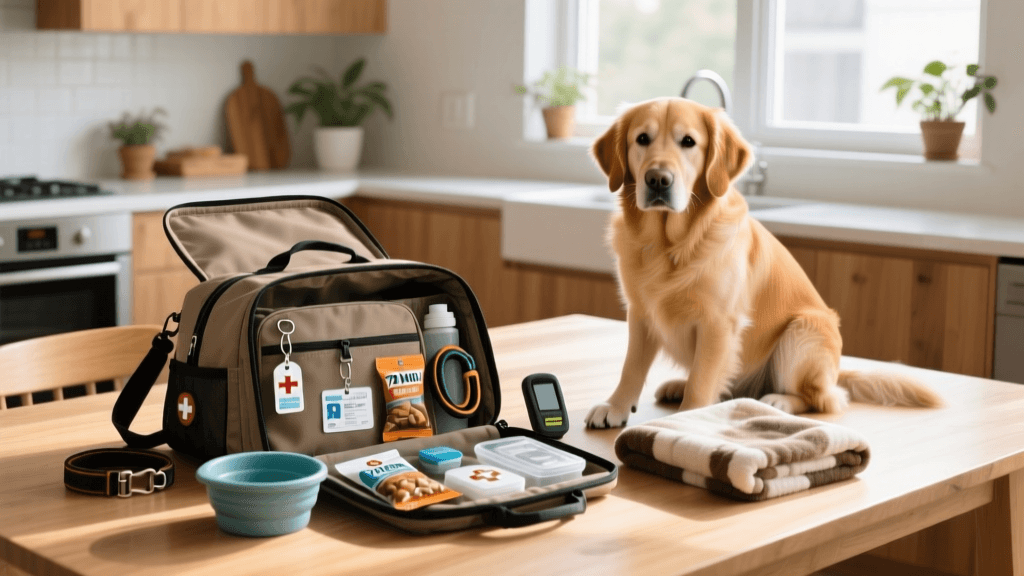
A go-bag is a portable, self-contained survival kit designed to sustain your dog for a minimum of three days. Store these items in a waterproof, easily accessible duffel bag or tactical backpack near your primary exit door.
- Water and Hydration: The general rule of thumb is one ounce of water per pound of body weight per day. For a 50-pound dog, you need at least 150 ounces (just over a gallon) for a three-day supply. Pack this in lightweight, BPA-free collapsible silicone bottles to save space.
- Food and Caloric Treats: Pack a three-day supply of your dog's regular kibble in a sealed, waterproof container. Sudden diet changes during high-stress events can cause severe gastrointestinal upset. Include high-calorie, easily digestible treats like Zuke's Mini Naturals or pureed peanut butter squeeze tubes to entice a stressed dog to eat.
- Feeding and Water Bowls: Pack two collapsible silicone travel bowls. They weigh mere ounces and fold completely flat.
- Leash, Harness, and Tie-Outs: Do not rely solely on a collar, which can slip off a panicked dog. Pack a well-fitted, front-clip no-pull harness (such as the Rabbitgoo or Kurgo Tru-Fit) and a sturdy 6-foot nylon leash. Include a 15-foot tie-out cable for securing your dog outside a temporary shelter or hotel.
- Sanitation Supplies: Pack a minimum of 50 biodegradable waste bags, a small roll of paper towels, and a bottle of enzymatic cleaner for accidents. If you have a senior or disabled dog, include 5-10 absorbent puppy pads.
- Comfort and Anxiety Management: Disasters are terrifying for dogs. Pack a familiar-scented item, like a small blanket or an old t-shirt you have worn. For dogs with noise phobias, include a compression garment like the ThunderShirt, which applies gentle, constant pressure to calm the canine nervous system during thunderstorms and fireworks.
Data Table: Go-Bag Essentials vs. Nice-to-Haves
When packing your bag, space and weight are at a premium. Use the following breakdown to prioritize your packing based on immediate survival needs versus long-term comfort.
| Item | Category | Est. Cost | Weight/Volume | Priority Level |
|---|---|---|---|---|
| 3-Day Kibble Supply | Nutrition | $15 - $25 | 3 - 6 lbs | Critical |
| Collapsible Silicone Bowls | Feeding | $8 - $12 | 4 oz | Critical |
| Front-Clip Harness & Leash | Restraint | $25 - $40 | 1.2 lbs | Critical |
| Waterproof Vet Records Pouch | Documentation | $5 - $10 | 2 oz | Critical |
| ThunderShirt / Calming Wrap | Comfort | $40 - $50 | 8 oz | High |
| Canine First-Aid Kit | Medical | $25 - $35 | 1 lb | High |
| Familiar Scented Blanket | Comfort | $0 (Existing) | 1 lb | Moderate |
| Portable Paw Washer | Sanitation | $12 - $15 | 6 oz | Low (Nice-to-Have) |
Navigating Evacuation Routes and Pet-Friendly Shelters
One of the most dangerous mistakes dog owners make is assuming that local emergency shelters will accept pets. Prior to the passage of the PETS Act (Pets Evacuation and Transportation Standards Act) in 2006, many public disaster shelters turned away animals, forcing owners to choose between their safety and their pets. While the PETS Act requires state and local emergency preparedness plans to accommodate household pets, the reality on the ground can still be chaotic. Public shelters often require pets to be crated at all times, and space is strictly limited.
Your primary evacuation plan should involve staying with friends or family outside the disaster zone. If that is impossible, you must identify pet-friendly hotel chains along your evacuation route. Brands like La Quinta, Motel 6, and Kimpton Hotels are renowned for their lenient, often fee-free pet policies. However, during a mass evacuation, these rooms fill up in hours. Use apps like BringFido or call hotel front desks directly as soon as an evacuation watch is upgraded to a warning.
Pro Tip: Keep a physical, printed map of your evacuation route and a list of three pet-friendly hotels located at 50-mile, 100-mile, and 150-mile intervals from your home. Cell towers frequently fail or become overloaded during natural disasters, rendering GPS and booking apps useless.
Crucial Documents and Identification
If you are separated from your dog, or if you need to board them at an emergency veterinary clinic or shelter, proof of ownership and vaccination is mandatory. Store the following documents in a sealed, waterproof Ziploc bag or a dedicated document organizer inside your go-bag:
- Rabies Certificate and Vaccination Records: Shelters will not accept dogs without proof of a current rabies vaccination.
- Microchip Information: Include the microchip number and the direct phone number of the registry (e.g., HomeAgain, Fi, or AKC Reunite). Ensure your current phone number and an out-of-state emergency contact are registered on the AAHA Universal Pet Microchip Lookup database.
- Recent Photographs: Print three clear, full-body photos of your dog showing any unique markings. Digital photos on a dead phone are useless for creating lost dog flyers.
- Behavioral and Medical Notes: Write down your dog's feeding schedule, any allergies, and behavioral quirks (e.g., 'fearful of men in hats', 'resource guards food').
First-Aid and Emergency Medications
A standard human first-aid kit is insufficient for canine emergencies. You can purchase a pre-made kit from the American Red Cross, or build your own to include specific veterinary supplies. Ensure your kit contains:
- Kwik Stop Styptic Powder: Essential for stopping bleeding if a dog tears a nail on debris or jagged terrain.
- Vetwrap (Self-Adhering Bandage): Used to secure gauze over lacerations. Unlike human bandages, it sticks to itself and won't pull on your dog's fur.
- Baskerville Ultra Muzzle: Even the sweetest, most docile dog may bite when experiencing extreme pain or shock. A basket-style muzzle allows the dog to pant and drink water while protecting you and veterinary staff.
- Sterile Saline Flush: For washing debris, ash, or chemical contaminants out of your dog's eyes and open wounds.
- Prescription Medications: If your dog takes daily medications (e.g., Apoquel for allergies, Heartgard for prevention, or thyroid meds), keep a rotating 7-day emergency supply in the go-bag. Check and rotate these medications every six months to ensure they do not expire.
Running a Practice Evacuation Drill
Packing the bag is only half the battle; executing the evacuation under stress is where many plans fail. Dogs are highly perceptive of human anxiety. If you are frantically running around the house shouting, your dog will likely hide under a bed or bolt out an open door.
Twice a year, conduct a 'fire drill' with your dog. Set a timer for 5 minutes. Practice calmly calling your dog, securing their harness, loading them into their crash-tested travel crate (such as a Ruff Land Performance Kennel or Gunner Kennel), and walking out to the vehicle with the go-bag. Reward your dog heavily with high-value treats like boiled chicken or freeze-dried liver at every step. By desensitizing your dog to the sights and sounds of emergency preparation, you transform a terrifying ordeal into a familiar, manageable routine. When a real disaster strikes, your preparation will be the lifeline that keeps your best friend safe.
jonas-cole
All our authors care for dogs every day — read more of their work on the authors page.