How to Evacuate With Your Dog During a Natural Disaster
Learn how to create a comprehensive disaster evacuation plan for your dog. Includes checklists, go-bag essentials, and safety tips for emergencies.
The Hidden Dangers of Natural Disasters for Pets
When a hurricane, wildfire, or flood strikes, the chaos of evacuation can be overwhelming. For dog owners, the stakes are even higher. You are not just responsible for your own safety, but for the life of a dependent animal who cannot understand the danger or pack their own belongings. According to FEMA's Ready.gov, thousands of pets are displaced or lost during natural disasters every year simply because their owners lacked a concrete, practiced evacuation plan.
In the panic of an impending storm or a rapidly spreading fire, leaving your dog behind might seem like the only option if you are unprepared. However, with the right emergency safety guide, you can ensure your furry family member stays by your side. This comprehensive guide will walk you through building a canine go-bag, understanding shelter laws, and executing a flawless evacuation drill.
The Legal Landscape: The PETS Act
Before diving into the logistics, it is vital to understand your rights and the resources available to you. Following the devastation of Hurricane Katrina in 2005, where thousands of pets were abandoned or perished, the U.S. government passed the Pets Evacuation and Transportation Standards (PETS) Act. This law requires state and local emergency preparedness plans to accommodate pets and service animals. While this means many public shelters now accept pets, it does not guarantee space, nor does it mean every hotel will open its doors. You must still do your legwork ahead of time.
Assembling the Ultimate Canine Emergency Go-Bag
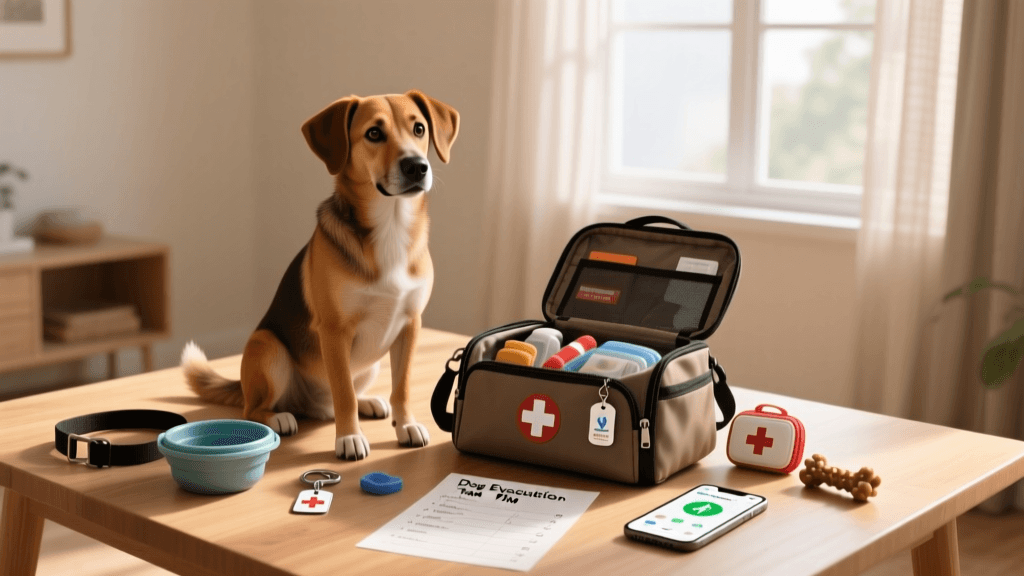
Your dog's emergency kit should be a dedicated, easily portable duffel bag or backpack kept near your exit door. The ASPCA strongly recommends maintaining a standalone kit for your pet so you do not have to scramble to gather supplies when an evacuation order is issued.
Food, Water, and Sanitation
A general rule of thumb for canine hydration is that dogs need approximately one ounce of water per pound of body weight per day. For a 50-pound dog, that means at least 50 ounces (roughly 0.4 gallons) daily. You must pack a minimum three-day supply of water specifically for your dog, alongside a three-day supply of their regular kibble or canned food. Sudden diet changes during high-stress situations can lead to severe gastrointestinal distress, so stick to their normal brand. Include collapsible silicone bowls and a dedicated pooper-scooper with a generous roll of waste bags.
Go-Bag Inventory and Cost Breakdown
Here is a structured breakdown of the essential items to include in your dog's go-bag, along with estimated costs to help you budget for your emergency fund.
| Item | Specification / Measurement | Estimated Cost |
|---|---|---|
| Collapsible Water Bowl | Silicone, holds 32 oz | $8 - $15 |
| Potable Water | 1 gallon per 50 lbs dog (3-day supply) | $5 - $10 |
| Kibble / Wet Food | 3-day supply in waterproof container | $15 - $30 |
| Medications | 7-day supply in pill organizer | $10 - $50 |
| Extra Harness & Leash | Front-clip harness, 6ft nylon leash | $25 - $45 |
| Comfort Item | Familiar blanket or worn t-shirt | $0 (Use existing) |
Pet First Aid Kit Essentials
Human first aid kits are insufficient for dogs. You need a veterinary-approved kit tailored to canine anatomy and common emergency injuries. Include the following:
- Styptic Powder: To stop bleeding from torn nails or minor cuts.
- Vet Wrap (Self-Adhering Bandage): For securing dressings without pulling fur.
- Sterile Saline Solution: For flushing debris, dirt, or chemicals from eyes and wounds.
- Tick Remover Tool: Displaced wildlife and ticks are common post-disaster.
- Digital Pet Thermometer: To monitor for shock or heatstroke.
- Hydrogen Peroxide (3%): To induce vomiting ONLY if explicitly instructed by a poison control hotline.
Identification and Medical Documentation
If you become separated from your dog during the chaos of an evacuation, proper identification is your best chance of a reunion. Ensure your dog's microchip information is updated with your current cell phone number and an out-of-state emergency contact. Furthermore, your dog should wear a sturdy collar with a highly visible, engraved ID tag.
Store physical copies of your dog's medical records, including their most recent rabies vaccination certificate and a list of current medications, in a waterproof ziplock bag. Many emergency shelters and pet-friendly hotels will legally require proof of a current rabies vaccination before allowing your dog on the premises.
Pre-Evacuation Preparation and Crate Training
A dog that is terrified of the car or their travel crate will turn a stressful evacuation into an impossible physical struggle. The American Red Cross advises pet owners to practice evacuation drills regularly. Begin by leaving the travel crate open in your living room, feeding your dog their meals inside it, and offering high-value treats like freeze-dried liver to build positive associations.
Once your dog is comfortable in the crate, practice loading them into the vehicle. Time your drills. You should aim to have your dog secured in the car, with all human and canine go-bags loaded, in under 10 minutes. If you have multiple dogs, assign specific family members to specific pets to avoid confusion and ensure no one is left behind.
Navigating Pet-Friendly Shelters and Hotels
Do not assume that your local emergency shelter will have space for your dog, even with the PETS Act in place. Shelters can reach capacity within hours. Create a tiered list of evacuation destinations:
- Tier 1: Friends or family members who live outside the disaster zone and are willing to host you and your dog.
- Tier 2: Pet-friendly hotels or motels located along your primary and secondary evacuation routes. Keep a printed list of these hotels, as cell towers often fail during hurricanes and wildfires.
- Tier 3: Designated co-sheltering facilities (where humans and pets are housed in the same building but separate areas) or local veterinary clinics that offer emergency boarding.
Worst-Case Scenario: If You Must Leave Your Dog Behind
In extreme, life-threatening emergencies where you are ordered to evacuate immediately and cannot physically take your dog, your actions will determine their chances of survival.
CRITICAL SAFETY WARNING: Never tie or chain your dog outside during a natural disaster. Rising floodwaters, falling trees, and flying debris make tethering a death sentence. Furthermore, panic can cause dogs to slip their collars and become lost.
If you must leave them, confine your dog to a safe, interior room without windows, such as a bathroom or a utility room. Leave the toilet seat up as an emergency water source, and scatter several bowls of dry kibble around the room. Place a highly visible sign on your front door and windows stating that there is a dog inside the home, including the dog's name, breed, and your emergency contact number.
Post-Disaster Re-entry and Canine Stress
Returning home after a disaster presents a new set of hazards. Fences may be destroyed, toxic chemicals may have spilled, and displaced wildlife (such as snakes or aggressive stray animals) may be seeking refuge in your yard. Before letting your dog off-leash, thoroughly walk the perimeter of your property to check for structural damage and debris.
Be prepared for behavioral changes. Dogs experience severe PTSD-like symptoms after natural disasters. Signs of stress include excessive panting, pacing, loss of appetite, destructive behavior, and clinginess. Maintain their routine as closely as possible, provide plenty of mental enrichment through puzzle toys, and offer patience as they readjust to their altered environment. If anxiety persists for more than a few weeks, consult your veterinarian about short-term anti-anxiety medications or behavioral therapy.
Conclusion
Evacuating with your dog requires foresight, preparation, and a well-stocked go-bag. By understanding the legal protections available, practicing your evacuation drills, and assembling the right supplies, you can navigate any natural disaster with confidence. Remember, your dog relies entirely on you for their safety—make sure your emergency plan includes them from day one.
beth-carrasco
All our authors care for dogs every day — read more of their work on the authors page.