7 Common Road Trip Mistakes to Avoid When Traveling With Your Dog
Avoid these 7 common road trip mistakes when traveling with your dog. Learn essential safety tips, gear recommendations, and routing advice for a stress-free journey.
The Open Road Awaits: Are You Truly Prepared?
Embarking on a cross-country road trip or a quick weekend getaway with your canine companion is one of the greatest joys of pet ownership. The wind in their fur, the new smells at every rest stop, and the shared adventure create unforgettable memories. However, traveling with a dog requires significantly more logistical planning than traveling solo or with human passengers. Many well-meaning pet parents inadvertently put their dogs at risk or create a highly stressful environment by overlooking crucial travel protocols.
From improper safety restraints to dangerous feeding schedules, the pitfalls of canine road travel are numerous. To ensure your next vacation is a tail-wagging success rather than a stressful ordeal, we have compiled the ultimate guide to the most frequent errors pet owners make. Here are the common road trip mistakes to avoid when traveling with your dog, complete with actionable advice, specific gear recommendations, and expert-backed safety protocols.
Mistake 1: Letting Your Dog Ride Unrestrained
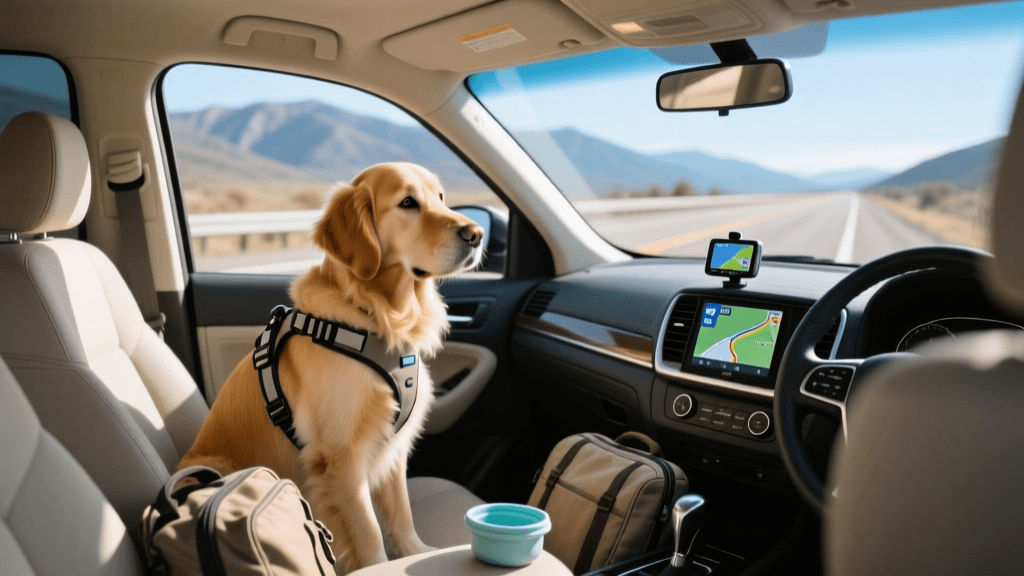
It might look adorable in movies to see a dog with its head out the window or lounging freely in the backseat, but this is one of the most dangerous mistakes you can make. An unrestrained dog is a severe projectile hazard in the event of a sudden stop or collision. Furthermore, a roaming dog can easily fall out of an open window or distract the driver, leading to catastrophic accidents.
According to crash test data compiled by the Center for Pet Safety, many standard pet harnesses fail under the extreme forces of a car crash. You must invest in a harness that has been independently crash-tested and certified.
- Top Pick: The Sleepypod Clickit Sport Harness (approx. $95) or the Ruffwear Load Up Harness (approx. $85) are excellent, certified choices.
- Alternative: If your dog prefers a crate, use a heavy-duty, crash-rated kennel like the Gunner G1 (starting around $500) secured with heavy-duty tie-down straps to the vehicle's anchor points.
Mistake 2: Skipping the 'Practice Drive' Phase
Many owners make the mistake of loading their dog into the car for a 10-hour drive without any prior conditioning, assuming the dog will simply 'figure it out.' If your dog only ever goes to the vet in the car, they likely associate the vehicle with fear and anxiety. Throwing them into a multi-day road trip will trigger severe stress, panting, drooling, and potentially aggressive behavior.
The Acclimation Schedule
Start preparing your dog at least three weeks before your trip. Follow this progressive schedule:
- Week 1: Sit in the parked car with the engine off for 5-10 minutes. Offer high-value treats like freeze-dried liver or peanut butter (xylitol-free).
- Week 2: Turn the engine on and let it idle for 5 minutes. Then, take a 5-minute drive around the block, ending at a fun location like a park.
- Week 3: Extend the drives to 30-45 minutes. Practice using their travel harness or crate and take them through a drive-thru to simulate trip routines.
Mistake 3: Feeding a Full Meal Right Before Departure
Just like humans, dogs can suffer from motion sickness. Feeding your dog a large, heavy meal right before hitting the highway is a recipe for vomit-covered upholstery and a miserable pup. Additionally, large breed dogs are at a higher risk for Gastric Dilatation-Volvulus (GDV), commonly known as bloat, which can be exacerbated by stress and car movement immediately after eating.
The American Kennel Club recommends fasting your dog for about three to four hours before a long car ride to minimize the risk of car sickness. If you are leaving early in the morning, skip breakfast entirely and feed them their first meal once you have reached your first major rest stop or destination. Always provide access to small amounts of water, but avoid letting them gulp down a massive bowl right before the car starts moving.
Mistake 4: Leaving Your Dog in a Parked Car
This cannot be overstated: never leave your dog alone in a parked car, even if the windows are cracked, and even if it feels mildly outside. The greenhouse effect of a vehicle's windows causes the interior temperature to spike to lethal levels in a matter of minutes.
On a seemingly pleasant 70°F (21°C) day, the temperature inside a parked car can reach 89°F (31°C) in just 10 minutes, and 104°F (40°C) in 30 minutes. Dogs cool themselves primarily by panting, which is entirely ineffective in a stagnant, superheated environment. Heatstroke can cause irreversible organ failure and death in under 15 minutes. If you need to use a restroom or grab food, utilize drive-thrus, take turns staying outside with the dog in the shade, or use pet-friendly rest areas where you can safely tether your dog to a picnic bench while you take a break.
Mistake 5: Overlooking Frequent Potty and Hydration Breaks
Human bladder capacity and endurance do not translate to our canine companions. A common logistical mistake is trying to power through a six-hour stretch of highway to beat traffic. This leads to accidents in the car, severe dehydration, and stiff joints for your dog.
The 2-to-3 Hour Rule
You must plan your route around your dog's biological needs. Stop every 2 to 3 hours for a minimum of 15 minutes. During this break:
- Hydrate: Offer 4 to 8 ounces of fresh water using a collapsible silicone bowl like the Kurgo Zippy Bowl ($15).
- Move: Allow your dog to walk on a secure 6-foot leash (avoid retractable leashes at busy rest stops) to stretch their legs and stimulate blood flow.
- Eliminate: Give them ample time to sniff and relieve themselves. Always pack a dedicated roll of biodegradable waste bags and a small bottle of enzymatic cleaner in case of accidents.
Mistake 6: Packing the Wrong Travel Gear
Overpacking useless items while forgetting critical safety and comfort gear is a frequent error. Bringing your dog's giant, plush orthopedic bed might seem like a good idea, but it will eat up valuable cargo space and trap dirt and mud from your trip. Instead, focus on durable, travel-specific gear. Below is a comparison of what you should actually pack versus what you should leave at home.
| Gear Category | What to Pack (Essential) | What to Leave Behind (Mistake) |
|---|---|---|
| Sleeping | Elevated cot (e.g., Coolaroo) or waterproof travel mat ($40-$60) | Giant plush beds or heavy duvets that trap dirt and take up space |
| Feeding | Collapsible silicone bowls and a sealed, hard-shell kibble container | Ceramic bowls (shatter hazard) or leaving the kibble bag open to spill |
| Restraint | Crash-tested harness or secured hard-shell kennel | Soft-sided carriers (offer zero crash protection) or seatbelt tethers |
| First Aid | Canine-specific kit with styptic powder, vet wrap, and tick remover ($30) | Human first aid kits containing ibuprofen or acetaminophen (toxic to dogs) |
| Cleaning | Microfiber towels, enzymatic cleaner, and paw-washing cup ($15) | Standard paper towels that fall apart when wiping muddy paws |
Mistake 7: Forgetting to Update Microchip and ID Tags
When traveling through unfamiliar territories, the risk of your dog slipping out of an open car door or breaking away from a leash at a noisy rest stop increases exponentially. If your dog gets lost in a state hundreds of miles from home, a collar tag with an outdated phone number is virtually useless.
Before you leave your driveway, verify that your dog's collar tags display your current mobile phone number. More importantly, contact your microchip registry (such as HomeAgain or AKC Reunite) to ensure your contact information, emergency contacts, and current address are up to date. The ASPCA strongly advocates for microchipping as a permanent form of identification, but a chip is only as good as the registry data linked to it. Additionally, carry a recent, clear, full-body photo of your dog on your smartphone to easily distribute to local shelters and social media groups if the worst happens.
Mistake 8: Ignoring State and Park Health Certificate Requirements
Many travelers assume that crossing state lines with a dog requires no paperwork. While enforcement varies, the USDA requires a Certificate of Veterinary Inspection (CVI) for dogs crossing state lines. Furthermore, if your road trip includes stays at private campgrounds, RV parks, or national parks, you will almost certainly be asked to provide proof of an up-to-date Rabies vaccination.
Schedule a 'travel prep' vet visit about 10 to 14 days before your departure. Expect to pay between $50 and $100 for the examination and the issuance of a health certificate. Ensure your dog's flea, tick, and heartworm preventatives are fully stocked for the duration of the trip, as different regions harbor different parasites (e.g., tick-borne diseases are highly prevalent in the Northeast and Midwest).
Conclusion: Preparation is the Key to Adventure
Traveling with your dog should be a liberating experience, not an exercise in crisis management. By avoiding these common road trip mistakes—investing in certified safety restraints, managing their feeding schedule, enforcing frequent breaks, and packing the correct tactical gear—you transform a potentially chaotic drive into a seamless adventure. Respect your dog's physical and emotional limits, prepare for the unexpected, and you will both enjoy the incredible bond that only the open road can forge. Safe travels!
anouk-beaumont
All our authors care for dogs every day — read more of their work on the authors page.